Skip to content

  • About
    • Our Mission
    • Participating Institutions
    • Collaborations
    • Boards
    • Diversity
    • SCIoI Cluster Reports
    • Labs and Facilities
    • Newsletter
    • Contacts
  • Research
    • SCIoI Disciplines
    • Research Projects
    • Research Structure
    • Research Proposal (2026-2032)
    • Candidate Principles of Intelligence
    • Research Data
    • Final theses
    • Grants & Awards
    • SCIoI Publications
  • Activities
    • SCIoI Fair
    • Punching Cards Podcast
    • CollActive Materials
    • Past Outreach Activities
    • SCIoI Talks & Videos
    • Press Room
    • TV/Radio Coverage
    • Press Releases
    • Press coverage
  • People
  • Education
    • Doctoral Program
    • Master’s Track
    • Conferences and Collaborations
    • The SCIoI Alumni Network
  • Events
  • News
  • Jobs
  • About
    • Our Mission
    • Participating Institutions
    • Collaborations
    • Boards
    • Diversity
    • SCIoI Cluster Reports
    • Labs and Facilities
    • Newsletter
    • Contacts
  • Research
    • SCIoI Disciplines
    • Research Projects
    • Research Structure
    • Research Proposal (2026-2032)
    • Candidate Principles of Intelligence
    • Research Data
    • Final theses
    • Grants & Awards
    • SCIoI Publications
  • Activities
    • SCIoI Fair
    • Punching Cards Podcast
    • CollActive Materials
    • Past Outreach Activities
    • SCIoI Talks & Videos
    • Press Room
    • TV/Radio Coverage
    • Press Releases
    • Press coverage
  • People
  • Education
    • Doctoral Program
    • Master’s Track
    • Conferences and Collaborations
    • The SCIoI Alumni Network
  • Events
  • News
  • Jobs
12 events found.

Thursday Morning Talk

  1. Events
  2. Thursday Morning Talk

Events

Events Search and Views Navigation

Event Views Navigation

  • List
  • Month
Today
  • October 2022

  • Thu 13

    Alan Tump, Dominik Deffner, David Mezey (Science of Intelligence), “How Cognitive Computational Modeling Can Help Us Better Understand Principles Underlying Collective Intelligence”

    Thursday Morning Talk
    13 October, 2022 @ 10:00 am - 11:00 am

    Abstract: Collective dynamics play a crucial role in everyday decision-making. Whether social influence promotes the spread of accurate information, and ultimately results in collective intelligence, or leads to false information cascades and maladaptive social contagion depends on the cognitive mechanisms underlying social interactions. In our talk, we will argue that cognitive modeling, in tandem with
  • Thu 20

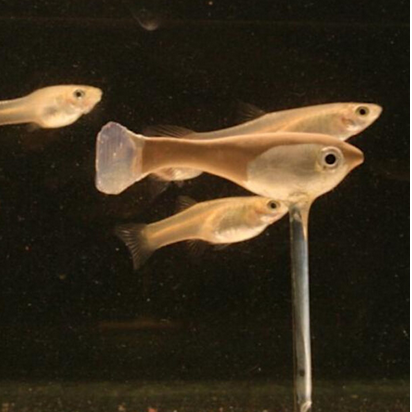
    David Bierbach (Science of Intelligence), “Anticipation in Fish-Robot Interactions”

    Thursday Morning Talk
    20 October, 2022 @ 10:00 am - 11:00 am

    Abstract: I will present our current research involving the Robofish. I will put a special focus on our latest research paper that found live fish to be able to anticipate predictably behaving Robofish both in regard to final movement locations as well as movement dynamics. This talk will take place in person at SCIoI  

  • November 2022

  • Thu 3

    POSTPONED: Scott Robbins, “What Machine’s Shouldn’t Do”

    Thursday Morning Talk
    3 November, 2022 @ 10:00 am - 11:00 am

    From writing essays to evaluating potential hires, machines are doing a lot these days. In all spheres of life, it seems that machines are being delegated more and more decisions. Some of these machines are being delegated decisions that could have significant impact on human lives. Examples of such machines which have caused such impact

  • Thu 10

    Jan De Bruyne (Leiden University), “Liability for Damage Involving AI – Some Regulatory Challenges and Priorities”

    Thursday Morning Talk
    10 November, 2022 @ 10:00 am - 11:00 am

    More details to follow. Photo by DeepMind on Unsplash This talk will take place in person at SCIoI.  

  • Thu 17

    Heiner Spiess (Science of Intelligence), “Tools To Study the Generality of Deep Neural Network Representations”

    Thursday Morning Talk
    17 November, 2022 @ 10:00 am - 11:00 am

    Abstract: As many of us know by now, Deep Learning has enabled tackling very challenging problems and applications that were previously almost impossible to solve with machine learning. However, for most of the tasks we want to solve with Deep Learning, we need large, if not huge, amounts of data and computing power. This is

  • Thu 24

    What are futures made of? Collactive Materials, a joint SCIoI/MoA project

    Thursday Morning Talk
    24 November, 2022 @ 10:00 am - 11:00 am

    Abstract: The BUA-funded experimental knowledge transfer project CollActive Materials, a collaboration between the Clusters of Excellence Science of Intelligence and Matters of Activity, encourages speculation on what the future has in store. Which intelligent materials will pave our tomorrows? How can substances and materials change our world in an intelligent way? What will the world

  • Thu 24

    Thursday morning talk: Nicolas Mandel, “Kangaroos & Quadcopters”

    Thursday Morning Talk
    24 November, 2022 @ 11:30 am - 1:00 pm

    Abstract: The contents of this presentation will be twofold. In the first part the Centre for Robotics of the Queensland University of Technology (QUT) and its research directions and facilities will be introduced. The research on semantics for the benefit of UAVs, specifically quadcopters, will be highlighted. The second part will contain the personal experiences

  • December 2022

  • Thu 1

    David Bierbach (Science of Intelligence), “Anticipation in social interactions among live and artificial agents”

    Thursday Morning Talk
    1 December, 2022 @ 10:00 am - 11:00 am

    Abstract: The aim of SCIoI’s P10 is to investigate how anticipation and prediction shapes social interactions among live and artificial agents using for example the Robofish system. We will outline our research showing the sophisticated anticipation abilities of live fish, as well as how we integrated prediction and anticipation into Robofish’s social interaction behaviors. We

  • Thu 8

    Erik Rodner “Please Label Me: Challenges and Efficient Strategies for Data Annotation and Selection”

    Thursday Morning Talk
    8 December, 2022 @ 10:00 am - 11:00 am

    Abstract: Lack of data and annotations has been the showstopper for machine learning projects when I started my PhD and 15 years later it still is. In my talk, I will give a brief overview of recent models we developed for weakly- and semi supervised as well as for active learning. In addition, we will

  • Thu 15

    Robert Lange and Luis Gomez (Science of Intelligence), “Quantifying and Modelling Collective Behavior Across Ecological Contexts”

    Thursday Morning Talk
    15 December, 2022 @ 10:00 am - 11:00 am

    Abstract: A central challenge in understanding the concept of swarm intelligence is the relation between the behavior of a swarm of agents and its ecological niche. In order to interpret such collective concept, we have been using analytical and synthetic approaches to get more insights using mainly one particular biological system of Sulphur mollies as

  • January 2023

  • Thu 12

    Dustin Lehmann, Fritz Francisco, Jorg Raisch, Pawel Romanczuk (Science of Intelligence), “Dynamical Adaptation and Learning: Knowledge Transfer and Cooperative Learning in Groups of Heterogeneous Agents”

    Thursday Morning Talk
    12 January, 2023 @ 10:00 am - 11:00 am

    Abstract:  In groups of agents learning how to solve a common task, interaction and knowledge transfer between agents is important and can vary depending on network topology. Heterogeneity is one of the key principles that influences the type and quality of interaction between learning agents. Different learning strategies and behaviors can be a driving factor

  • Thu 19

    David Garzón Ramos (Université Libre De Bruxelles), “Automatic Design of Robot Swarms: Context and Experiments”

    Thursday Morning Talk
    19 January, 2023 @ 10:00 am - 11:30 am

    Abstract: Swarm robotics is a promising approach to the coordination of large groups of robots. Traditionally, the design of collective behaviors for robot swarms has been an iterative manual process: a human designer manually refines the control software of the individual robots until the desired collective behavior emerges. In this talk, I discuss automatic design

  • Previous Events
  • Today
  • Next Events
  • Google Calendar
  • iCalendar
  • Outlook 365
  • Outlook Live
  • Export .ics file
  • Export Outlook .ics file

Science of
Intelligence

Funded by the Deutsche Forschungsgemeinschaft (DFG, German Research Foundation) under Germany ́s Excellence Strategy – EXC 2020/1 and 2020/2 – Project number 390523135.

Marchstr. 23 – MAR 5-2
10587 Berlin
Email: info@scioi.de
Tel: +49 30 314 70660

  • Instagram Icon
  • Facebook Icon
  • Youtube Icon
  • Twitter Icon

Imprint | Data Protection

Newsletter

Subscribe to our newsletter to receive the latest news from SCIoI.

Subscribe

Useful links

Doctoral Program
Publications
Events
Press Room
Contacts
Jobs and Research Positions