Skip to content

  • About
    • Our Mission
    • Participating Institutions
    • Collaborations
    • Boards
    • Diversity
    • SCIoI Cluster Reports
    • Labs and Facilities
    • Newsletter
    • Contacts
  • Research
    • SCIoI Disciplines
    • Research Projects
    • Research Structure
    • Research Proposal (2026-2032)
    • Candidate Principles of Intelligence
    • Research Data
    • Final theses
    • Grants & Awards
    • SCIoI Publications
  • Activities
    • Intelligence Lectures
    • Lecture Series
    • Press coverage
    • TV/Radio Coverage
    • SCIoI Fair
    • Punching Cards Podcast
    • SCIoI Talks & Videos
    • Outreach Activities
    • Press Room
  • People
  • Education
    • Doctoral Program
    • Master’s Track
    • Conferences and Collaborations
  • Events
  • News
  • Jobs
  • About
    • Our Mission
    • Participating Institutions
    • Collaborations
    • Boards
    • Diversity
    • SCIoI Cluster Reports
    • Labs and Facilities
    • Newsletter
    • Contacts
  • Research
    • SCIoI Disciplines
    • Research Projects
    • Research Structure
    • Research Proposal (2026-2032)
    • Candidate Principles of Intelligence
    • Research Data
    • Final theses
    • Grants & Awards
    • SCIoI Publications
  • Activities
    • Intelligence Lectures
    • Lecture Series
    • Press coverage
    • TV/Radio Coverage
    • SCIoI Fair
    • Punching Cards Podcast
    • SCIoI Talks & Videos
    • Outreach Activities
    • Press Room
  • People
  • Education
    • Doctoral Program
    • Master’s Track
    • Conferences and Collaborations
  • Events
  • News
  • Jobs
12 events found.

Thursday Morning Talk

  1. Events
  2. Thursday Morning Talk

Events Search and Views Navigation

Event Views Navigation

  • List
  • Month
Today
  • December 2021

  • Thu 2
    Thursday Morning Talk
    2 December, 2021 @ 10:00 am - 11:00 am

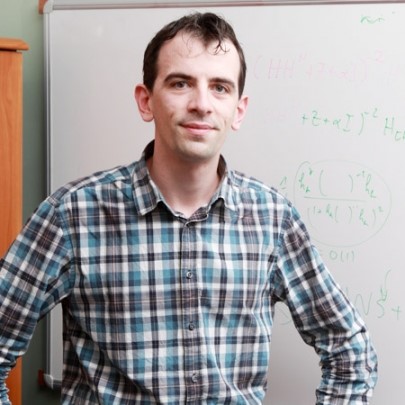
    Kate Storrs (Justus Liebig University, Giessen), “Modelling Mid-Level Vision With Unsupervised Learning”

    On Zoom

    Abstract: Models of vision have come far in the past 10 years. Deep neural networks can recognise objects with near-human accuracy, and predict brain activity in high-level visual regions. However,

  • Thu 9
    Thursday Morning Talk
    9 December, 2021 @ 10:00 am - 16 December, 2021 @ 11:00 am

    Eric J. Johnson (Columbia University, US), “Can We Improve Choices by Changing How Choices Are Posed?”

    On Zoom

    Abstract: Choice architecture suggests that much of what we decide is influenced by that options are presented. This means that the choice environment can encode intelligence that will help (or

  • Thu 16
    Thursday Morning Talk
    16 December, 2021 @ 10:00 am - 11:00 am

    Romain Couillet (University Grenoble-Alps, France), “Random Matrices Could Steer the Dangerous Path Taken by AI but Even That Is Likely Not Enough”

    On Zoom

    Abstract: Like most of our technologies today, AI dramatically increases the world's carbon footprint, thereby strengthening the severity of the coming downfall of life on the planet. In this talk,

  • Thu 16
    Thursday Morning Talk
    16 December, 2021 @ 4:00 pm - 5:30 pm

    Lars Chittka (Queen Mary, University of London), “The Mind of a Bee”

    TU Berlin

    Abstract: Bees have a diverse instinctual repertoire that exceeds in complexity that of most vertebrates. This repertoire allows the social organisation of such feats as the construction of precisely hexagonal

  • Thu 23
    Thursday Morning Talk
    23 December, 2021 @ 10:00 am - 11:00 am

    Elke Weber (Princeton University), “Personal and Social Information Search and Integration for Intelligent Decisions on Climate Action”

    On Zoom

    Abstract: Some of my past and current research looks at "decisions from  experience,” i.e., decisions based on the personally experienced outcomes of past choices, along the lines of reinforcement learning

  • January 2022

  • Thu 6
    Thursday Morning Talk
    6 January, 2022 @ 10:00 am - 11:00 am

    Ruben Arslan (MPI Berlin): “Bad Science vs. Open Science. The Replication Crisis and Possible Ways Out.”

    On Zoom

    Estimates from large-scale replication projects in psychology suggest that the majority of studies from top journals do not replicate. Using commonly accepted research methods, several academic fields amassed prolific, seemingly coherent literatures

  • Thu 27
    Thursday Morning Talk
    27 January, 2022 @ 10:00 am - 11:00 am

    Dimitri Coelho Mollo (Science of Intelligence), “The Concept of Intelligence – A progress report”

    In this presentation, I will report on the results of my work so far on the concept of intelligence, summarising some of the main points and proposals made, and opening

  • February 2022

  • Thu 10
    Thursday Morning Talk
    10 February, 2022 @ 10:00 am - 11:00 am

    Mathilde Caron, “Self-Supervised Learning: How To Learn From Images Without Human Annotations”

    On Zoom

    Abstract: Self-supervised learning (SSL) consists in training neural network systems without using any human annotations. Typically, neural networks require large amounts of annotated data, which have limited their applications in

  • Thu 17
    Thursday Morning Talk
    17 February, 2022 @ 10:00 am - 11:00 am

    Yuejiang Liu (EPFL University), “Learning Beyond the IID Setting with Robust and Adaptive Representations”

    On Zoom

    Abstract Machine learning models have achieved stunning successes in the IID setting. Yet, beyond this setting, existing models still suffer from two grand challenges: brittle under covariate shift and inefficient

  • March 2022

  • Thu 3
    Thursday Morning Talk
    3 March, 2022 @ 4:00 pm - 10 March, 2022 @ 5:00 pm

    Chaz Firestone (Johns Hopkins University), “Seeing ‘How'”

    On Zoom

    Abstract: What is perception? The most intuitive and influential answer to this question has long been the one given by David Marr: To see the world is “to know what

  • Thu 10
    Thursday Morning Talk
    10 March, 2022 @ 4:00 pm - 24 March, 2022 @ 5:00 pm

    Mark Nawrot (North Dakota University), “Pursuit Eye Movements in the Perception of Depth From Motion Parallax”

    On Zoom

    Abstract: The brain performs critical calculations on visual information as we swiftly, yet effortlessly, navigate around objects and obstacles in our cluttered environment. Perhaps one of the most important calculations

  • Thu 17
    Thursday Morning Talk
    17 March, 2022 @ 10:00 am - 11:00 am

    Henning Sprekeler (Science of Intelligence), “Architectural Design Principles for Intelligence: Modularity vs. Integration”

    On Zoom

    Abstract: The world is modular. So – intuitively – it seems clear that cognitive systems that deal with the world should benefit from a modular architecture. Simple or less important

  • Previous Events
  • Today
  • Next Events
  • Google Calendar
  • iCalendar
  • Outlook 365
  • Outlook Live
  • Export .ics file
  • Export Outlook .ics file

Science of
Intelligence

Funded by the Deutsche Forschungsgemeinschaft (DFG, German Research Foundation) under Germany ́s Excellence Strategy – EXC 2020/1 and 2020/2 – Project number 390523135.

Marchstr. 23 – MAR 5-2
10587 Berlin
Email: info@scioi.de
Tel: +49 30 314 70660

  • Instagram Icon
  • Facebook Icon
  • Youtube Icon
  • Twitter Icon

Imprint | Data Protection

Newsletter

Subscribe to our newsletter to receive the latest news from SCIoI.

Subscribe

Useful links

Doctoral Program
Publications
Events
Press Room
Contacts
Jobs and Research Positions