Skip to content

  • About
    • Our Mission
    • Participating Institutions
    • Collaborations
    • Boards
    • Diversity
    • SCIoI Cluster Reports
    • Labs and Facilities
    • Newsletter
    • Contacts
  • Research
    • SCIoI Disciplines
    • Research Projects
    • Research Structure
    • Research Proposal (2026-2032)
    • Candidate Principles of Intelligence
    • Research Data
    • Final theses
    • Grants & Awards
    • SCIoI Publications
  • Activities
    • Intelligence Lectures
    • Lecture Series
    • Press coverage
    • TV/Radio Coverage
    • SCIoI Fair
    • Punching Cards Podcast
    • SCIoI Talks & Videos
    • Outreach Activities
    • Press Room
  • People
  • Education
    • Doctoral Program
    • Master’s Track
    • Conferences and Collaborations
  • Events
  • News
  • Jobs
  • About
    • Our Mission
    • Participating Institutions
    • Collaborations
    • Boards
    • Diversity
    • SCIoI Cluster Reports
    • Labs and Facilities
    • Newsletter
    • Contacts
  • Research
    • SCIoI Disciplines
    • Research Projects
    • Research Structure
    • Research Proposal (2026-2032)
    • Candidate Principles of Intelligence
    • Research Data
    • Final theses
    • Grants & Awards
    • SCIoI Publications
  • Activities
    • Intelligence Lectures
    • Lecture Series
    • Press coverage
    • TV/Radio Coverage
    • SCIoI Fair
    • Punching Cards Podcast
    • SCIoI Talks & Videos
    • Outreach Activities
    • Press Room
  • People
  • Education
    • Doctoral Program
    • Master’s Track
    • Conferences and Collaborations
  • Events
  • News
  • Jobs
12 events found.

Events Search and Views Navigation

Event Views Navigation

  • List
  • Month
Today
  • November 2021

  • Thu 25
    For the Public
    25 November, 2021 @ 7:00 am - 8:30 pm

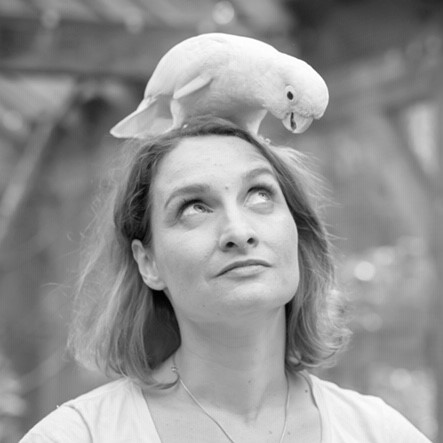
    What Does the Swarm Know? Collective Intelligence Explained at the HU Lab’s MitWissenschaft Event

    Humboldt Forum

    As part of the events linked to the exhibition Nach der Natur at the Humboldt Forum, on 25 November at 7pm cluster members Jens Krause, Lea Musiolek, and Pawel Romanczuk will take part in an exciting discussion on the meaning, the study, and the challenges of collective intelligence, bringing great examples and fascinating materials. How

  • December 2021

  • Thu 2
    Thursday Morning Talk
    2 December, 2021 @ 10:00 am - 11:00 am

    Kate Storrs (Justus Liebig University, Giessen), “Modelling Mid-Level Vision With Unsupervised Learning”

    On Zoom

    Abstract: Models of vision have come far in the past 10 years. Deep neural networks can recognise objects with near-human accuracy, and predict brain activity in high-level visual regions. However, most networks require supervised training using ground-truth labels for millions of images, whereas brains must somehow learn from sensory experience alone. We have been using

  • Thu 2
    2 December, 2021 @ 4:00 pm - 5:30 pm

    Alice Von Auersperg (University of Veterinary Medicine Vienna), “Breaking New Ground: Innovation in Birds, Primates and Human Infants”

    Breaking new ground: innovation in birds, primates and human infants  Novel behaviors that suddenly appear either as a solution to a new problem or as an alternative way to solve an existing problem allow humans and animals to deal with environmental challenges and to create new opportunities. They are thus key ingredients for developing advanced problem-solving abilities. In order

  • Thu 9
    Thursday Morning Talk
    9 December, 2021 @ 10:00 am - 16 December, 2021 @ 11:00 am

    Eric J. Johnson (Columbia University, US), “Can We Improve Choices by Changing How Choices Are Posed?”

    On Zoom

    Abstract: Choice architecture suggests that much of what we decide is influenced by that options are presented. This means that the choice environment can encode intelligence that will help (or can hurt) the decision maker. The talk will start by reviewing some results from choice architecture and describe how the environment can affect choice through

  • Thu 9
    Distinguished Speaker Series
    9 December, 2021 @ 4:00 pm - 5:30 pm

    POSTPONED – Distinguished Speaker Series Talk, Iain Couzin (University of Konstanz)

    Postponed to a later date (to be assessed) More info coming soon!  

  • Thu 16
    Thursday Morning Talk
    16 December, 2021 @ 10:00 am - 11:00 am

    Romain Couillet (University Grenoble-Alps, France), “Random Matrices Could Steer the Dangerous Path Taken by AI but Even That Is Likely Not Enough”

    On Zoom

    Abstract: Like most of our technologies today, AI dramatically increases the world's carbon footprint, thereby strengthening the severity of the coming downfall of life on the planet. In this talk, I propose that recent advances in large dimensional mathematics, and especially random matrices, could help AI engage in the future economic growth. This being said,

  • Thu 16
    Thursday Morning Talk
    16 December, 2021 @ 4:00 pm - 5:30 pm

    Lars Chittka (Queen Mary, University of London), “The Mind of a Bee”

    TU Berlin

    Abstract: Bees have a diverse instinctual repertoire that exceeds in complexity that of most vertebrates. This repertoire allows the social organisation of such feats as the construction of precisely hexagonal honeycombs, an exact climate control system inside their home, the provision of the hive with commodities that must be harvested over a large territory (nectar,

  • Thu 23
    Thursday Morning Talk
    23 December, 2021 @ 10:00 am - 11:00 am

    Elke Weber (Princeton University), “Personal and Social Information Search and Integration for Intelligent Decisions on Climate Action”

    On Zoom

    Abstract: Some of my past and current research looks at "decisions from  experience,” i.e., decisions based on the personally experienced outcomes of past choices, along the lines of reinforcement learning models and how such learning and updating is related to and differs from the way in which people and other intelligent agents use other sources of information,

  • January 2022

  • Thu 6
    Thursday Morning Talk
    6 January, 2022 @ 10:00 am - 11:00 am

    Ruben Arslan (MPI Berlin): “Bad Science vs. Open Science. The Replication Crisis and Possible Ways Out.”

    On Zoom

    Estimates from large-scale replication projects in psychology suggest that the majority of studies from top journals do not replicate. Using commonly accepted research methods, several academic fields amassed prolific, seemingly coherent literatures on phenomena that do not exist, such as extrasensory perception and depression candidate genes. Throughout the biomedical and life sciences, data detectives keep finding highly cited

  • Thu 6
    PI Lecture
    6 January, 2022 @ 4:00 pm - 5:30 pm

    Lars Lewejohann (Science of Intelligence), “What’s on a Mouse’s Mind? Behavioral Measures To Understand Experiences and Needs of an Animal”

    What's on a mouse's mind? Behavioral measures to understand experiences and needs of an animal Lars Lewejohann, Freie Universität Berlin, German Federal Institute for Risk Assessment (BfR), German Centre for the Protection of Laboratory Animals (Bf3R) Mice, as all other living creatures, have adapted to specific living conditions in the course of evolution. From a

  • Thu 20
    20 January, 2022 @ 10:00 am - 11:00 am

    Mengmi Zhang (Harvard Medical School), “A Peek Into How Brain Computations Inspire New Paths in AI and How AI Elucidate Brain Computations”

    On Zoom

    Abstract: The fields of neuroscience and AI have a long and intertwined history. From the study of simple and complex cells in visual areas of the brain to the recent success of convolution neural networks in many real-world applications, experimental and theoretical neuroscience has contributed significantly to designing smarter machines. In turn, AI models help us better understand

  • Thu 20
    PI Lecture
    20 January, 2022 @ 4:00 pm - 5:30 pm

    Henning Sprekeler (Science of Intelligence), “Harnessing Machine Learning To Model Biological Systems”

    "Harnessing machine learning to model biological systems" Abstract: Classically, models of biological systems follow two different approaches. In bottom-up approaches, biological data are used to constrain a phenomenological model of the system in question, and the model is the studied to identify potential functions or potential consequences of the observations that flow into the model.

  • Previous Events
  • Today
  • Next Events
  • Google Calendar
  • iCalendar
  • Outlook 365
  • Outlook Live
  • Export .ics file
  • Export Outlook .ics file

Science of
Intelligence

Funded by the Deutsche Forschungsgemeinschaft (DFG, German Research Foundation) under Germany ́s Excellence Strategy – EXC 2020/1 and 2020/2 – Project number 390523135.

Marchstr. 23 – MAR 5-2
10587 Berlin
Email: info@scioi.de
Tel: +49 30 314 70660

  • Instagram Icon
  • Facebook Icon
  • Youtube Icon
  • Twitter Icon

Imprint | Data Protection

Newsletter

Subscribe to our newsletter to receive the latest news from SCIoI.

Subscribe

Useful links

Doctoral Program
Publications
Events
Press Room
Contacts
Jobs and Research Positions