Skip to content

  • About
    • Our Mission
    • Participating Institutions
    • Collaborations
    • Boards
    • Diversity
    • SCIoI Cluster Reports
    • Labs and Facilities
    • Newsletter
    • Contacts
  • Research
    • SCIoI Disciplines
    • Research Projects
    • Research Structure
    • Research Proposal (2026-2032)
    • Candidate Principles of Intelligence
    • Research Data
    • Final theses
    • Grants & Awards
    • SCIoI Publications
  • Activities
    • Intelligence Lectures
    • Lecture Series
    • Press coverage
    • TV/Radio Coverage
    • SCIoI Fair
    • Punching Cards Podcast
    • SCIoI Talks & Videos
    • Outreach Activities
    • Press Room
  • People
  • Education
    • Doctoral Program
    • Master’s Track
    • Conferences and Collaborations
  • Events
  • News
  • Jobs
  • About
    • Our Mission
    • Participating Institutions
    • Collaborations
    • Boards
    • Diversity
    • SCIoI Cluster Reports
    • Labs and Facilities
    • Newsletter
    • Contacts
  • Research
    • SCIoI Disciplines
    • Research Projects
    • Research Structure
    • Research Proposal (2026-2032)
    • Candidate Principles of Intelligence
    • Research Data
    • Final theses
    • Grants & Awards
    • SCIoI Publications
  • Activities
    • Intelligence Lectures
    • Lecture Series
    • Press coverage
    • TV/Radio Coverage
    • SCIoI Fair
    • Punching Cards Podcast
    • SCIoI Talks & Videos
    • Outreach Activities
    • Press Room
  • People
  • Education
    • Doctoral Program
    • Master’s Track
    • Conferences and Collaborations
  • Events
  • News
  • Jobs
12 events found.

Events Search and Views Navigation

Event Views Navigation

  • List
  • Month
Today
  • October 2021

  • Thu 14
    PI Lecture
    14 October, 2021 @ 4:00 pm - 5:30 pm

    Tim Landgraf (Science of Intelligence), “The Hidden Shallows of Explaining Deep Models”

    Abstract: In the cognitive-, behavioral- or neuro-sciences we often match a computational model to observations and then, analyzing the model, hope to find results that generalize to the underlying system. With deep neural networks (DNNs) quite powerful function approximators are available that can be fitted to huge data sets, accelerated by cheap hardware and elaborate
  • Tue 19
    External Event
    19 October, 2021 @ 10:00 am - 6:00 pm

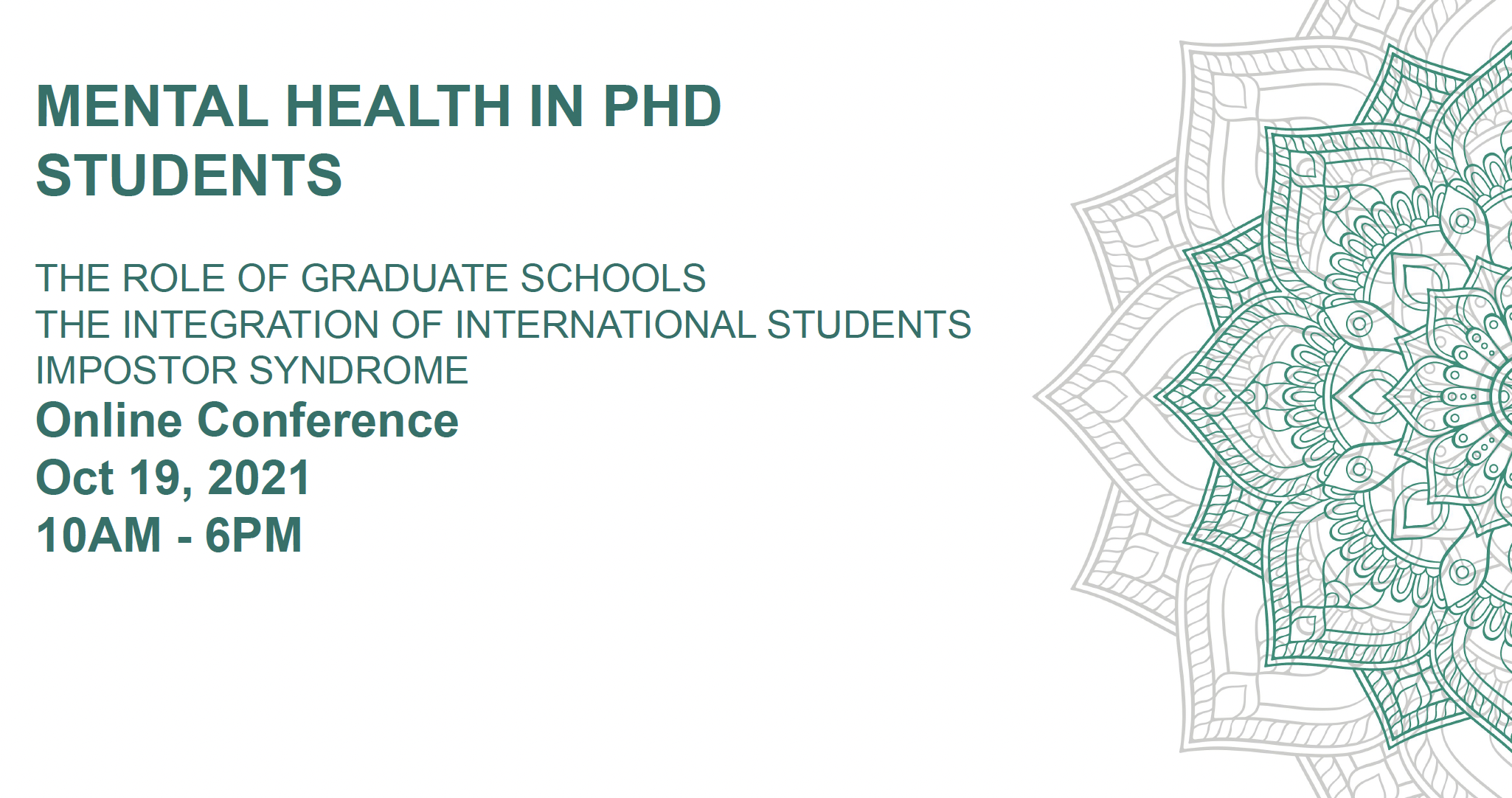
    Mental Health in PhD Students. The Role of Graduate Schools, the Integration of International Students and Impostor Syndrome

    On Zoom

    Scholar Minds, in collaboration with Science of Intelligence and the Berlin School of Mind and Brain, would like to invite you to a special conference on the topic "Mental Health in PhD students: The role of graduate schools, the integration of international students and impostor syndrome". The event will take place online on October 19th

  • Thu 28
    Distinguished Speaker Series
    28 October, 2021 @ 4:00 pm - 5:30 pm

    Cameron Buckner (Univ. of Houston), Imagination and the Prospects for Empiricist Artificial Intelligence

    On Zoom

    Abstract: In current debates over deep-neural-network-based AI, deep learning researchers have adopted the mantle of philosophical empiricism and associationism, and its critics have taken up the side of philosophical rationalism and nativism.  These rationalist critics, however, often interpret associationism and empiricism in a way which is too caricatured to fit the views of any significant

  • November 2021

  • Tue 2
    For the Public
    2 November, 2021 @ 6:00 am - 7:00 pm

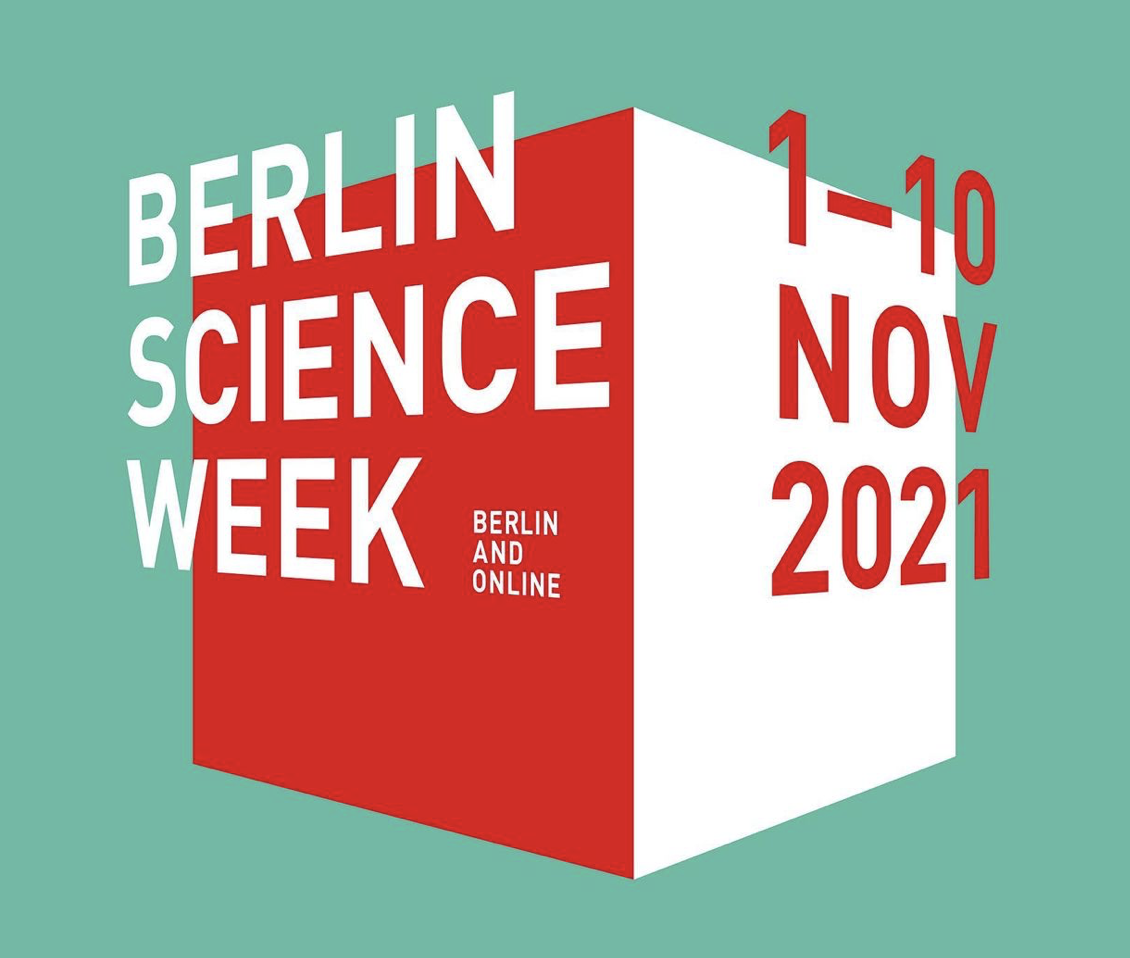
    Berlin Science Week Talk, Guillermo Gallego: Giving Robots T-Rex-Inspired Eyes

    On Zoom

    Ever heard of neuromorphic cameras? They are bio-inspired sensors that mimic the transient visual pathway. These cameras do not acquire pictures or full images as a normal video camera. Instead, they sense only intensity changes at every pixel as they occur with microsecond resolution (called “events” or “spikes”). These cameras offer many advantages compared to

  • Sat 6
    For the Public
    6 November, 2021 @ 12:00 pm - 1:30 pm

    Berlin Science Week Talk, David Bierbach: Just Be Yourself! How Individual Differences Shape Collective Behavior. Using a Robotic Fish To Understand Collective Behavior

    Naturkundemuseum

    Do genetically identical individuals living in the same environment develop identical behaviors? And what role does individuality play in shaping the collective behavior of a flock of birds or a school of fish? In this talk, David Bierbach will present results from fascinating experiments with a clonal fish, the Amazon molly (Poecilia formosa), to test whether near-identical

  • Sun 7
    For the Public
    7 November, 2021 @ 6:00 pm - 7:00 pm

    Berlin Science Week Talk, Alex Kacelnik and Marc Toussaint: Unsolved Problems in the Study of Intelligence. Learning About Intelligence, From Crows to Robots

    On Zoom

    A live discussion of Alex Kacelnik (Biologist, U Oxford) and Marc Toussaint (AI Roboticist, TU Berlin) on key problems in studying intelligence in both animals and AI systems. Please register on the BSW website here

  • Mon 8
    For the Public
    8 November, 2021 @ 6:00 pm - 7:00 pm

    Berlin Science Week Talk, Ralf Kurvers and Pawel Romanczuk: Collective Intelligence or Collective Stupidity? From Fish Schools to Human Groups. Exploring swarm intelligence in fish and humans

    On Zoom

    Scientists Pawel Romanczuk and Ralf Kurvers will explore swarm intelligence in fish and humans, investigating the role of single individuals and social interactions in collective decisions, also exploring when collectives make good decisions, and when they go wrong. In this talk, David Bierbach will present results from fascinating experiments with a clonal fish, the Amazon

  • Wed 10
    For the Public
    10 November, 2021 @ 6:00 pm - 7:00 pm

    Berlin Science Week Talk, Fritz Francisco: Why Behaviour? Why We Behave the Way We Do

    On Zoom

    From French photographers, Austrian naturalists and English adventurers – all have been equally fascinated by the way we are affected by, and interact with our surroundings. It is the intricate interplay between self and others, known and unknown, present and future that makes behaviour so hard to grasp and exciting to study. Ethology, the study

  • Thu 25
    For the Public
    25 November, 2021 @ 7:00 am - 8:30 pm

    What Does the Swarm Know? Collective Intelligence Explained at the HU Lab’s MitWissenschaft Event

    Humboldt Forum

    As part of the events linked to the exhibition Nach der Natur at the Humboldt Forum, on 25 November at 7pm cluster members Jens Krause, Lea Musiolek, and Pawel Romanczuk will take part in an exciting discussion on the meaning, the study, and the challenges of collective intelligence, bringing great examples and fascinating materials. How

  • December 2021

  • Thu 2
    Thursday Morning Talk
    2 December, 2021 @ 10:00 am - 11:00 am

    Kate Storrs (Justus Liebig University, Giessen), “Modelling Mid-Level Vision With Unsupervised Learning”

    On Zoom

    Abstract: Models of vision have come far in the past 10 years. Deep neural networks can recognise objects with near-human accuracy, and predict brain activity in high-level visual regions. However, most networks require supervised training using ground-truth labels for millions of images, whereas brains must somehow learn from sensory experience alone. We have been using

  • Thu 2
    2 December, 2021 @ 4:00 pm - 5:30 pm

    Alice Von Auersperg (University of Veterinary Medicine Vienna), “Breaking New Ground: Innovation in Birds, Primates and Human Infants”

    Breaking new ground: innovation in birds, primates and human infants  Novel behaviors that suddenly appear either as a solution to a new problem or as an alternative way to solve an existing problem allow humans and animals to deal with environmental challenges and to create new opportunities. They are thus key ingredients for developing advanced problem-solving abilities. In order

  • Thu 9
    Thursday Morning Talk
    9 December, 2021 @ 10:00 am - 16 December, 2021 @ 11:00 am

    Eric J. Johnson (Columbia University, US), “Can We Improve Choices by Changing How Choices Are Posed?”

    On Zoom

    Abstract: Choice architecture suggests that much of what we decide is influenced by that options are presented. This means that the choice environment can encode intelligence that will help (or can hurt) the decision maker. The talk will start by reviewing some results from choice architecture and describe how the environment can affect choice through

  • Previous Events
  • Today
  • Next Events
  • Google Calendar
  • iCalendar
  • Outlook 365
  • Outlook Live
  • Export .ics file
  • Export Outlook .ics file

Science of
Intelligence

Funded by the Deutsche Forschungsgemeinschaft (DFG, German Research Foundation) under Germany ́s Excellence Strategy – EXC 2020/1 and 2020/2 – Project number 390523135.

Marchstr. 23 – MAR 5-2
10587 Berlin
Email: info@scioi.de
Tel: +49 30 314 70660

  • Instagram Icon
  • Facebook Icon
  • Youtube Icon
  • Twitter Icon

Imprint | Data Protection

Newsletter

Subscribe to our newsletter to receive the latest news from SCIoI.

Subscribe

Useful links

Doctoral Program
Publications
Events
Press Room
Contacts
Jobs and Research Positions