Lauren Sumner-Rooney
Thursday Morning TalkMore details to follow. This talk will take place in person at SCIoI.
More details to follow. This talk will take place in person at SCIoI.

Abstract: The opacity of datasets poses a significant challenge to creating inclusive and intelligible machine learning (ML) systems. Various AI ethics initiatives have addressed this issue by proposing standardized dataset documentation frameworks based on the value of transparency. In this talk, I propose a shift of perspective: from documenting for transparency to documenting for reflexivity.

Abstract: In our project, we explore the idea that complex, intelligent behavior can be generated by selecting from simple strategies in a smart way. In the first part, we will talk about how we tested this idea of strategy selection in the context of human decision making under risk, and we will discuss the potential

Abstract: Collective dynamics play a crucial role in everyday decision-making. Whether social influence promotes the spread of accurate information and ultimately results in collective intelligence or leads to false information cascades and maladaptive social contagion depends on the cognitive mechanisms underlying social interactions. This talk will take place in person at SCIoI.

Using swarm optimization algorithms as heuristic solutions in various engineering problems, including the state estimation of nonlinear systems, has been an inspiration to me for my SCIoI project. We started our project by studying the "Wisdom of Crowds" effect, i.e. the notion that the average of many imperfect estimations, under the right conditions, can potentially yield a
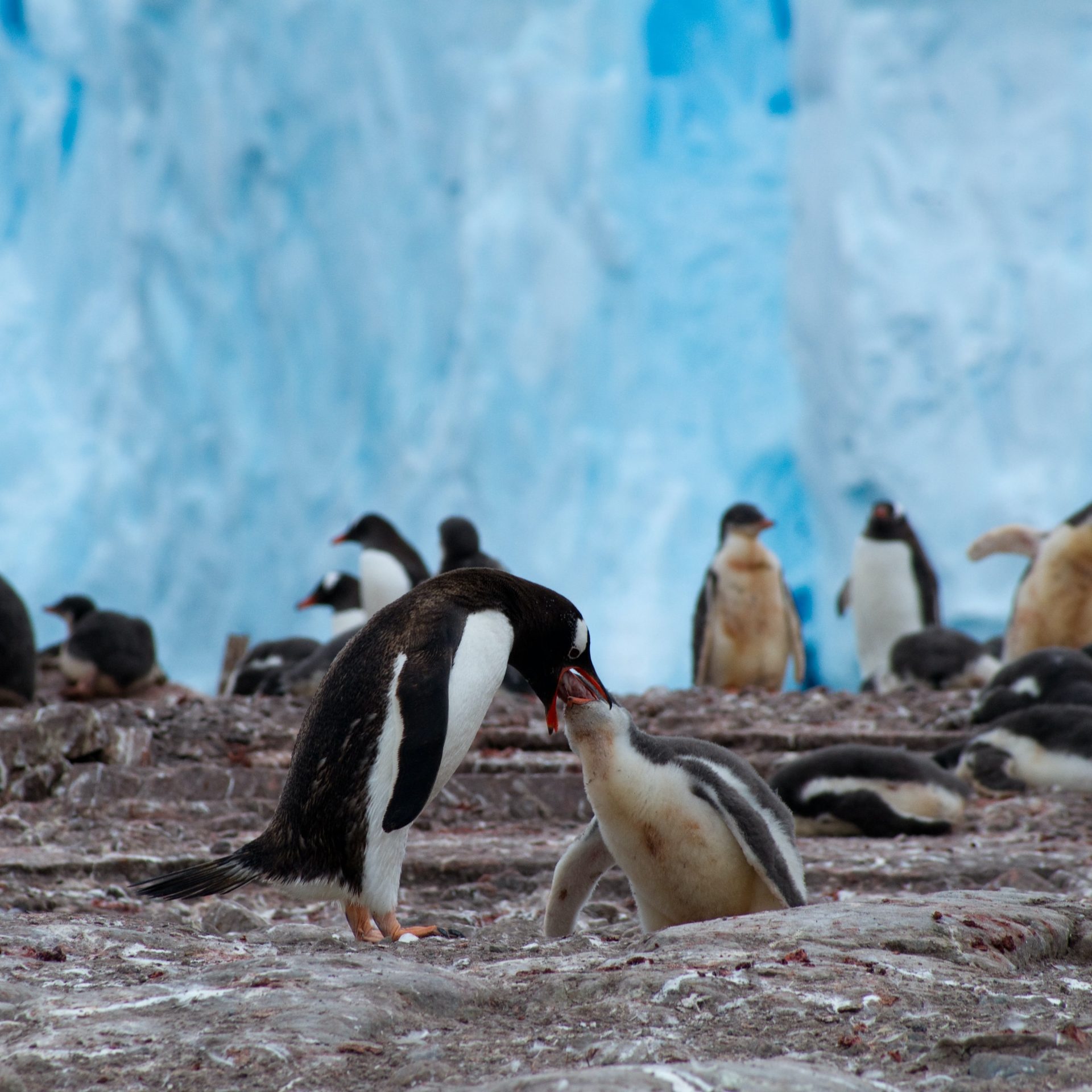
Abstract: The social structure and behaviour of organisms is highly divergent. How can this stunning diversity in nature be explained? I will argue that a few key principles are responsible for the evolution of social behaviour, with all its simple and complex manifestations. Organisms compete for resources. As survival and reproduction require resources and only

Abstract: Reinforcement learning has shown great success in controlling complex dynamical systems. However, when training a policy, most algorithms only consider a single objective function. While this may suffice in virtual domains, physical systems must satisfy a set of operational constraints, with safety being of crucial importance. It is natural to express these problems as

Machine learning tools have already been used to identify individual animals such as but not limited to pandas, black bears, cows and dogs. These tools can help to improve the quality of non-invasive wildlife monitoring and enhance the information on individual animal behaviour as well as on behaviour within social networks of the animals (Lynn

Abstract: Collective motion is a familiar sight in nature; groups of distinct, self-propelled individuals appear to move as a coherent whole, exhibiting a rich behavioral repertoire that ranges from directed movement to milling to disordered swarming. Biological collective motion is an emergent phenomenon that is the result of self-organization, whereby macroscopic patterns arise from decentralized,

Abstract: A tutorial on Open Science practices with a focus on pre-registration, going through the process step-by-step, including a live experimental data collection. This talk will take place in person at SCIoI. Photo by Markus Spiske on Unsplash.

More details to follow. This talk will take place in person at SCIoI. Photo by Markus Spiske on Unsplash.

More details to follow. This talk will take place in person at SCIoI. Photo by Katja Anokhina on Unsplash.
Marchstr. 23 – MAR 5-2
10587 Berlin
Email: info@scioi.de
Tel: +49 30 314 70660