• Yuejiang Liu (EPFL University), “Learning Beyond the IID Setting with Robust and Adaptive Representations”

    Thursday Morning Talk
    On Zoom

    Abstract Machine learning models have achieved stunning successes in the IID setting. Yet, beyond this setting, existing models still suffer from two grand challenges: brittle under covariate shift and inefficient for knowledge transfer. In this talk, I will introduce three approaches to tackle these challenges, namely self-supervised learning, causal representation learning, and test-time training. More

  • Marcel Brass (Science of Intelligence), “The Cognitive Neuroscience of Implementing Novel Instructions”

    PI Lecture

    One fundamental difference between human and non-human animals is the ability of humans to instantaneously implement instructed behaviour. While other animals acquire new behaviour via effortful trial-and-error learning or extensive practice, humans can implement novel behaviour based on instructions. This ability is presumably a key aspect of cultural learning. In my talk, I will discuss

  • Chaz Firestone (Johns Hopkins University), “Seeing ‘How'”

    Thursday Morning Talk
    On Zoom

    Abstract: What is perception? The most intuitive and influential answer to this question has long been the one given by David Marr: To see the world is “to know what is where by looking” - to transform light into representations of objects and their features, located somewhere ins pace. But is this all that perception

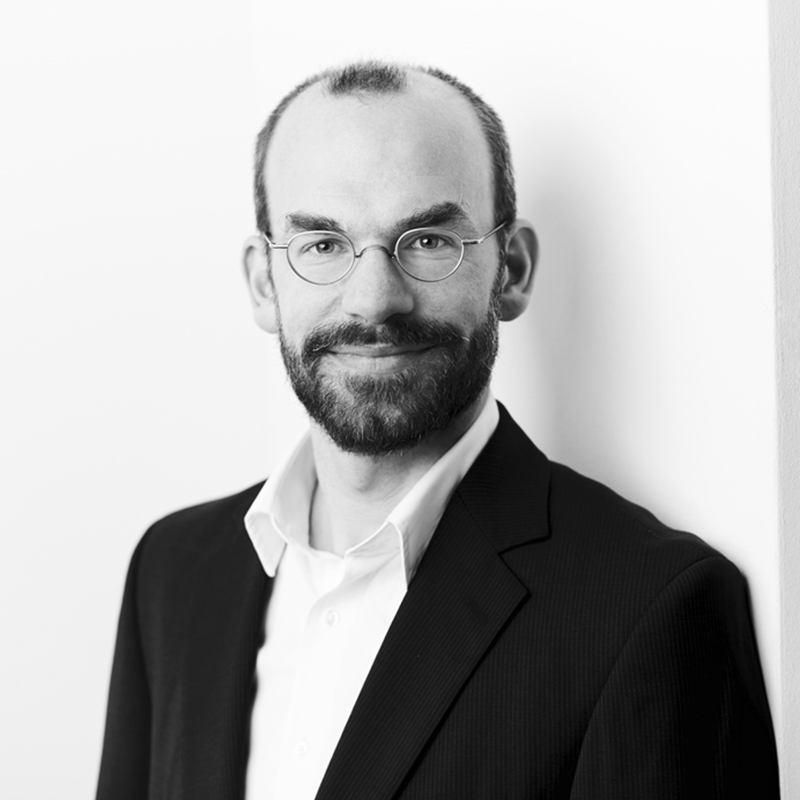
  • Mark Nawrot (North Dakota University), “Pursuit Eye Movements in the Perception of Depth From Motion Parallax”

    Thursday Morning Talk
    On Zoom

    Abstract: The brain performs critical calculations on visual information as we swiftly, yet effortlessly, navigate around objects and obstacles in our cluttered environment. Perhaps one of the most important calculations is for the perception of depth using the apparent relative motion of objects in the environment created by our own translation known as motion parallax.

  • Henning Sprekeler (Science of Intelligence), “Architectural Design Principles for Intelligence: Modularity vs. Integration”

    Thursday Morning Talk
    On Zoom

    Abstract: The world is modular. So – intuitively – it seems clear that cognitive systems that deal with the world should benefit from a modular architecture. Simple or less important problems should use less cognitive resources than complex or important problems, which – intuitively – may be achieved by changing the degree of modularity that

  • Global Scientific Exchange Program – Part I

    Thursday Morning Talk
    On Zoom

    The talks will be held by Arinze Lawrence Folarin, "My 175 days journey in Berlin"; Juliana T.C. Marcos "GSEP Internship: More than a research experience in neuromorphic vision at SCIoI"; and Kiprono Elijah Koech "Action Recognition in a Wildlife Setting - Taken a Leap". The Zoom Link will be sent the day before the lecture.

  • Global Scientific Exchange Program – Part II

    Thursday Morning Talk
    On Zoom

    The talks will be held by Emmanuel Ousu Ahenkan and Tatiana Ngoli Moteu Marcos. The Zoom Link will be sent the day before the lecture.

  • Earlybird UNI-X

    Thursday Morning Talk
    On Zoom

    Meet Philipp Semmer and Frederic du Bois-Reymond, both partners at the venture capital firm Earlybird UNI-X. They will talk about funding for university spin-offs and why they believe that scientist and researcher should be more excited about entrepreneurship. They will also share their insights on deep tech companies becoming the next generation of unicorns. The

  • C. jessica E. Metcalf, “Evolving Immunity: Responding, Learning, Forgetting “

    Abstract:  The adaptive immune system must meet the challenge of a constantly changing pool of both dangerous and friendly microbes. Evolution has favored a system that can learn what responses work, and forget responses that are unlikely to be needed again, and can seem both remarkably intelligent and remarkably stupid. I will introduce the concepts evolutionary biologists might

  • Danny Driess, Manuel Baum, Katharina Hohlbaum, Niek Andresen (Science of Intelligence), “Perspectives on the Gap Between Robotic Models and Observed Biological Behavior”

    Thursday Morning Talk

    Abstract: One of SCIoI's goals is to establish and evaluate synthetic models for biological data. Achieving this goal is clearly beneficial not only to produce more capable artificial behavior, but also to get a better idea about the processes that may underlie biological intelligence. Why can a cockatoo or mouse open a lock box? What

  • Girls’ Day 2022

    For the Public

    On Girls’ Day 2022 (28 April 22), SCIoI members Jinan Allan and Marah Halawa will give an overview of their life as women in science, including ambitions and possible challenges. The brief introduction will be followed by visits to the cluster's labs. More information here.