Skip to content

  • About
    • Our Mission
    • Participating Institutions
    • Collaborations
    • Boards
    • Diversity
    • SCIoI Cluster Reports
    • Labs and Facilities
    • Newsletter
    • Contacts
  • Research
    • SCIoI Disciplines
    • Research Projects
    • Research Structure
    • Research Proposal (2026-2032)
    • Candidate Principles of Intelligence
    • Research Data
    • Final theses
    • Grants & Awards
    • SCIoI Publications
  • Activities
    • SCIoI Fair
    • Punching Cards Podcast
    • CollActive Materials
    • Past Outreach Activities
    • SCIoI Talks & Videos
    • Press Room
    • TV/Radio Coverage
    • Press Releases
    • Press coverage
  • People
  • Education
    • Doctoral Program
    • Master’s Track
    • Conferences and Collaborations
    • The SCIoI Alumni Network
  • Events
  • News
  • Jobs
  • About
    • Our Mission
    • Participating Institutions
    • Collaborations
    • Boards
    • Diversity
    • SCIoI Cluster Reports
    • Labs and Facilities
    • Newsletter
    • Contacts
  • Research
    • SCIoI Disciplines
    • Research Projects
    • Research Structure
    • Research Proposal (2026-2032)
    • Candidate Principles of Intelligence
    • Research Data
    • Final theses
    • Grants & Awards
    • SCIoI Publications
  • Activities
    • SCIoI Fair
    • Punching Cards Podcast
    • CollActive Materials
    • Past Outreach Activities
    • SCIoI Talks & Videos
    • Press Room
    • TV/Radio Coverage
    • Press Releases
    • Press coverage
  • People
  • Education
    • Doctoral Program
    • Master’s Track
    • Conferences and Collaborations
    • The SCIoI Alumni Network
  • Events
  • News
  • Jobs
12 events found.

PI Lecture

  1. Events
  2. PI Lecture

Events

Events Search and Views Navigation

Event Views Navigation

  • List
  • Month
Today
  • October 2021

  • Thu 14

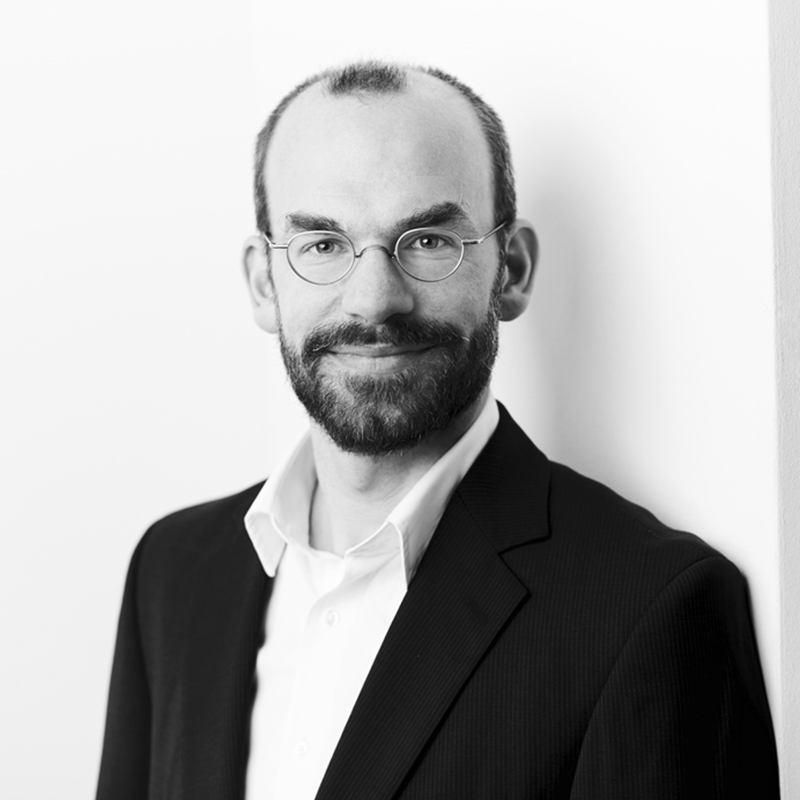
    Tim Landgraf (Science of Intelligence), “The Hidden Shallows of Explaining Deep Models”

    PI Lecture
    14 October, 2021 @ 4:00 pm - 5:30 pm

    Abstract: In the cognitive-, behavioral- or neuro-sciences we often match a computational model to observations and then, analyzing the model, hope to find results that generalize to the underlying system.

  • January 2022

  • Thu 6

    Lars Lewejohann (Science of Intelligence), “What’s on a Mouse’s Mind? Behavioral Measures To Understand Experiences and Needs of an Animal”

    PI Lecture
    6 January, 2022 @ 4:00 pm - 5:30 pm

    What's on a mouse's mind? Behavioral measures to understand experiences and needs of an animal Lars Lewejohann, Freie Universität Berlin, German Federal Institute for Risk Assessment (BfR), German Centre for

  • Thu 20

    Henning Sprekeler (Science of Intelligence), “Harnessing Machine Learning To Model Biological Systems”

    PI Lecture
    20 January, 2022 @ 4:00 pm - 5:30 pm

    "Harnessing machine learning to model biological systems" Abstract: Classically, models of biological systems follow two different approaches. In bottom-up approaches, biological data are used to constrain a phenomenological model of

  • February 2022

  • Thu 17

    Marcel Brass (Science of Intelligence), “The Cognitive Neuroscience of Implementing Novel Instructions”

    PI Lecture
    17 February, 2022 @ 4:00 pm - 5:30 pm

    One fundamental difference between human and non-human animals is the ability of humans to instantaneously implement instructed behaviour. While other animals acquire new behaviour via effortful trial-and-error learning or extensive

  • May 2022

  • Thu 5

    Michael Pauen (Science of Intelligence), “Detecting Higher Cognitive States in Natural and Artificial Intelligence”

    PI Lecture
    5 May, 2022 @ 4:00 pm - 5:30 pm

    More details to follow.

  • June 2022

  • Thu 2

    Max Wolf, “Fishy Twin Studies and the Origin of Personality Differences”

    PI Lecture
    2 June, 2022 @ 4:00 pm - 5:30 pm

    Abstract: I will discuss research on a powerful biological model system, the natural clonal fish Amazon molly. Mothers in this female-only species produce genetically identical offspring, allowing us to employ

  • Thu 16

    Marianne Maertens (Event Takes Place at MAR at 2pm), “Smart Mechanisms in Visual Perception”

    PI Lecture
    16 June, 2022 @ 2:00 pm - 3:30 pm

    More details to follow.  

  • July 2022

  • Thu 7

    Pawel Romanczuk, “Modeling of Flocking &Amp; Swarming With Stochastic Agent-Based Models”

    PI Lecture
    7 July, 2022 @ 4:00 pm - 5:30 pm

    Abstract: Collective behavior, as exhibited by bird flocks, fish schools or insect swarms, is a fascinating example of self-organized behavior in biology. Mathematical models of flocking were key for the

  • Thu 21

    Linda Onnasch (HU), “Effects of Anthropomorphism on Trust and Behavior in Work-Related HRI”

    PI Lecture
    21 July, 2022 @ 4:00 pm - 5:30 pm

    Abstract:   Anthropomorphic robot features are intended to trigger the activation of social scripts from human-human interaction, thereby offering an intuitive approach to interact with robots. Whereas this seems to be

  • September 2022

  • Thu 15

    SCIoI Open Day 2022 (hybrid event)

    PI Lecture
    15 September, 2022 @ 2:00 pm - 5:00 pm

    This Thursday 15 September (2-5pm) is SCIoI’s Open Day! On this day, SCIoI offers visitors the chance to catch a glimpse of our cluster, its activities, and open positions. During

  • October 2022

  • Thu 13

    Jens Krause (HU Berlin), “Mexican Waves: The Adaptive Value of Collective Behaviour”.

    PI Lecture
    13 October, 2022 @ 4:00 pm - 5:30 pm

    Abstract The collective behaviour of animals has attracted considerable attention in recent years, with many studies exploring how local interactions between individuals can give rise to global group properties. The

  • December 2022

  • Thu 1

    Klaus Obermayer (Science of Intelligence), “Computational Models of Electric Field Effects and Optimal Control of Neurons and Neural Populations”

    PI Lecture
    1 December, 2022 @ 4:00 pm - 5:30 pm

    Abstract: The brain is a complex dynamical system with processes operating on different spatial scales. At the macroscopic end one observes global dynamical phenomena, which are called „brain states“ and

  • Previous Events
  • Today
  • Next Events
  • Google Calendar
  • iCalendar
  • Outlook 365
  • Outlook Live
  • Export .ics file
  • Export Outlook .ics file

Science of
Intelligence

Funded by the Deutsche Forschungsgemeinschaft (DFG, German Research Foundation) under Germany ́s Excellence Strategy – EXC 2020/1 and 2020/2 – Project number 390523135.

Marchstr. 23 – MAR 5-2
10587 Berlin
Email: info@scioi.de
Tel: +49 30 314 70660

  • Instagram Icon
  • Facebook Icon
  • Youtube Icon
  • Twitter Icon

Imprint | Data Protection

Newsletter

Subscribe to our newsletter to receive the latest news from SCIoI.

Subscribe

Useful links

Doctoral Program
Publications
Events
Press Room
Contacts
Jobs and Research Positions