Beyond the Individual: Exploring Collective Intelligence with SCIoI at Berlin Science Week 2025

How can intelligent behavior emerge from interaction and coordination within groups? The topic of collective intelligence is deeply fascinating. Among SCIoI’s contributions to Berlin Science Week 2025 was one event devoted to this line of research, offering a general audience insight into the underlying question.

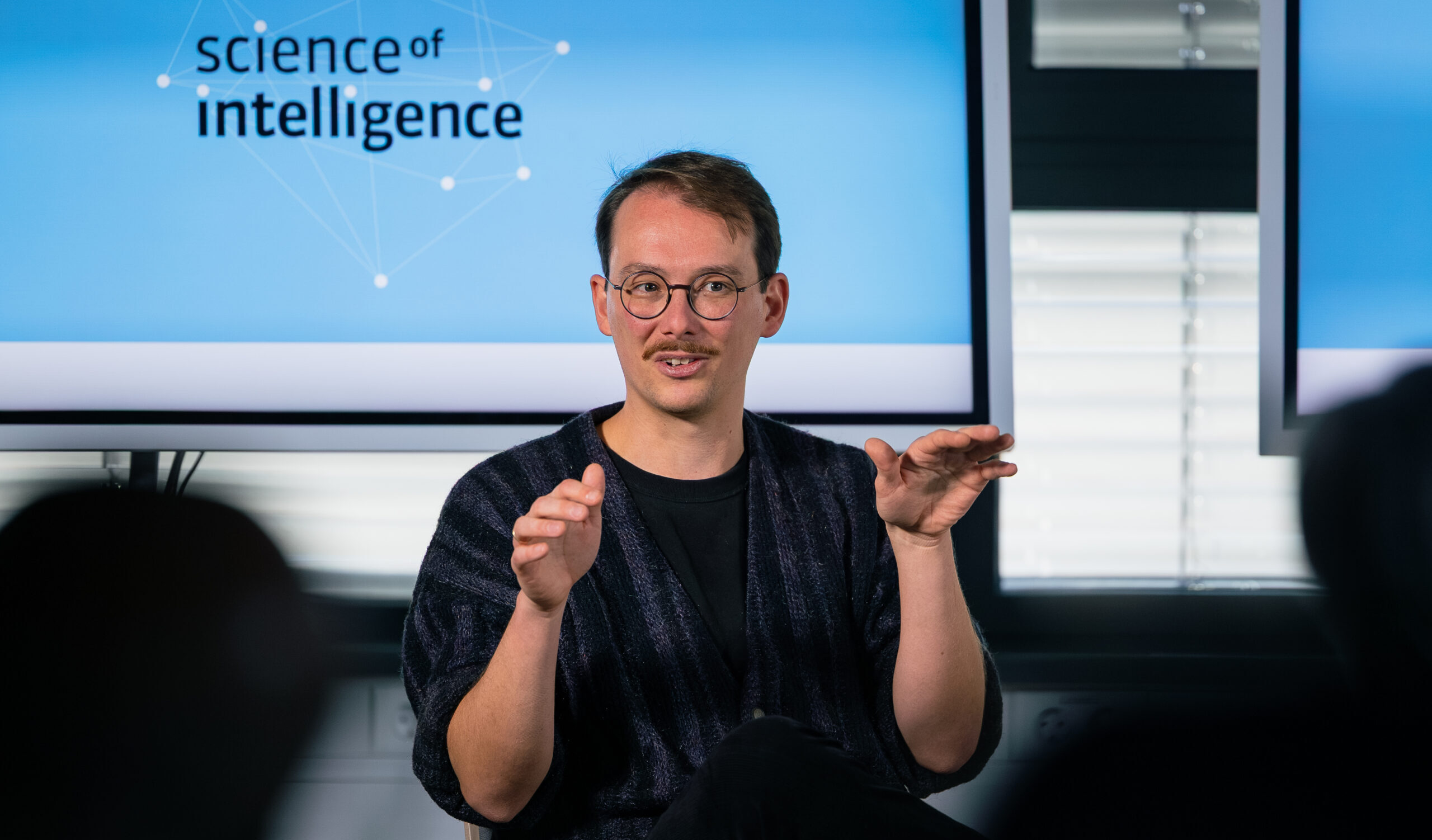
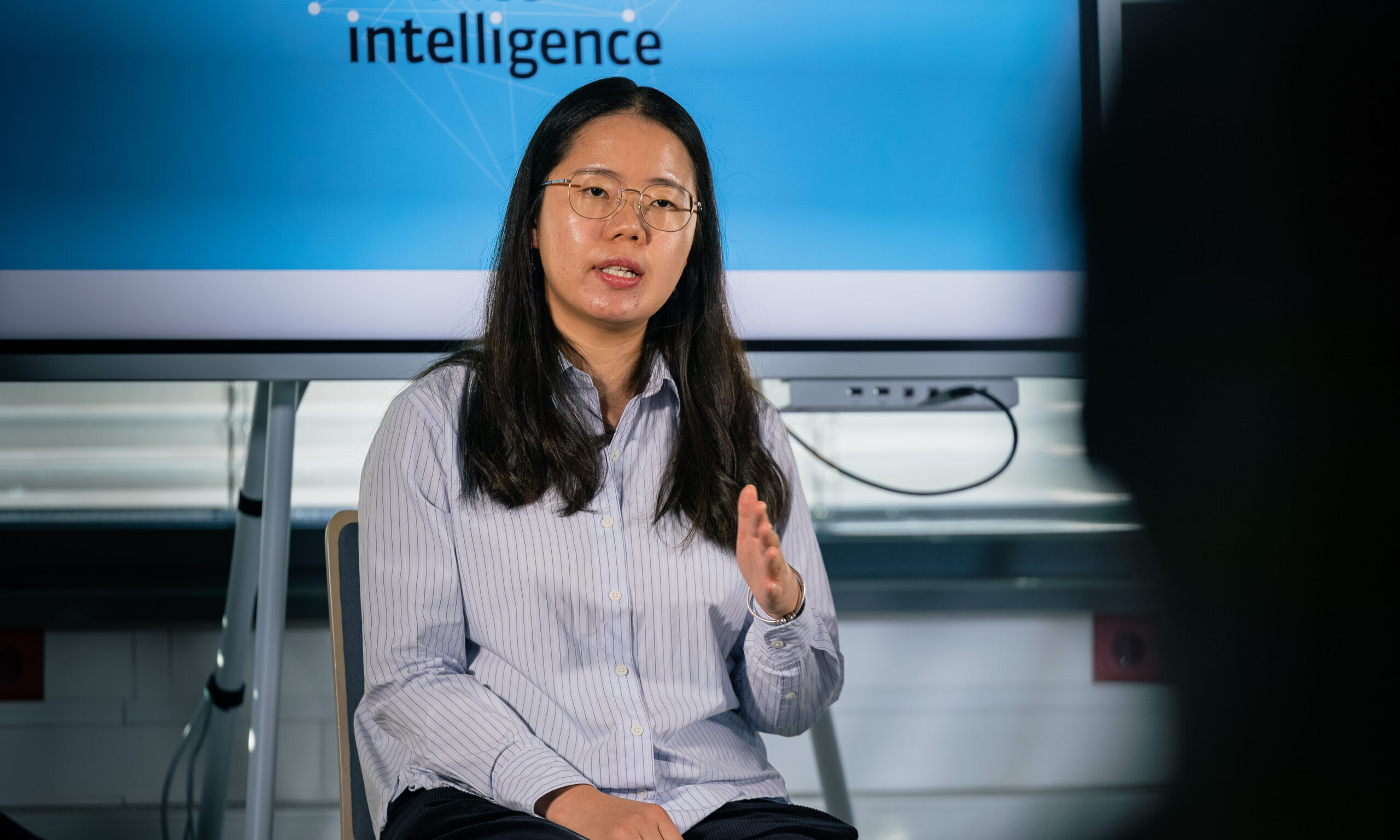
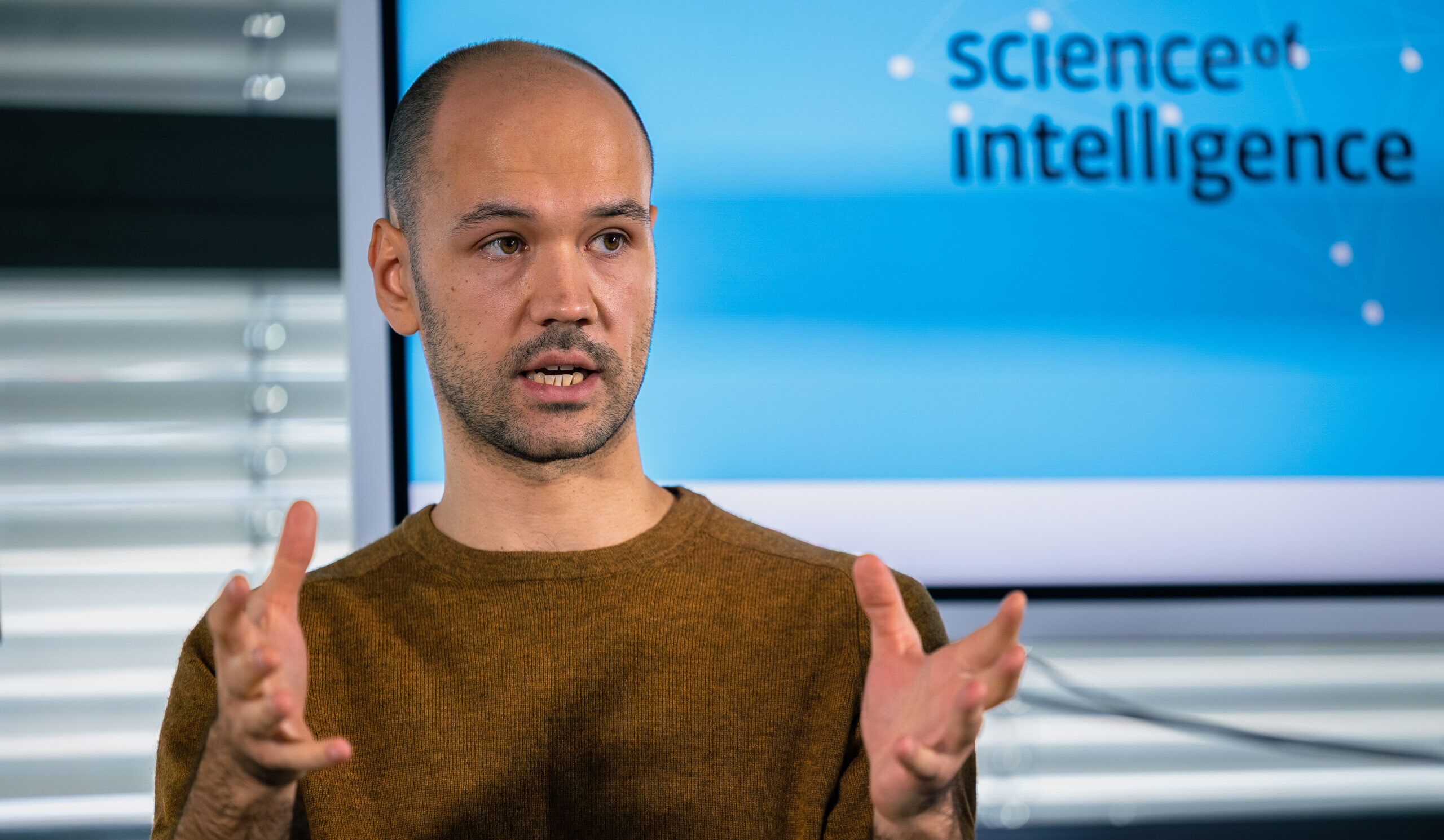
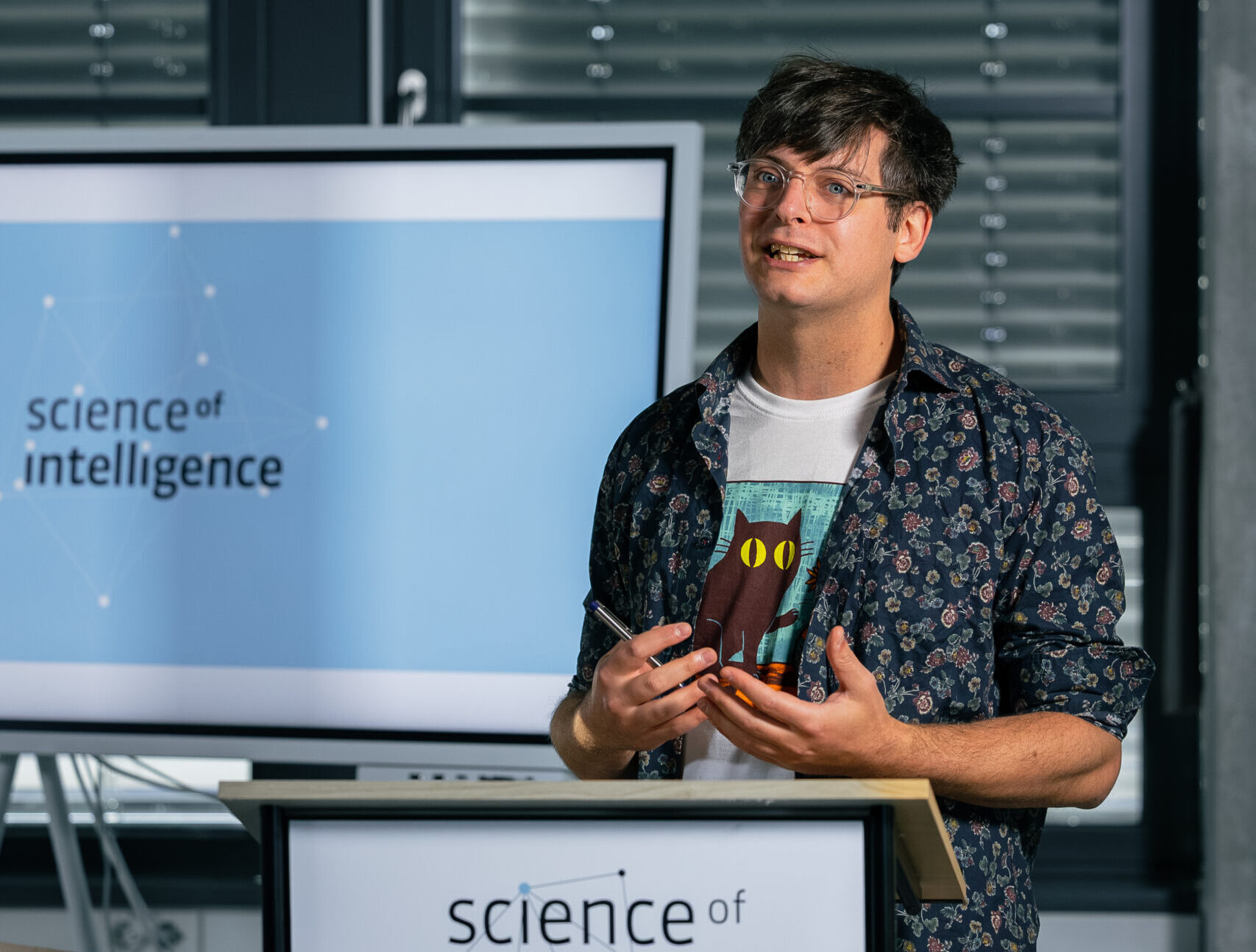
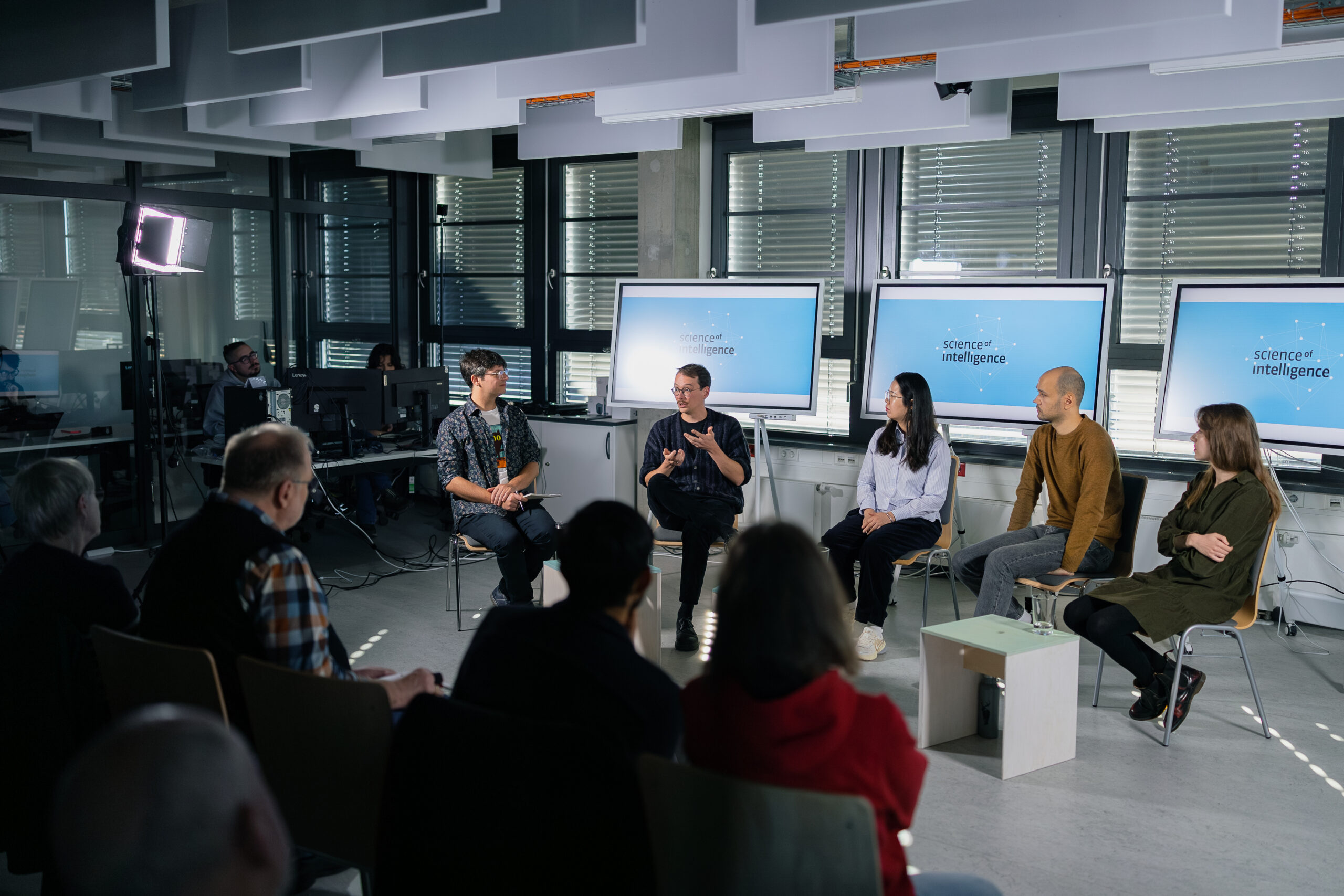
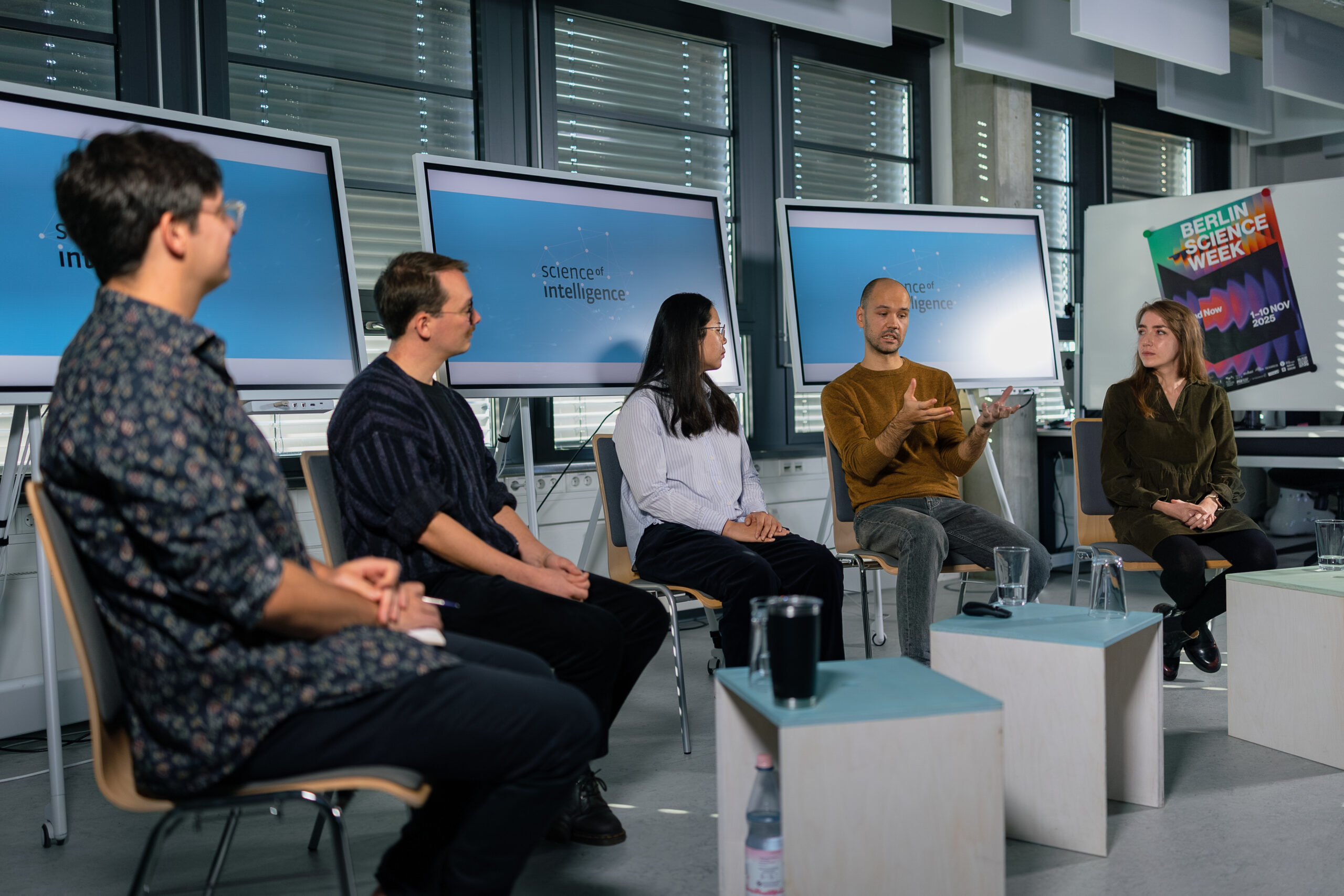
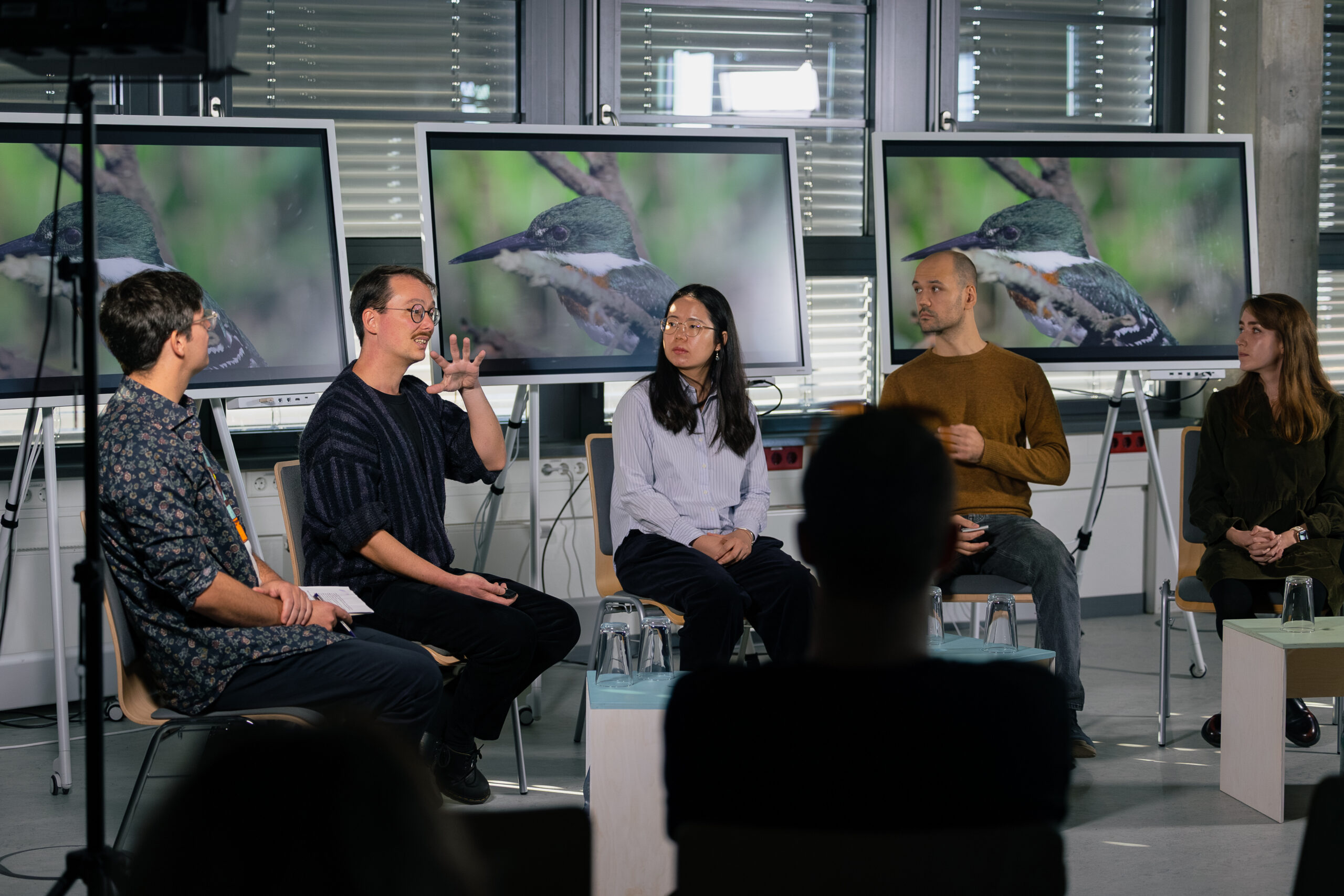
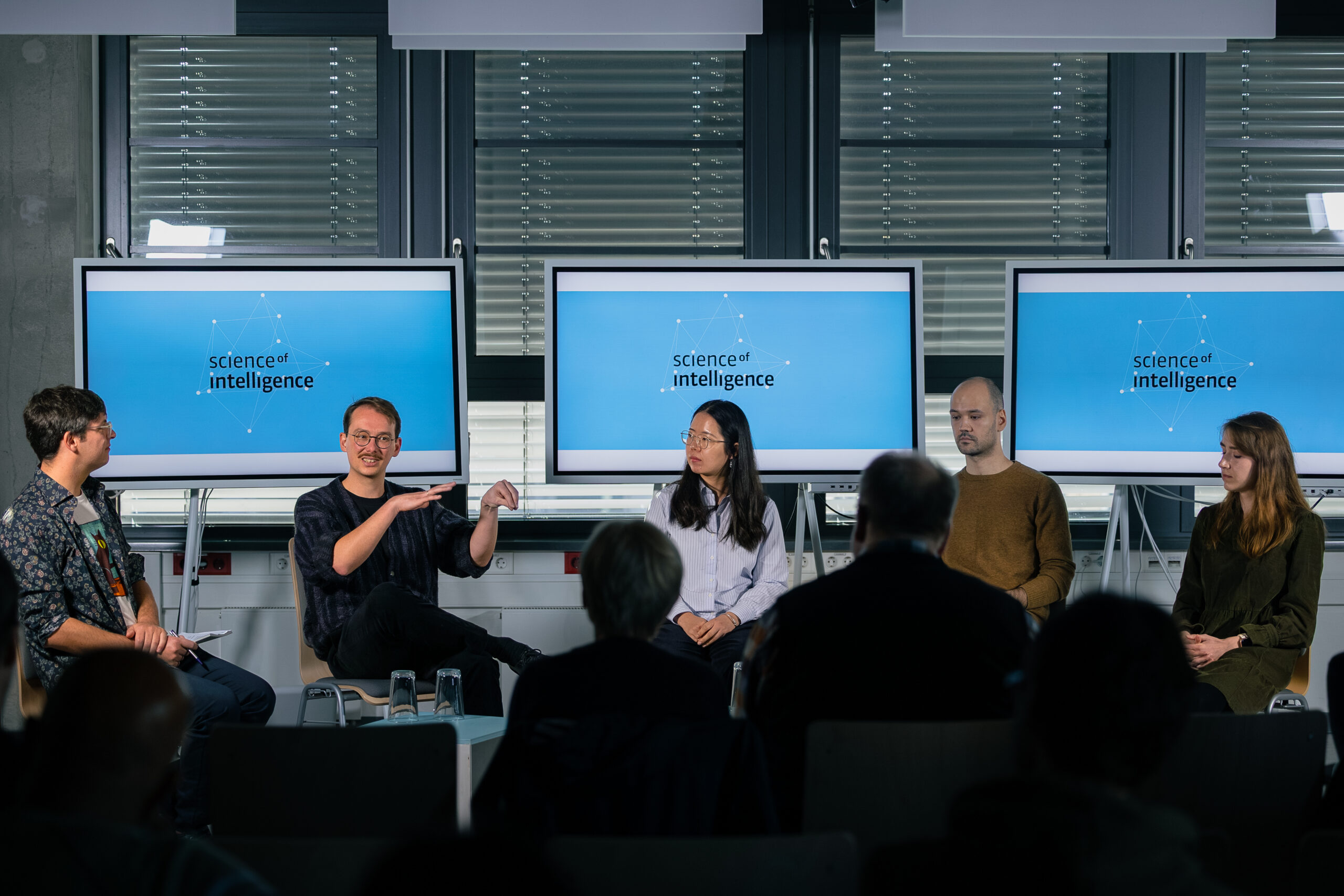
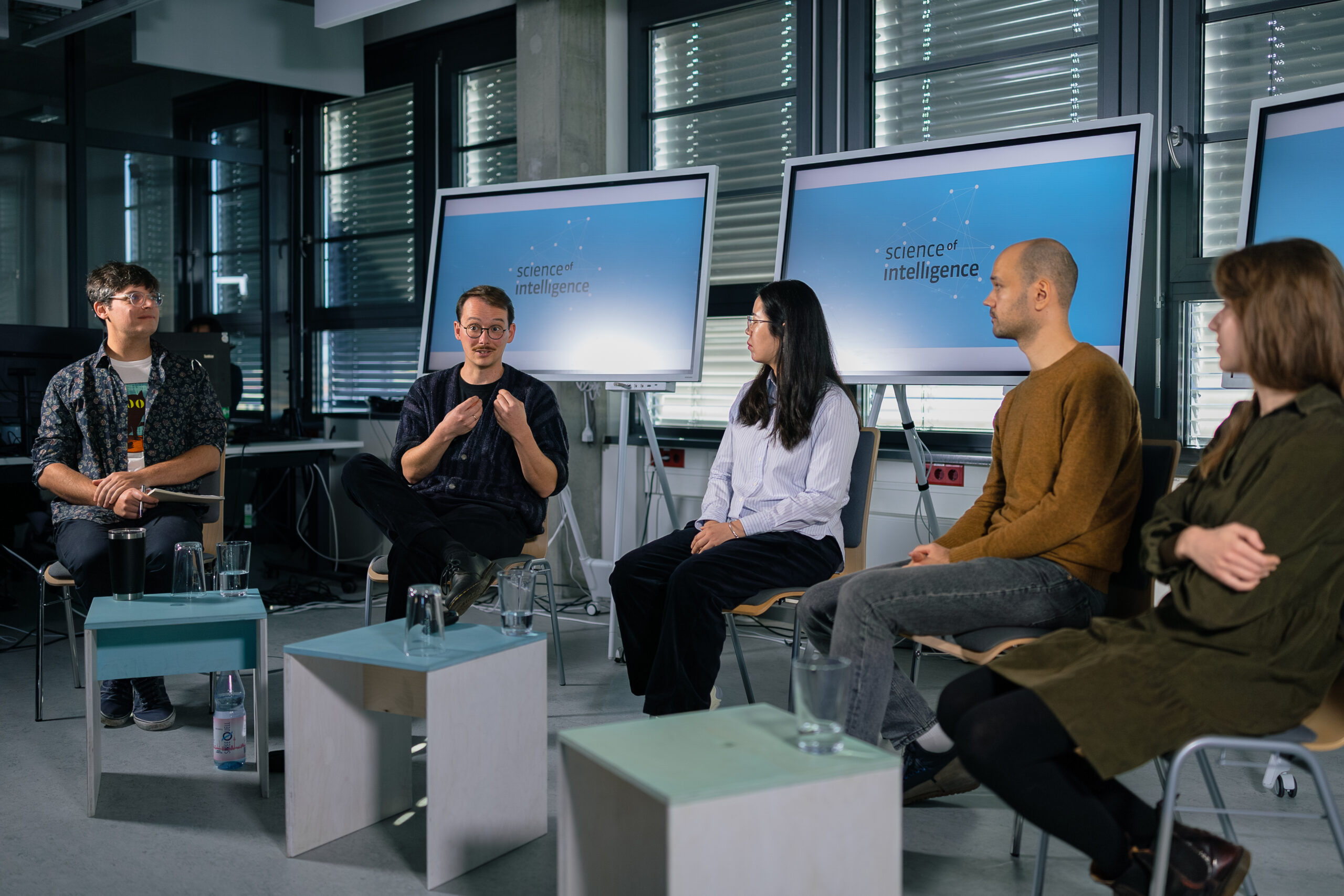
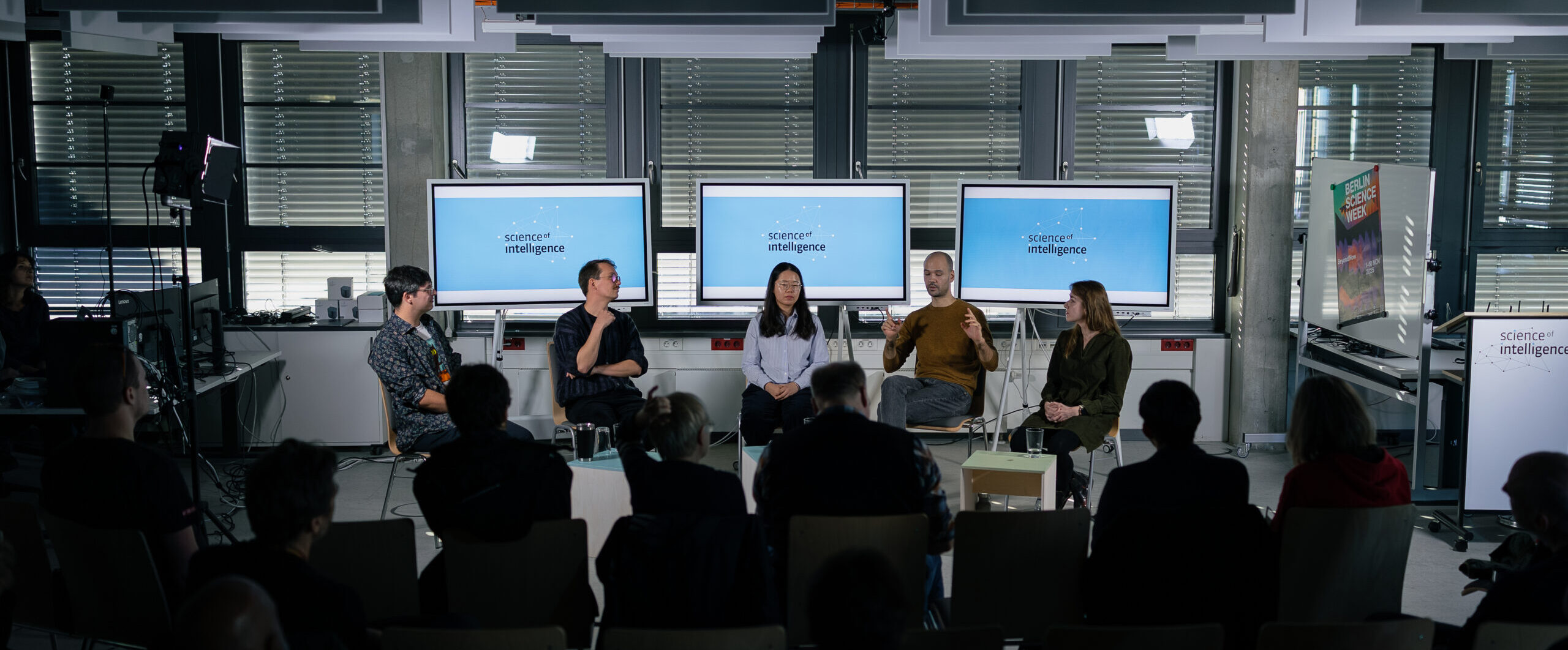
Computer scientist Palina Bartashevich opened the event with a public talk that set the conceptual frame and joined the following panel discussion with philosopher Marten Kaas, computational cognitive scientist Valerii Chirkov, physicist Yunus Sevinchan, and swarm roboticist Yating Zheng.  Together, they discussed collective intelligence across natural systems, artificial swarms, and human societies, focusing on how groups solve problems through interaction.

Intelligence between minds

Palina opened by challenging an ingrained image of intelligence as something that happens inside a single head. “We often imagine intelligence as an individual planning moves ahead, like in a chess game,” she said. “But when we look at natural systems, we see “intelligence” emerging from interactions.”

From ant colonies to bird flocks, she argued, highly coordinated behavior can arise without central control. “No single ant understands the whole colony, but collectively they solve complex problems,” she told the audience. “So maybe intelligence doesn’t only happen inside a single brain. Maybe it also happens between individuals—in their connections, interactions, and shared information. That’s what we call collective intelligence.”
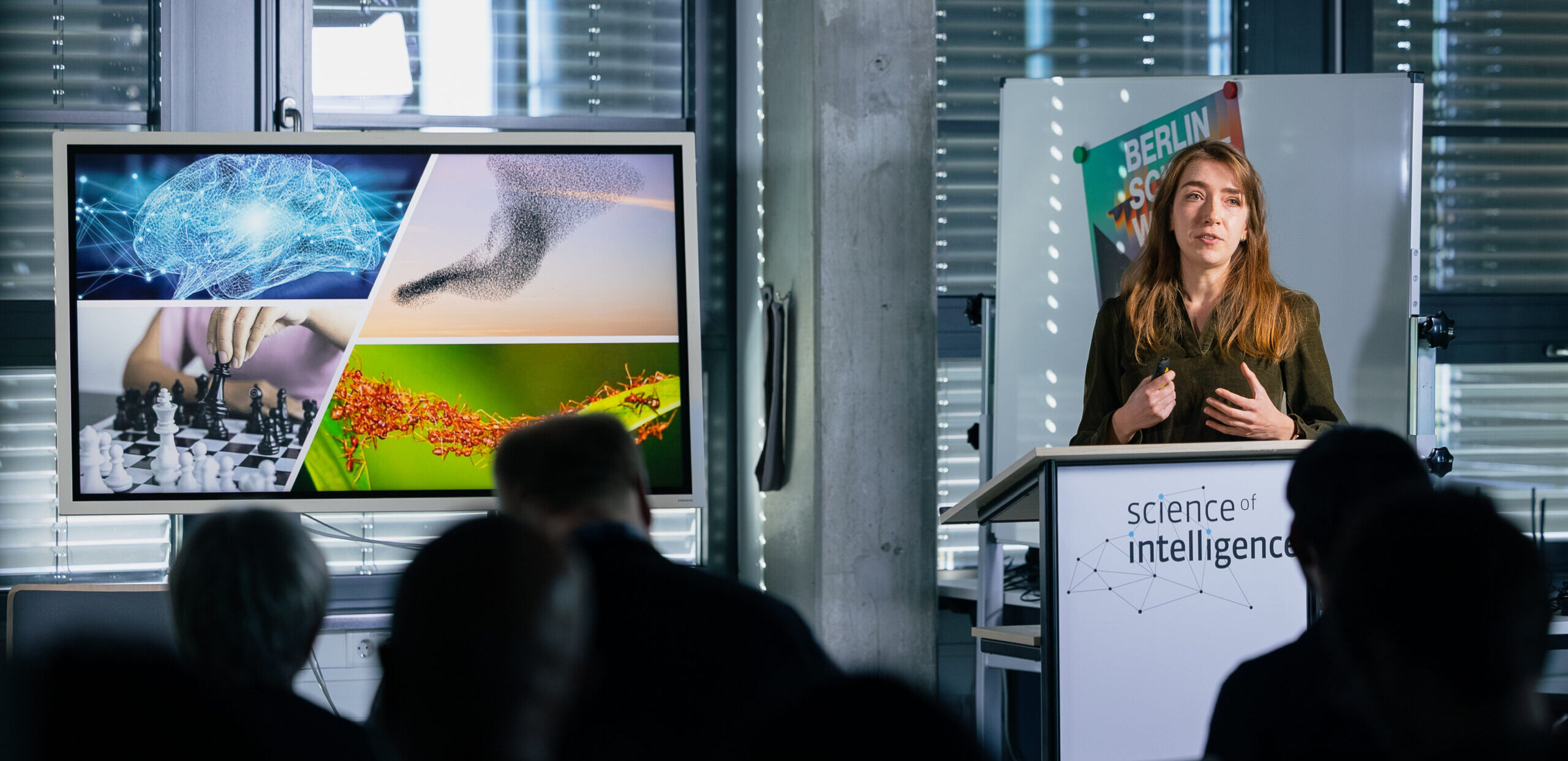
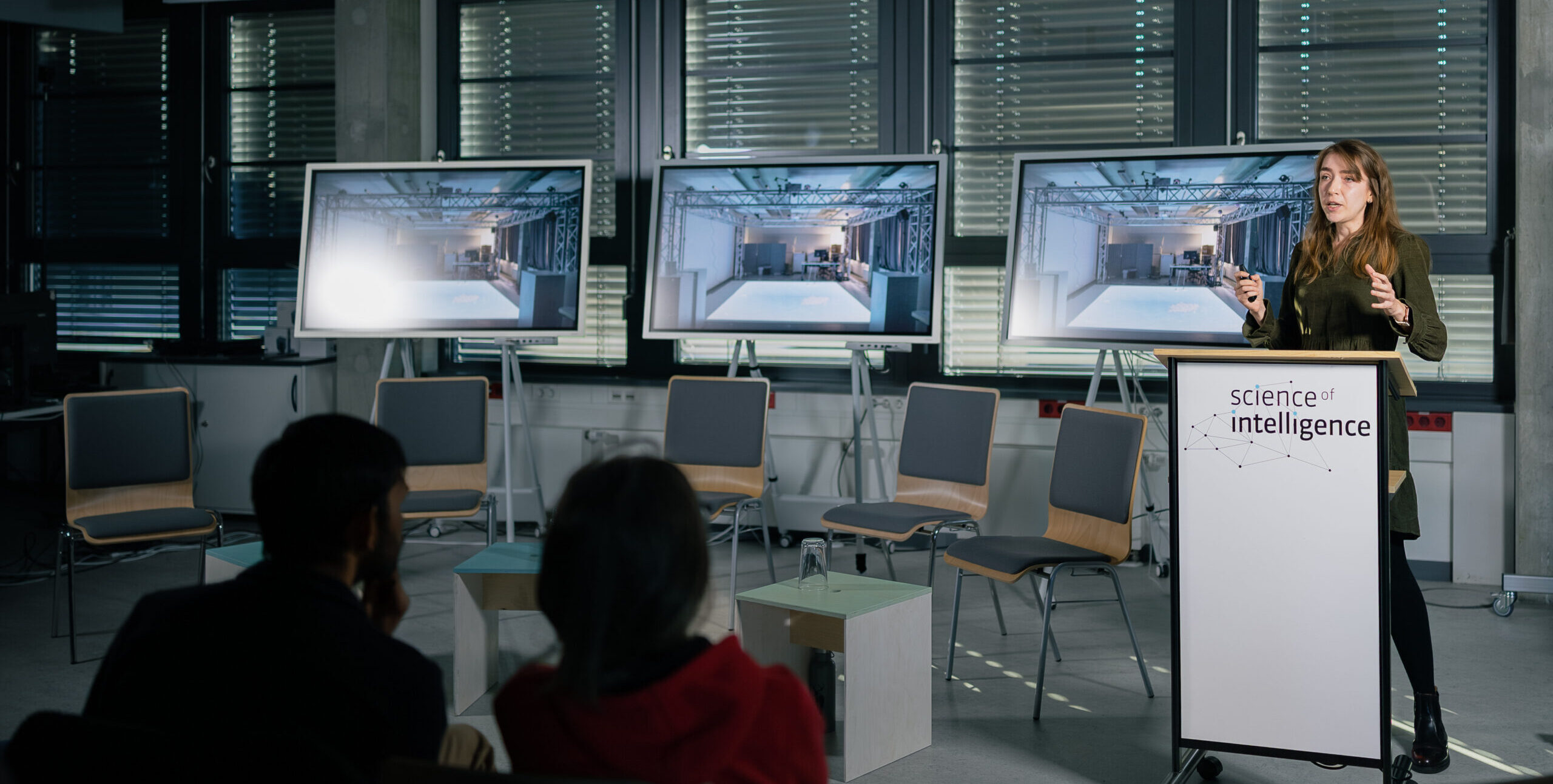
She introduced the principle of emergence, how simple local interactions can produce complex group behavior, and highlighted the properties that make such systems powerful: scalability, robustness, and flexibility. These features, she explained, allow collectives to adapt even when individuals fail or conditions change.

To ground theory in reality, Palina took the audience to the open waters of the Pacific. Drone footage from her group’s fieldwork on hunting marlin showed predators and prey locked in rapid, coordinated motion, unfolding collective strategies in real time. “We study how prey escape and how predators attack,” she said, “to understand which principles give rise to intelligent behavior at the group level.”

She concluded by presenting SCIoI’s spatially augmented reality platform, which projects computational swarm models into physical space, allowing humans and robots to interact with them directly. “It lets us bring models out of the computer and into the real world,” she explained, turning abstract theory into something observable, testable, and tangible.

A collective brain

After questions from the audience, Marten invited the panelists to discuss: What is collective intelligence for you, and why does it matter?

For Yunus, who studies fish in extreme environments, the answer lies in function. He described his work on sulphur mollies in Mexico, which evade birds by diving away in tightly coordinated groups. “For me, collective intelligence starts with this emergent group-level process of perceiving a threat and responding to it,” he said. “In this case, it has a clear biological function. That’s definitely an example of intelligent behaviour.”

Using computer models, Yunus reconstructs how information spreads through the school and how a local perception becomes a collective decision. “I believe we can learn something more general about the mechanisms that allow collective-level processes to emerge,” he added.

From biology, the discussion moved to robotics. Yating, who works in bio-inspired swarm robotics, emphasized that collective intelligence is not just observed, it can be engineered. “In swarm robotics, a large number of simple robots can self-organise and coordinate to solve tasks that a single robot cannot,” she said. Her research on collective shepherding shows how one swarm can guide another, translating natural principles into artificial systems. “The key is creating the right conditions for coordination,” she noted.

Valerii broadened the perspective further. “It’s the circumstances that create collective intelligence,” he argued. “We observe it in different ways and in different contexts.” Intelligence at the group level, he suggested, depends as much on environmental constraints and interaction structures as on the abilities of individuals.

When is a collective intelligent?

A recurring theme throughout the panel was decentralization. Who decides in a collective? Often, the answer is: no one in particular. Leadership can emerge, but rarely in the form of a fixed commander. As Marten put it, a collective can resemble a kind of “distributed brain,” where intelligence arises from the relationships between parts rather than from any single component.

At the same time, the panel resisted idealizing collectives. Not all group behavior is intelligent. Under certain conditions, the same dynamics that enable coordination can produce what the speakers called “collective stupidity.” Palina summarized the point succinctly: “Collective behaviour only becomes intelligent when it serves a function. The intelligence of the group depends on the constraints of individuals and the external circumstances.”

The discussion also turned to modeling: how researchers choose between different computational representations of collective systems, and how difficult it remains to identify universal principles. “A single equation for collective intelligence would be a dream,” one panelist remarked. For now, understanding emerges from the interplay of fieldwork, theory, and simulation.

Rethinking intelligence

By the end of the session, one message was clear: intelligence is not confined to brains, algorithms, or machines taken in isolation. It can arise between agents, through interaction, information exchange, and shared constraints. From marlins hunting in groups to fish schools evading predators and robot swarms solving complex tasks, collective intelligence offers a new lens on what it means to think and act in a complex world.

In the spirit of “Beyond Now”, SCIoI’s contribution to Berlin Science Week looked to the future, showing how research on collective behavior could transform the way we understand intelligence. As science confronts increasingly complex social, ecological, and technological systems, the ability to grasp how intelligence emerges from many may become one of its most powerful tools.

Photocredit: ©SCIoI/Kevin Fuchs


Research

An overview of our scientific work

See our Research Projects