Let the body do some of the thinking
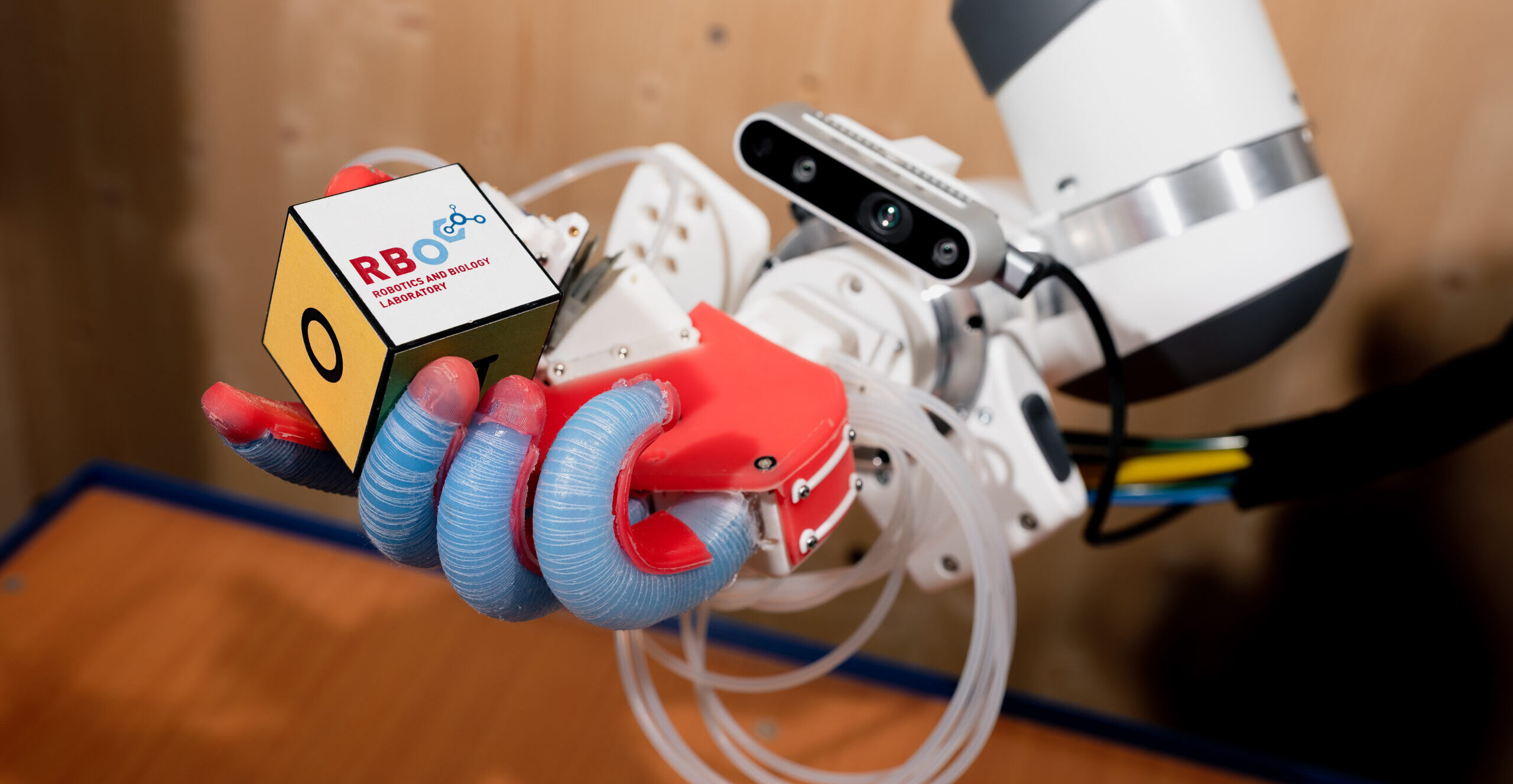
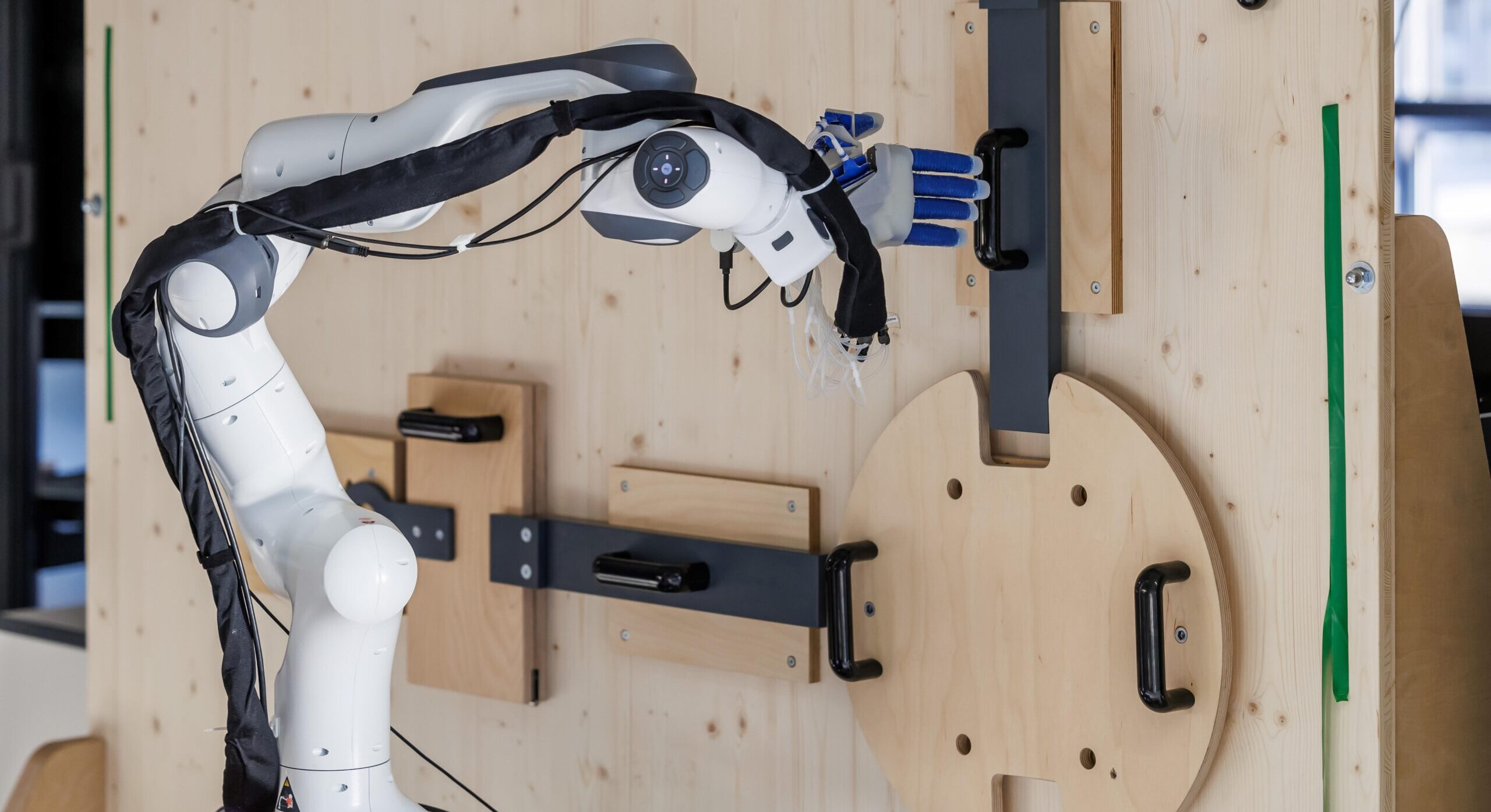
The hand had seven actuators, grouped into only four actuation channels for the grasping experiments. And yet the final postures it could produce were considerably richer than those four dimensions of control would suggest. The “missing” complexity came from the interaction between hand and object. When the soft fingers make contact with an object, they deform and wrap around its surface as they adapt to differences in shape and position. A relatively coarse control command can therefore produce a much more specific final grasp because the mechanics of the hand help complete the movement.
This was one of the central arguments of the paper: Raphael and Oliver found that the dimensionality of the resulting grasp postures was greater than the dimensionality of the hand’s control. The idea that grasping behavior can have a lower-dimensional control structure was not new and had already been explored in human hands, notably in work by Marco Santello and others. What Raphael and Oliver showed was how this could play out in a highly compliant robotic hand. Their interpretation was that compliant interaction with the object generated part of this additional variability. In other words, while the body was executing a command, it was also participating in the solution.
This seems like a simple shift in perspective, but it resonates strongly with how we think about intelligence at SCIoI. Intelligent behavior does not necessarily emerge from a controller specifying every detail in advance. Instead, complexity can sometimes be reduced by exploiting the structure of the body, the environment, and especially the interaction between them. Simply put: A hand does not need to calculate every millimeter of an object’s geometry if its fingers can adapt to it.
A different idea of dexterity
The RBO Hand 2 was an exercise in making robots softer, but its design, more importantly, challenged the idea that robustness and dexterity necessarily pull in opposite directions. Compliance had already made robotic grasping more forgiving. A soft hand can tolerate uncertainty in where an object is positioned and can also absorb impacts. It can adjust when reality does not quite match the model.
But the RBO Hand 2 showed that these qualities did not have to come at the expense of versatility. On the contrary, the authors argued that passive compliance might actually help produce dexterous behavior. They were careful about how far they took that conclusion. Some of the paper’s analysis relied on an assumption that the dimensionality of human and robotic grasp postures was comparable, and the authors explicitly noted that stronger evidence would be needed before drawing definitive conclusions.
That caution was important, but so was the direction the work pointed toward: Perhaps sophisticated behavior does not always require sophisticated control. Perhaps part of what appears to be intelligence at the level of behavior can emerge from the right relationship between morphology, control, and environment.
From RBO Hand 2 to the questions we ask today
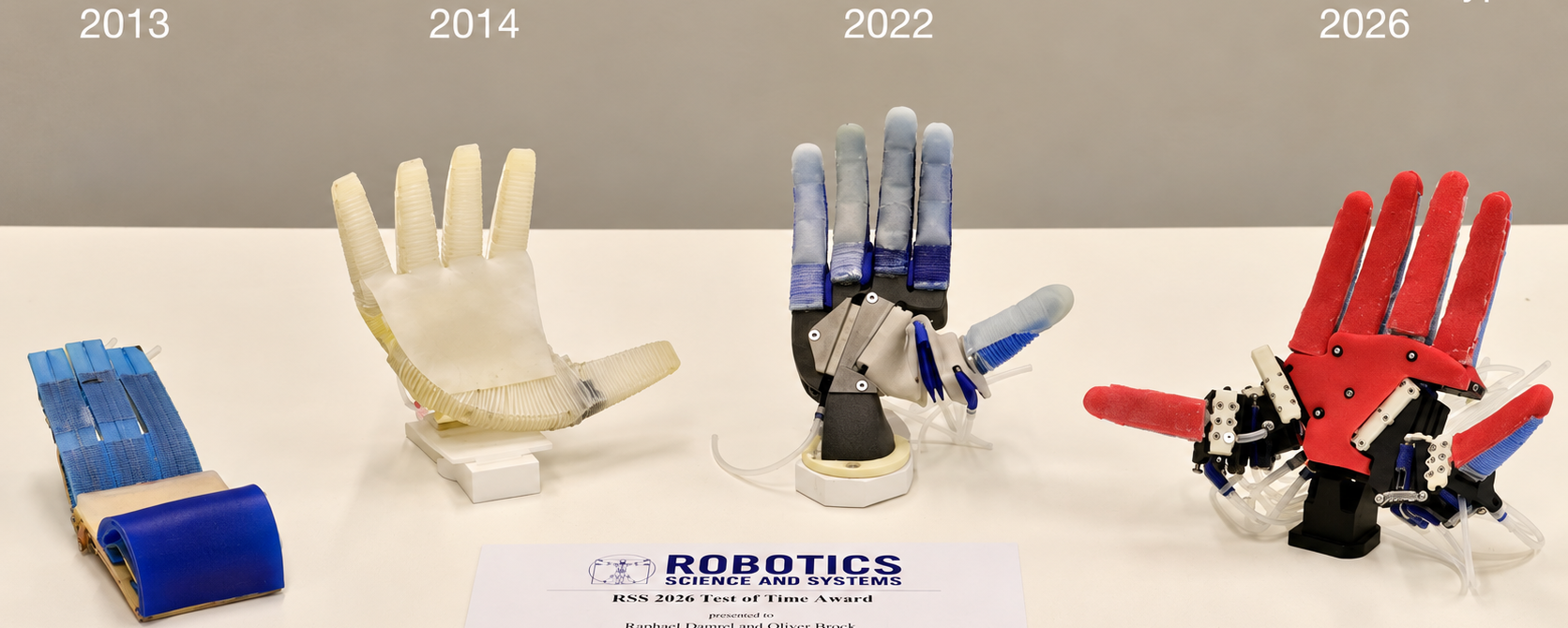
This idea did not end with this particular hand but became part of a longer trajectory in Oliver’s research on soft and embodied robotic manipulation, from the first RBO Hand through the RBO Hand 2 and RBO Hand 3, which was mainly worked on by Steffen Puhlmann from Oliver’s Robotics and Biology Laboratory (RBO), to current prototypes. And the questions behind it became part of something larger too.