Integrating the cognitive and collective behavior perspective using Virtual Reality (VR)
©SCIoI
Behavioral contagion determines how behavior spreads in an infection-like manner between individuals, examples are aggressive behavior in a violent protest or escape response of sheep or prey agents to the intervention of a shepherd or a predator. Behavioral contagion has been investigated in different disciplines such as social and cognitive psychology, sociology, biology and computational modelling. In the domain of collective behavior, behavioral contagion was primarily investigated from a birds-eye perspective to determine the behavioral dynamics of the group, typically assuming strongly idealized social interactions.
However, the question arises whether such an approach is sufficient to predict the social dynamics in situations where individual decisions are more complex and cognitively demanding. These more complex decision processes have been studied from the cognitive perspective in experimental research on social conformity, and social contagion. Such a perspective can easily deal with more complex constraints on individual behavior and can model these constraints on individual decisions.
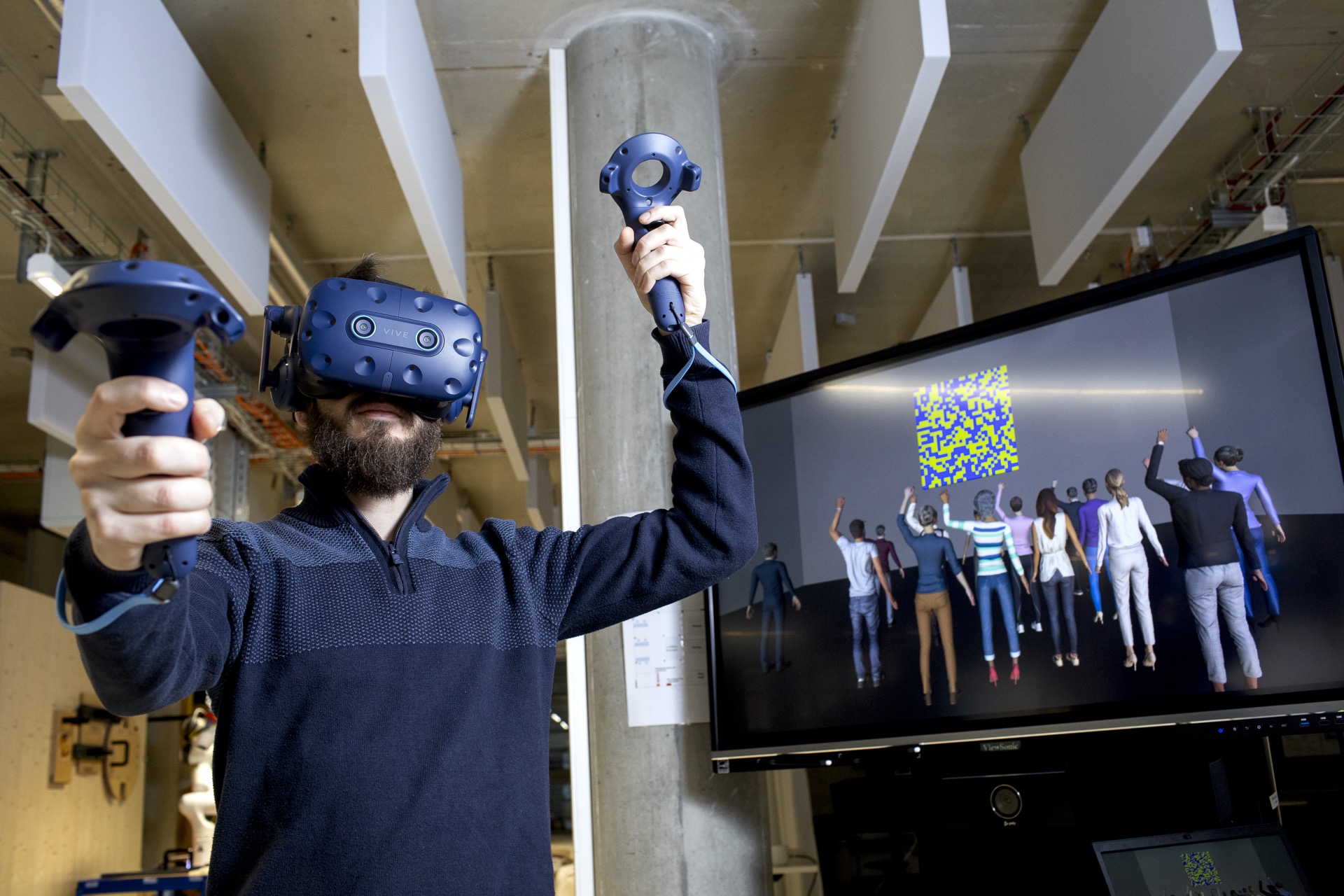
The cognitive approach has usually neglected complex group dynamics. In the current project we intend to merge the cognitive and collective behavior perspectives on behavioral contagion with the primary goal to develop innovative synthetic models of group and individual behavior. We plan to investigate the interaction of individual decision processes and group dynamics in Virtual Reality (VR) experiments where simulations of the group dynamics are implemented in a virtual group of artificial agents.
VR allows to investigate complex behavioral interactions between participant and the virtual group under controlled experimental conditions. In three work packages we will develop an experimental environment in VR that allows to simulate group dynamics of a virtual group (objective 1), map out proximate mechanisms at the individual level that underlie behavioral contagion such as selective attention, motor contagion and global/local group influences of different group sizes, (objective 2). We will parameterize the individual decision processes and implement these decision models in artificial agents (objective 3). Then we will investigate the group dynamics that evolve from the interaction of these artificial agents (objective 4) and compare the behavior of artificial and human agents (objective 5). Finally, we will investigate how artificial and human agents respond to more complex subgroup dynamics that evolve when the group is confronted with intervening agents that try to systematically influence the behavior of the group (objective 6).
Related Publications +
6984777
proj042
1
apa
50
creator
desc
year
20218
https://www.scienceofintelligence.de/wp-content/plugins/zotpress/
%7B%22status%22%3A%22success%22%2C%22updateneeded%22%3Afalse%2C%22instance%22%3Afalse%2C%22meta%22%3A%7B%22request_last%22%3A0%2C%22request_next%22%3A0%2C%22used_cache%22%3Atrue%7D%2C%22data%22%3A%5B%7B%22key%22%3A%22LPXG8E32%22%2C%22library%22%3A%7B%22id%22%3A6984777%7D%2C%22meta%22%3A%7B%22creatorSummary%22%3A%22Karimian%20et%20al.%22%2C%22parsedDate%22%3A%222025%22%2C%22numChildren%22%3A1%7D%2C%22bib%22%3A%22%26lt%3Bdiv%20class%3D%26quot%3Bcsl-bib-body%26quot%3B%20style%3D%26quot%3Bline-height%3A%202%3B%20padding-left%3A%201em%3B%20text-indent%3A-1em%3B%26quot%3B%26gt%3B%5Cn%20%20%26lt%3Bdiv%20class%3D%26quot%3Bcsl-entry%26quot%3B%26gt%3BKarimian%2C%20M.%2C%20Reeh%2C%20F.%2C%20Daneshi%2C%20A.%2C%20Brass%2C%20M.%2C%20%26amp%3B%20Romanczuk%2C%20P.%20%282025%29.%20Behavioural%20Contagion%20in%26%23xA0%3BHuman%20and%26%23xA0%3BArtificial%20Multi-agent%20Systems%3A%20A%20Computational%20Modeling%20Approach.%20In%20O.%20Brock%20%26amp%3B%20J.%20Krichmar%20%28Eds.%29%2C%20%26lt%3Bi%26gt%3BFrom%20Animals%20to%20Animats%2017%26lt%3B%5C%2Fi%26gt%3B%20%28pp.%20145%26%23x2013%3B156%29.%20Springer%20Nature%20Switzerland.%20%26lt%3Ba%20class%3D%26%23039%3Bzp-DOIURL%26%23039%3B%20href%3D%26%23039%3Bhttps%3A%5C%2F%5C%2Fdoi.org%5C%2F10.1007%5C%2F978-3-031-71533-4_11%26%23039%3B%26gt%3Bhttps%3A%5C%2F%5C%2Fdoi.org%5C%2F10.1007%5C%2F978-3-031-71533-4_11%26lt%3B%5C%2Fa%26gt%3B%26lt%3B%5C%2Fdiv%26gt%3B%5Cn%26lt%3B%5C%2Fdiv%26gt%3B%22%2C%22data%22%3A%7B%22itemType%22%3A%22conferencePaper%22%2C%22title%22%3A%22Behavioural%20Contagion%20in%5Cu00a0Human%20and%5Cu00a0Artificial%20Multi-agent%20Systems%3A%20A%20Computational%20Modeling%20Approach%22%2C%22creators%22%3A%5B%7B%22creatorType%22%3A%22author%22%2C%22firstName%22%3A%22Maryam%22%2C%22lastName%22%3A%22Karimian%22%7D%2C%7B%22creatorType%22%3A%22author%22%2C%22firstName%22%3A%22Fabio%22%2C%22lastName%22%3A%22Reeh%22%7D%2C%7B%22creatorType%22%3A%22author%22%2C%22firstName%22%3A%22Asieh%22%2C%22lastName%22%3A%22Daneshi%22%7D%2C%7B%22creatorType%22%3A%22author%22%2C%22firstName%22%3A%22Marcel%22%2C%22lastName%22%3A%22Brass%22%7D%2C%7B%22creatorType%22%3A%22author%22%2C%22firstName%22%3A%22Pawel%22%2C%22lastName%22%3A%22Romanczuk%22%7D%2C%7B%22creatorType%22%3A%22editor%22%2C%22firstName%22%3A%22Oliver%22%2C%22lastName%22%3A%22Brock%22%7D%2C%7B%22creatorType%22%3A%22editor%22%2C%22firstName%22%3A%22Jeffrey%22%2C%22lastName%22%3A%22Krichmar%22%7D%5D%2C%22abstractNote%22%3A%22This%20study%20employs%20a%20modified%20formulation%20of%20the%20second-order%20Drift-Diffusion%20model%20to%20investigate%20how%20the%20interaction%20between%20environmental%20and%20social%20cues%20influences%20individual%20decision-making%20in%20a%20binary%20choice%20scenario.%20Environmental%20information%20is%20represented%20as%20stochastic%20cues%2C%20often%20biased%20towards%20one%20of%20the%20choices%2C%20while%20social%20information%20is%20conveyed%20through%20signals%20from%20a%20group%20of%20identical%20agents%20making%20random%20decisions.%20The%20model%20incorporates%20simplified%20human%20perceptual%20characteristics%20via%20a%20visual%20network%20of%20social%20interactions%2C%20which%20considers%20perceptual%20limitations%20due%20to%20physical%20distances%20and%20visual%20occlusions.%20Model%20parameters%20and%20assumptions%20are%20informed%20by%20an%20ongoing%20behavioural%20experiment%20on%20behavioural%20contagion%2C%20conducted%20in%20human%20and%20artificial%20multi-agent%20systems%20using%20virtual%20reality.%20The%20stochastic%20evolution%20of%20decision%20states%20in%20response%20to%20environmental%20and%20social%20input%20mirrors%20the%20behavioural%20choices%20of%20human%20participants%2C%20who%20respond%20to%20stimuli%20presented%20in%20the%20virtual%20reality%20environment%20and%20social%20cues%20from%20a%20group%20of%20virtual%20agents.%20Manipulating%20the%20size%20and%20density%20of%20the%20group%20revealed%20that%20larger%20group%20sizes%20and%20lower%20densities%20lead%20to%20greater%20alignment%20of%20individual%20decisions%20with%20social%20cues%2C%20accompanied%20by%20shorter%20and%20more%20homogeneous%20response%20times%20and%20reduced%20accuracy.%20These%20findings%20afford%20preliminary%20insights%20into%20the%20behavioural%20experiment.%20With%20reciprocal%20informative%20exchange%20from%20experimental%20findings%2C%20this%20study%20would%20contribute%20to%20enhanced%20realism%20in%20future%20steps.%22%2C%22proceedingsTitle%22%3A%22From%20Animals%20to%20Animats%2017%22%2C%22conferenceName%22%3A%22SAB%202024%22%2C%22date%22%3A%222025%22%2C%22eventPlace%22%3A%22%22%2C%22DOI%22%3A%2210.1007%5C%2F978-3-031-71533-4_11%22%2C%22ISBN%22%3A%22978-3-031-71533-4%22%2C%22citationKey%22%3A%22%22%2C%22url%22%3A%22%22%2C%22ISSN%22%3A%22%22%2C%22language%22%3A%22en%22%2C%22collections%22%3A%5B%5D%2C%22dateModified%22%3A%222026-08-20T06%3A34%3A12Z%22%7D%7D%2C%7B%22key%22%3A%227LV7LWFX%22%2C%22library%22%3A%7B%22id%22%3A6984777%7D%2C%22meta%22%3A%7B%22creatorSummary%22%3A%22Daneshi%20and%20Brass%22%2C%22parsedDate%22%3A%222025-07-16%22%2C%22numChildren%22%3A1%7D%2C%22bib%22%3A%22%26lt%3Bdiv%20class%3D%26quot%3Bcsl-bib-body%26quot%3B%20style%3D%26quot%3Bline-height%3A%202%3B%20padding-left%3A%201em%3B%20text-indent%3A-1em%3B%26quot%3B%26gt%3B%5Cn%20%20%26lt%3Bdiv%20class%3D%26quot%3Bcsl-entry%26quot%3B%26gt%3BDaneshi%2C%20A.%2C%20%26amp%3B%20Brass%2C%20M.%20%282025%29.%20Does%20the%20risk-taking%20behaviour%20of%20a%20group%20influence%20individual%20risk-taking%20behaviour%3F%20%26lt%3Bi%26gt%3BRoyal%20Society%20Open%20Science%26lt%3B%5C%2Fi%26gt%3B%2C%20%26lt%3Bi%26gt%3B12%26lt%3B%5C%2Fi%26gt%3B%287%29%2C%20250200.%20%26lt%3Ba%20class%3D%26%23039%3Bzp-ItemURL%26%23039%3B%20href%3D%26%23039%3Bhttps%3A%5C%2F%5C%2Fdoi.org%5C%2F10.1098%5C%2Frsos.250200%26%23039%3B%26gt%3Bhttps%3A%5C%2F%5C%2Fdoi.org%5C%2F10.1098%5C%2Frsos.250200%26lt%3B%5C%2Fa%26gt%3B%26lt%3B%5C%2Fdiv%26gt%3B%5Cn%26lt%3B%5C%2Fdiv%26gt%3B%22%2C%22data%22%3A%7B%22itemType%22%3A%22journalArticle%22%2C%22title%22%3A%22Does%20the%20risk-taking%20behaviour%20of%20a%20group%20influence%20individual%20risk-taking%20behaviour%3F%22%2C%22creators%22%3A%5B%7B%22creatorType%22%3A%22author%22%2C%22firstName%22%3A%22Asieh%22%2C%22lastName%22%3A%22Daneshi%22%7D%2C%7B%22creatorType%22%3A%22author%22%2C%22firstName%22%3A%22Marcel%22%2C%22lastName%22%3A%22Brass%22%7D%5D%2C%22abstractNote%22%3A%22People%20often%20take%20more%20risks%20when%20in%20groups%20than%20when%20alone%2C%20but%20studying%20group-based%20risk-taking%20can%20be%20logistically%20challenging.%20This%20study%20used%20an%20online%20simulation%20of%20the%20balloon%20analogue%20risk%20task%20featuring%20virtual%20agents%20to%20examine%20how%20the%20presence%20of%20others%20influences%20individual%20decision-making.%20Ninety-nine%20participants%20completed%20160%20trials%20of%20a%20balloon%20inflation%20task%20while%20situated%20in%20a%20virtual%20room%20with%20five%20computer-generated%20agents.%20On%20each%20trial%2C%20a%20varying%20number%20of%20agents%20also%20inflated%20balloons%20and%20displayed%20either%20risk-taking%20or%20risk-avoiding%20behaviour.%20Results%20showed%20that%20participants%5Cu2019%20risk-taking%20generally%20increased%20as%20more%20agents%20co-inflated%2C%20and%20this%20effect%20was%20stronger%20when%20the%20agents%20behaved%20riskily%2C%20consistent%20with%20the%20risky%20shift%20phenomenon.%20These%20findings%20demonstrate%20the%20utility%20of%20virtual%20simulations%20for%20exploring%20social%20influences%20on%20risk-related%20decisions.%22%2C%22date%22%3A%222025-07-16%22%2C%22section%22%3A%22%22%2C%22partNumber%22%3A%22%22%2C%22partTitle%22%3A%22%22%2C%22DOI%22%3A%2210.1098%5C%2Frsos.250200%22%2C%22citationKey%22%3A%22%22%2C%22url%22%3A%22https%3A%5C%2F%5C%2Fdoi.org%5C%2F10.1098%5C%2Frsos.250200%22%2C%22PMID%22%3A%22%22%2C%22PMCID%22%3A%22%22%2C%22ISSN%22%3A%222054-5703%22%2C%22language%22%3A%22%22%2C%22collections%22%3A%5B%5D%2C%22dateModified%22%3A%222026-08-20T06%3A54%3A35Z%22%7D%7D%5D%7D
Karimian, M., Reeh, F., Daneshi, A., Brass, M., & Romanczuk, P. (2025). Behavioural Contagion in Human and Artificial Multi-agent Systems: A Computational Modeling Approach. In O. Brock & J. Krichmar (Eds.),
From Animals to Animats 17 (pp. 145–156). Springer Nature Switzerland.
https://doi.org/10.1007/978-3-031-71533-4_11
Daneshi, A., & Brass, M. (2025). Does the risk-taking behaviour of a group influence individual risk-taking behaviour?
Royal Society Open Science,
12(7), 250200.
https://doi.org/10.1098/rsos.250200