• Jörg Raisch (Science of Intelligence), “Efficient Consensus over Wireless Channels & and its Use in Traffic Automation Problems”

    PI Lecture
    MAR 2.057

    Consensus algorithms are routinely employed in a variety of multi-agent scenarios. They require that each agent iteratively evaluates a multivariate function of its neighbours’ information states. If a wireless communication channel is used, this is typically implemented through protocols (such as TDMA – Time Division Multiple Access) that avoid superposition of transmitted signals by assigning each transmitter its own
  • Michael Taborsky, “The Evolution of Social Behaviour”

    Thursday Morning Talk

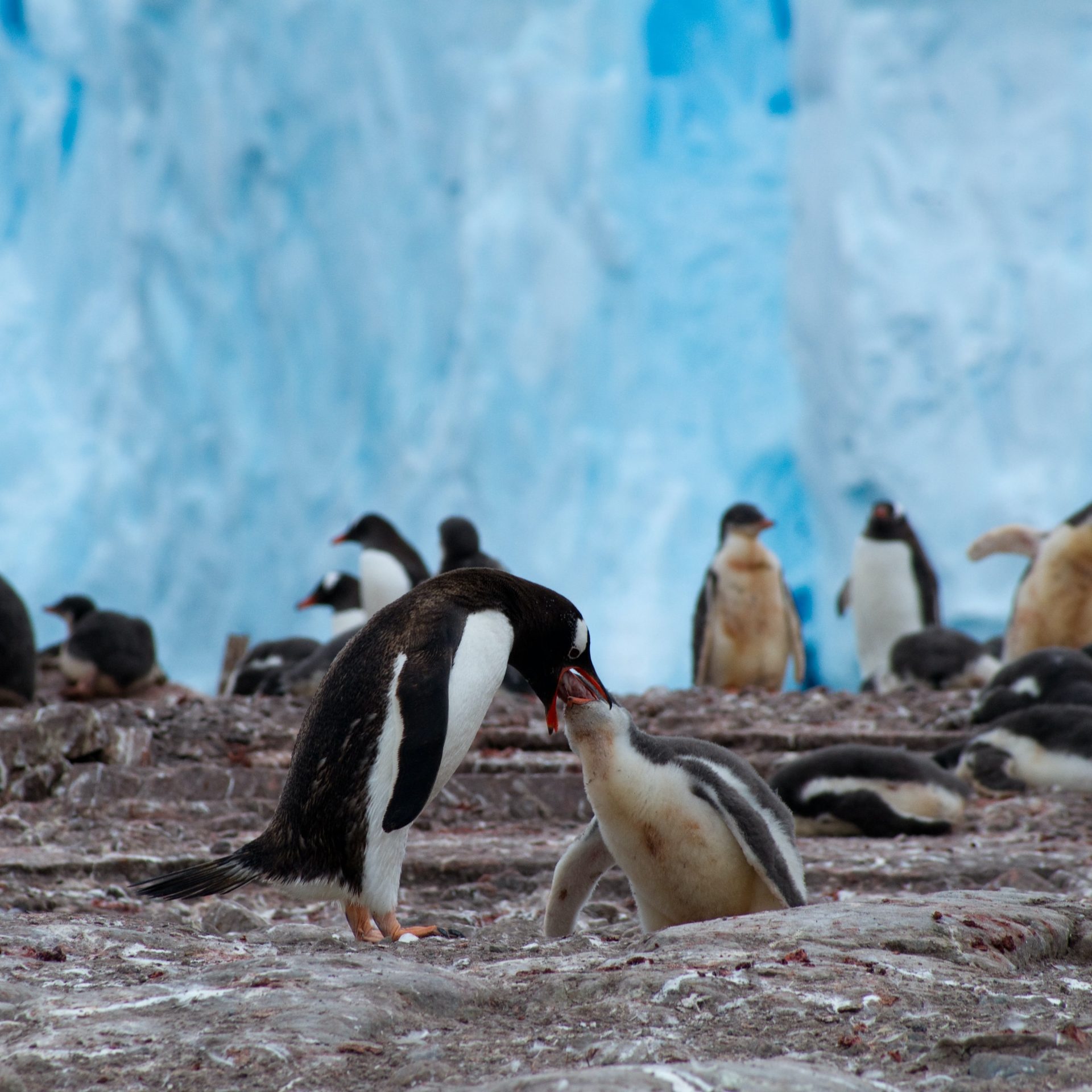
    Abstract: The social structure and behaviour of organisms is highly divergent. How can this stunning diversity in nature be explained? I will argue that a few key principles are responsible for the evolution of social behaviour, with all its simple and complex manifestations. Organisms compete for resources. As survival and reproduction require resources and only

  • Santiago Paternain, “Safe Learning for Dynamical Systems and Control”

    Thursday Morning Talk

    Abstract: Reinforcement learning has shown great success in controlling complex dynamical systems. However, when training a policy, most algorithms only consider a single objective function. While this may suffice in virtual domains, physical systems must satisfy a set of operational constraints, with safety being of crucial importance. It is natural to express these problems as

  • Lisa-Kristin Richter, “Model Training for Facial Recognition of Raccoons”

    Thursday Morning Talk
    MAR 2.057

    Machine learning tools have already been used to identify individual animals such as but not limited to pandas, black bears, cows and dogs. These tools can help to improve the quality of non-invasive wildlife monitoring and enhance the information on individual animal behaviour as well as on behaviour within social networks of the animals (Lynn

  • Olaf Hellwich (Science of Intelligence), “State Vectors of Computer Vision at Time T=Now. Perspectives, Particles and Predictions”

    PI Lecture
    MAR 2.057

    We take varying perspectives to the state of the art in Computer Vision: e.g. from SCIoI, disciplinary and interdisciplinary viewpoints. Sampling from the multi-modal state vector distribution, we inspect currently exciting developments: e.g. the integration of computer vision and language processing, the use of biological principles in synthetic systems, and self supervision. Generalizing from the

  • Science of Intelligence Fair 2023

    For the Public

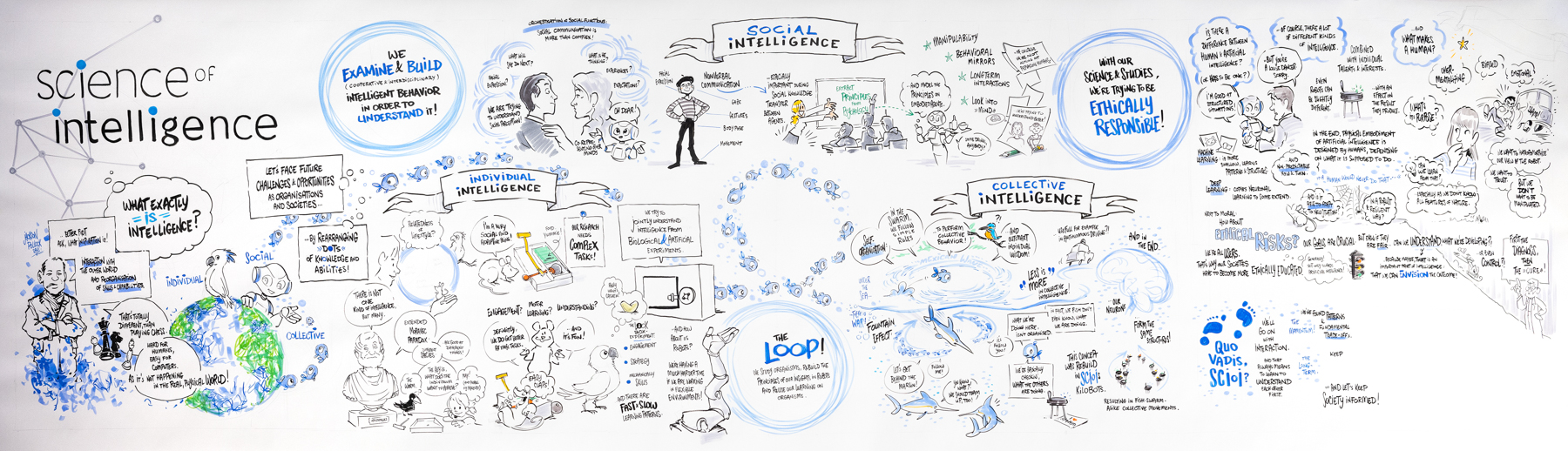
    The first conference and exhibition of the Cluster of Excellence Science of Intelligence (SCIoI) in Berlinwas held in September 2023. Leading experts from science and politics, as well as journalists and the broader public came together to discuss the diverse facets of intelligence research. From individual, social, and collective principles of intelligence to the ethics

  • Conor Heins, “Collective Behavior From Surprise Minimization”

    Thursday Morning Talk
    MAR 2.057

    Abstract:  Collective motion is a familiar sight in nature; groups of distinct, self-propelled individuals appear to move as a coherent whole, exhibiting a rich behavioral repertoire that ranges from directed movement to milling to disordered swarming. Biological collective motion is an emergent phenomenon that is the result of self-organization, whereby macroscopic patterns arise from decentralized,

  • Rasha Abdel Rahman (Science of Intelligence), “How Intelligent Is Visual Perception?”

    PI Lecture
    MAR 2.057

    Abstract: Visual perception is shaped by the input from our physical environment and by expectations derived from our sensory experience with the visual world. But is what we see also influenced by higher cognitive capacities such as memories, language, semantic knowledge or (true or false) beliefs? And if so, what are the consequences on how

  • Jens Krause (Science of Intelligence), “Collective Behaviour and Collective Memory”

    PI Lecture
    MAR 2.057

    Abstract:  The idea that animal groups can have collective memories has been raised a number of times in different contexts. The information centre hypothesis predicts that communal roosts allow for information exchange between individuals so that successful foragers, for example, can be followed by others to promising sites. A different approach to collective memory has

  • Airbound: Sensing Collective Futures

    External Event
    CLB BERLIN Prinzenstraße 84.2, Berlin, Germany

      From molecule to atmosphere: the global climate crisis and the possible futures of our coexistence will be decided by means of air. We are »airbound« – bound through air. How can we create a sense of what is coming? And what will connect us in the future? The exhibition »Airbound« features climate fictions and