-

More details to follow. This talk will take place in person at SCIoI.
|
Monday
|
Tuesday
|
Wednesday
|
Thursday
|
Friday
|
Saturday
|
Sunday
|
|---|---|---|---|---|---|---|
|
0 events,
|
0 events,
|
0 events,
|
1 event,
-
More details to follow. This talk will take place in person at SCIoI. |
0 events,
|
0 events,
|
0 events,
|
|
0 events,
|
0 events,
|
0 events,
|
1 event,
-
Abstract: Robot swarms have the potential to assist us with simpler logistics in persistent missions involving vast scenarios. Robot swarms also promise added resilience to complete their objectives despite unforeseen difficulties. However, current demonstrations of swarm technology in unstructured environments only count on single-digit individuals. That is farther from what one would expect from the |
0 events,
|
0 events,
|
0 events,
|
|
0 events,
|
0 events,
|
0 events,
|
1 event,
-
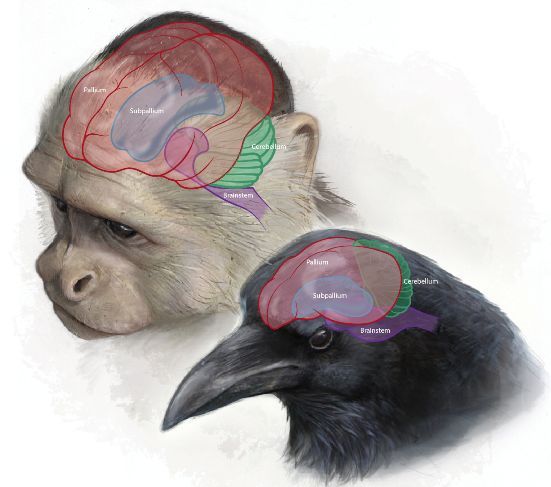
Abstract: Over the last 20 years, it has been shown that birds and mammals are startlingly similar in their cognitive repertoire. Even the most intelligent taxa from each group – great apes and large corvids and parrots – match each other in most domains of cognition. This functional similarity is remarkable considering that birds and |
0 events,
|
0 events,
|
0 events,
|
|
0 events,
|
0 events,
|
0 events,
|
0 events,
|
0 events,
|
0 events,
|
0 events,
|
|
0 events,
|
0 events,
|
0 events,
|
1 event,
-

Abstract: What is a useful skill hierarchy for an autonomous agent? In this talk, we will consider a possible answer based on a graphical representation of how the interaction between an agent and its environment may unfold. The proposed approach uses modularity maximisation as a central organising principle to expose the structure of the interaction |
0 events,
|
0 events,
|
0 events,
|
Marchstr. 23 – MAR 5-2
10587 Berlin
Email: info@scioi.de
Tel: +49 30 314 70660