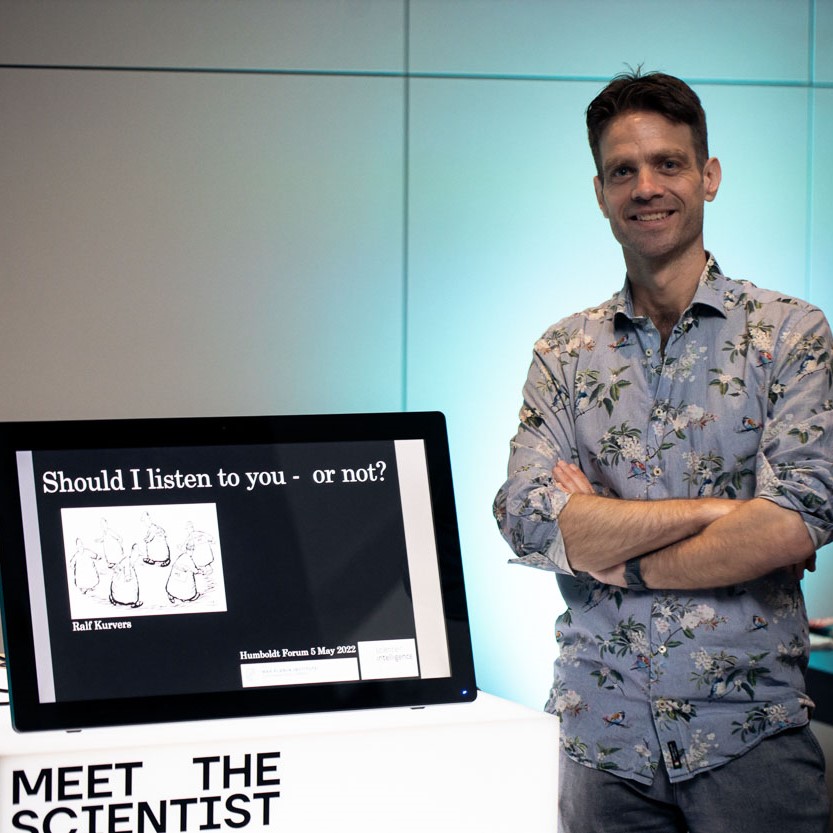
Ralf Kurvers at “Meet the Scientist”, Humboldt Forum
For the Public"Should I listen to you – or not?" Should I listen to you? Or should I ignore you when making up my mind? And what factors shape my decision-making? Questions
"Should I listen to you – or not?" Should I listen to you? Or should I ignore you when making up my mind? And what factors shape my decision-making? Questions

What do sensitive robots, gripping plants and creative bacteria have in common? Let's find out together! In "CollActive Materials" experimental laboratory, a joint project of SCIoI and MoA, research and society
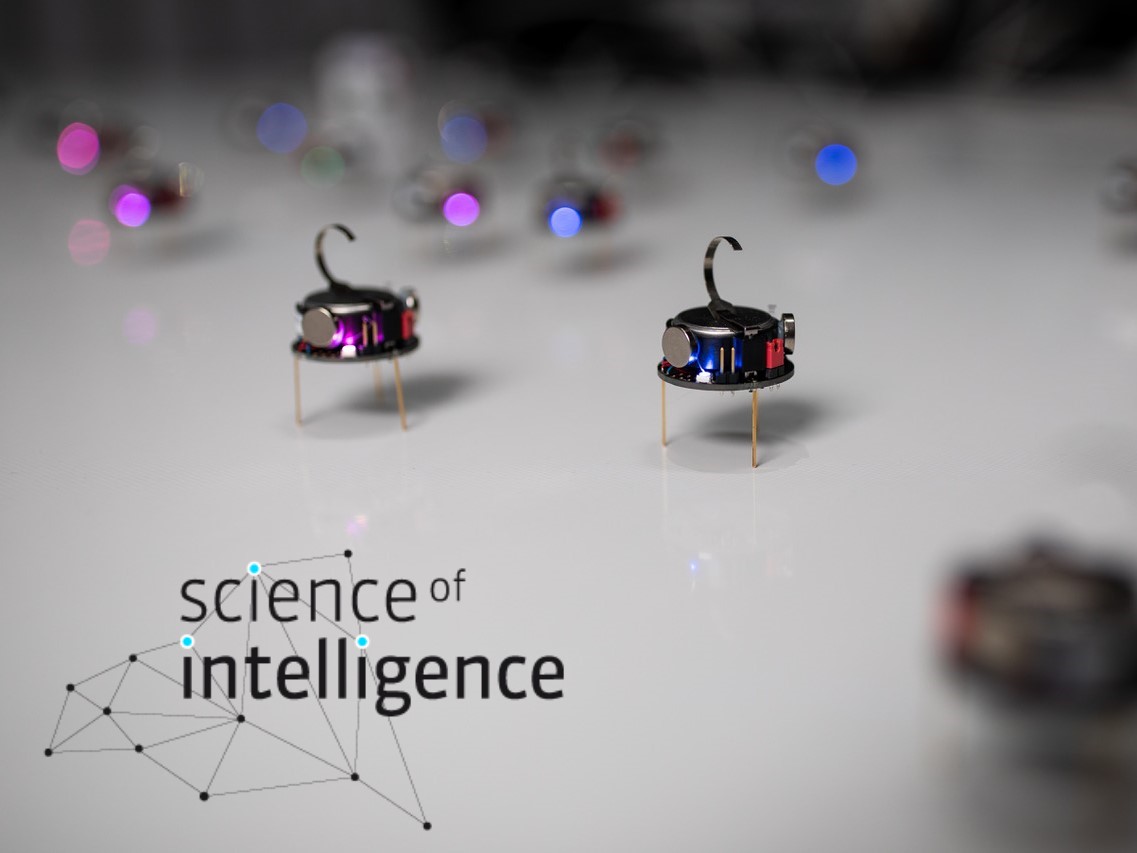
Swarms, such as schools of fish, and flocks of birds, have shown a great capability of solving complex problems in nature. Such examples are bees finding the best nest site,

SCIoI is taking part of the Lange Nacht der Wissenschaften 2022 with five unique events! We will have Richard Schweitzer and Nicolas Roth showing and performing experiments on eye movements,
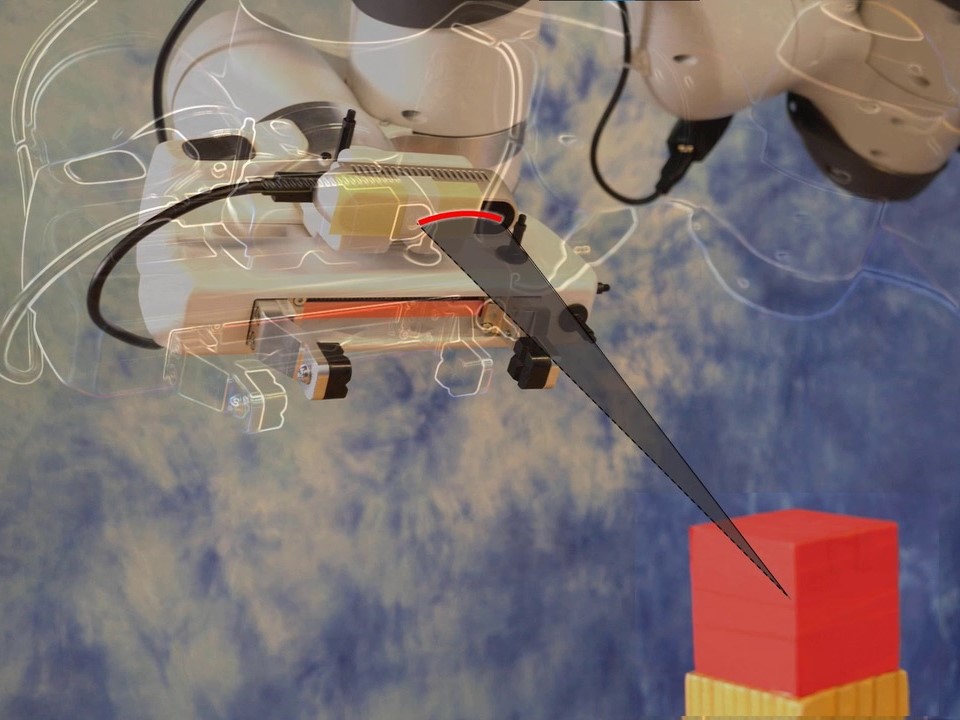
The RBO Lab Team gives three exciting demonstrations of recent advances in robotics: acoustic sensing with soft robot fingers, robot hand teleoperation, and moving robotic hand perceiving spatial depths. The

Viele Tiere zeigen erstaunliche kognitive Leistungen. Am Beispiel von Fischen wird Dr. Bierbach einige der beachtlichen Geistesleistungen von Tieren aufzeigen – vom Antizipieren des zukünftigen Verhaltens bekannter Artgenossen über das

At our cluster science slam, scientists try everything to entertain their audience, regardless of whether the subject is e.g. mathematics, neuroscience or active material. The sky is the limit when

It's that time of year again! Every April, school girls all over Germany visit scientific institutions to get inspiration for their future careers. SCIoI has participated in this event twice
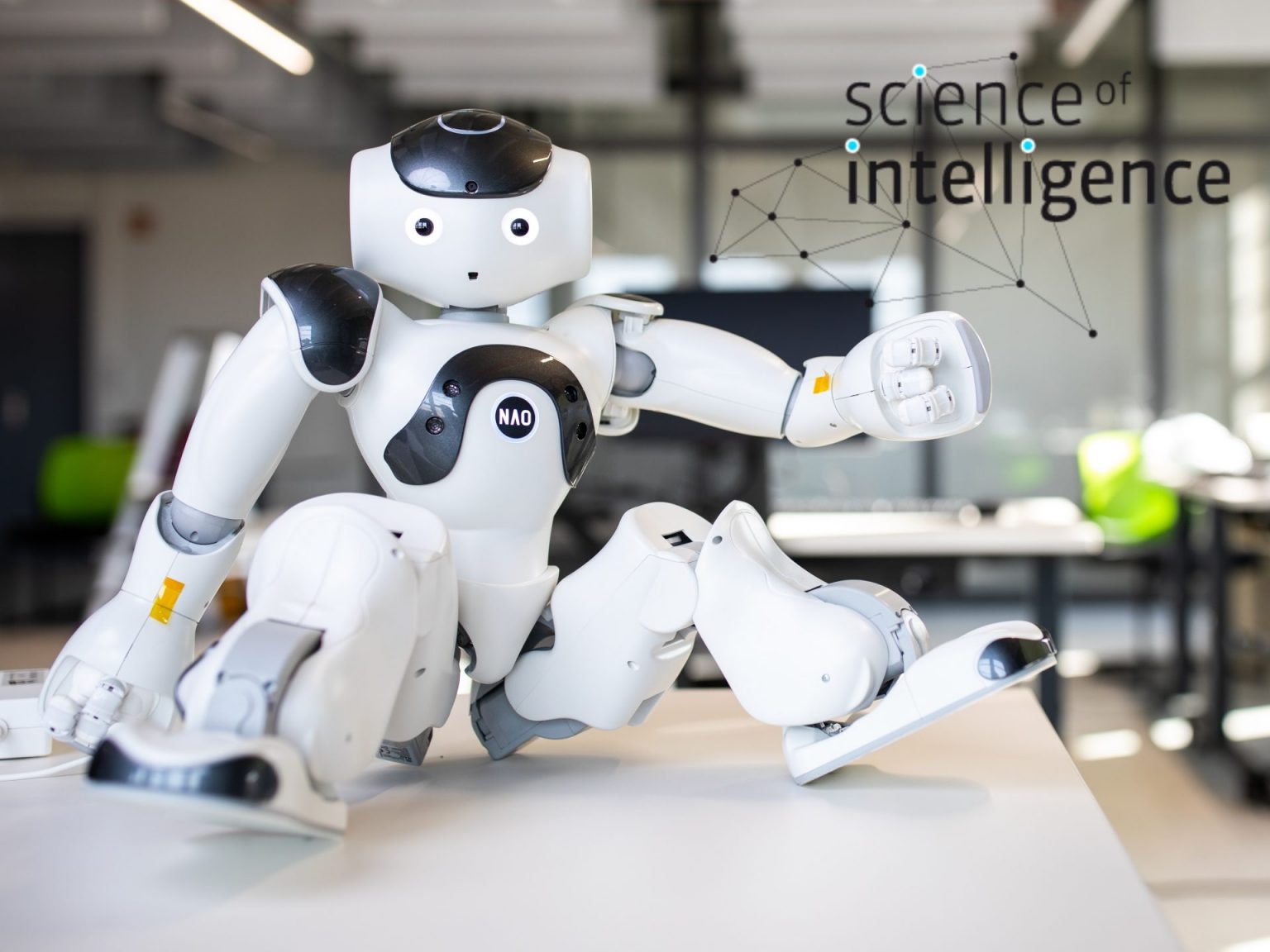
Under what conditions does a system behave intelligently? What meaning does the attribution of intelligent behavior to non-human systems carry? The event illustrates different perspectives from the philosophy of cognition

Who is Pepper? The humanoid robot we use in our labs helps us understand social interactions between robots and humans, and if it’s easy to see why that works so
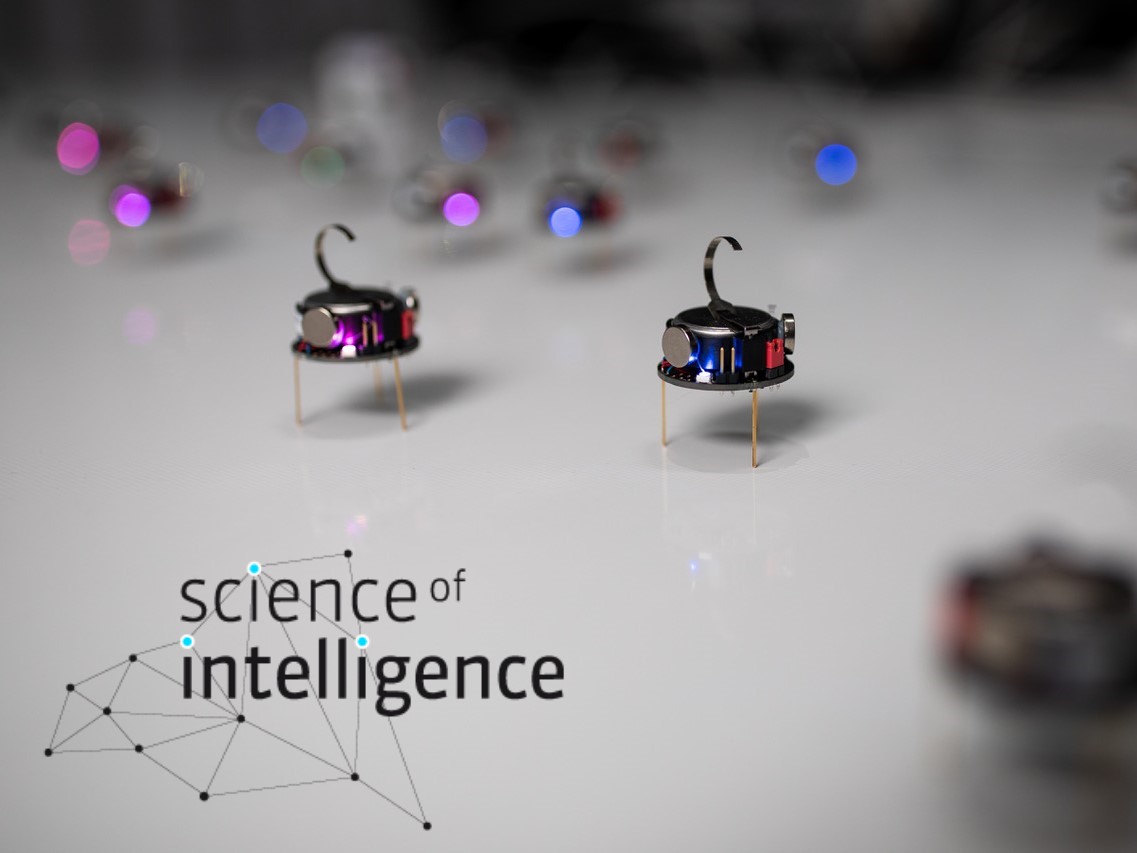
Swarms, such as schools of fish, and flocks of birds, have shown a great capability of solving complex problems in nature. Such examples are bees finding the best nest site,

We constantly move our eyes, approximately three times per second, and even more if we search for something. We do this to place individual objects into the region where we
Marchstr. 23 – MAR 5-2
10587 Berlin
Email: info@scioi.de
Tel: +49 30 314 70660