Chorafas Prize 2025 honors SCIoI researcher Nicolas Roth’s dissertation

On 1 December 2025, the Technical University of Berlin awarded the prestigious Chorafas Prize to two early‑career researchers for outstanding doctoral work. Among this year’s awardees is Nicolas Roth, a member of Science of Intelligence (SCIoI) at TU Berlin. The Chorafas Prize recognizes exceptional doctoral dissertations with strong scientific and societal relevance.

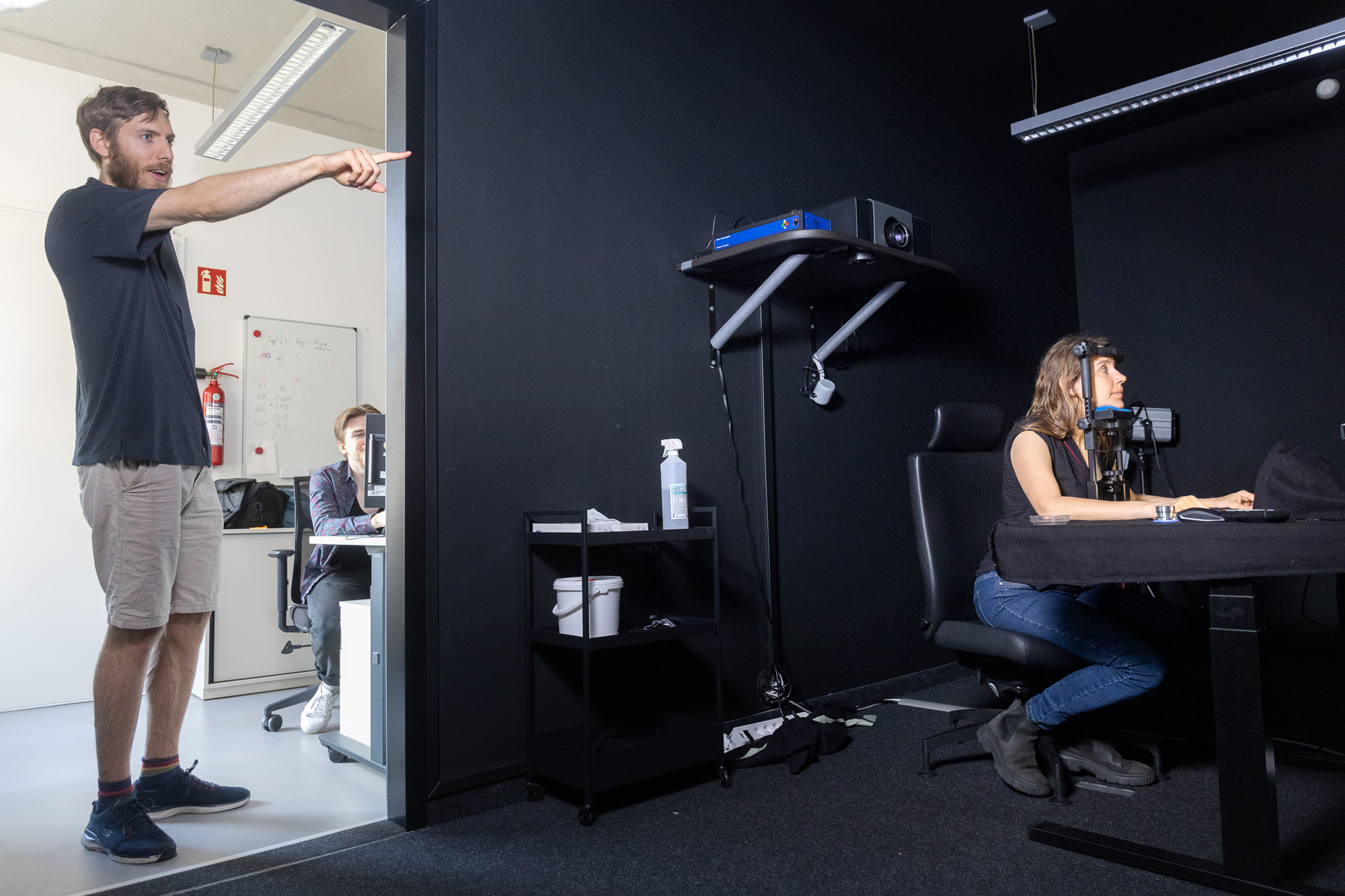
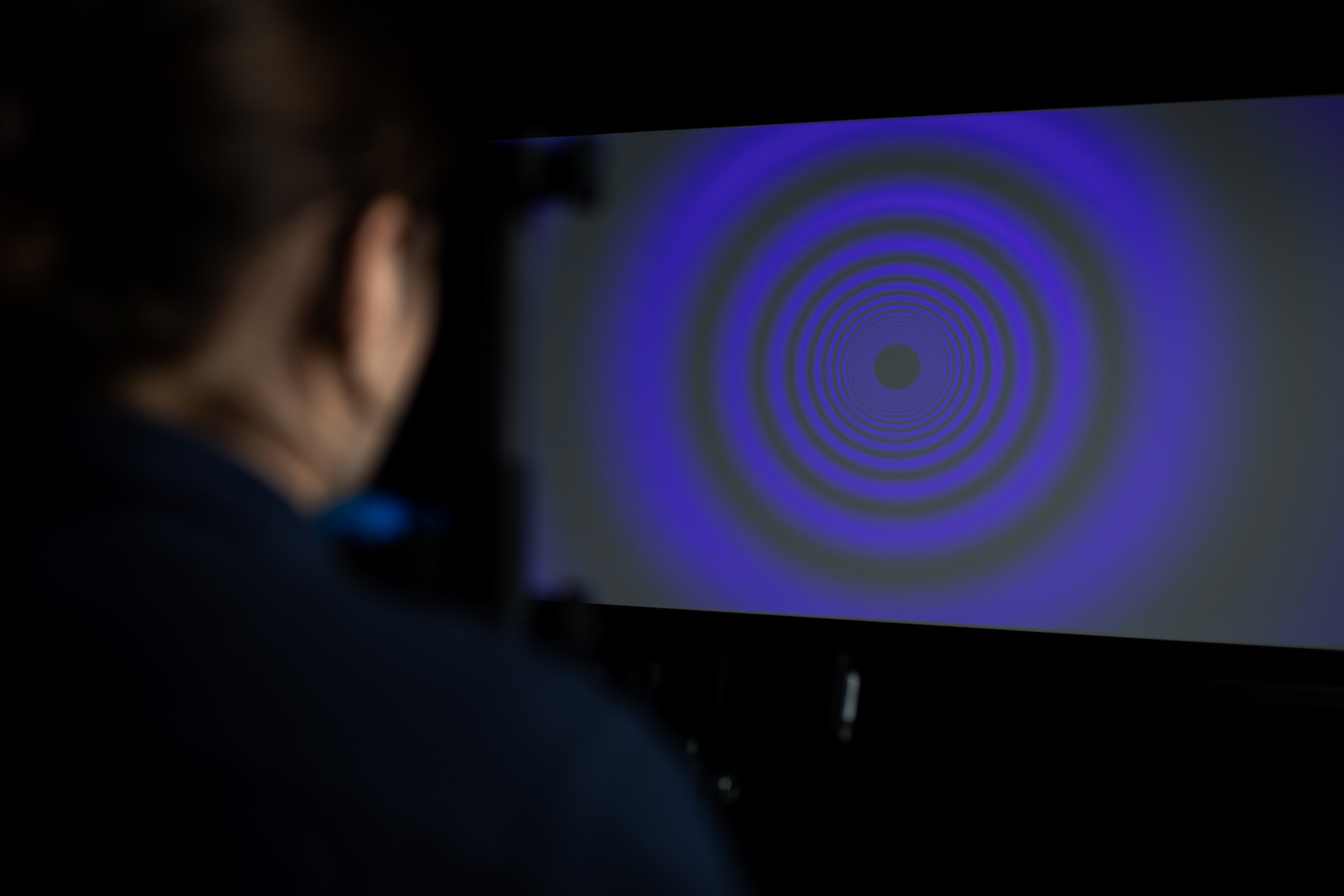
At SCIoI, Nico’s research is situated at the intersection of cognitive psychology, computational modeling, and computer vision. He investigates how humans actively explore complex visual environments, and what this can teach us about natural and artificial intelligence.

The doctoral work behind the Chorafas Prize

Nico was awarded the Chorafas Prize for his doctoral dissertation, “Saccadic decision‑making in dynamic real‑world scenes” (defended on 26 February 2025). The thesis, supervised by Klaus Obermayer and Martin Rolfs,  addresses a fundamental but elusive question: how do humans decide where and when to move their eyes when observing complex, dynamic scenes?

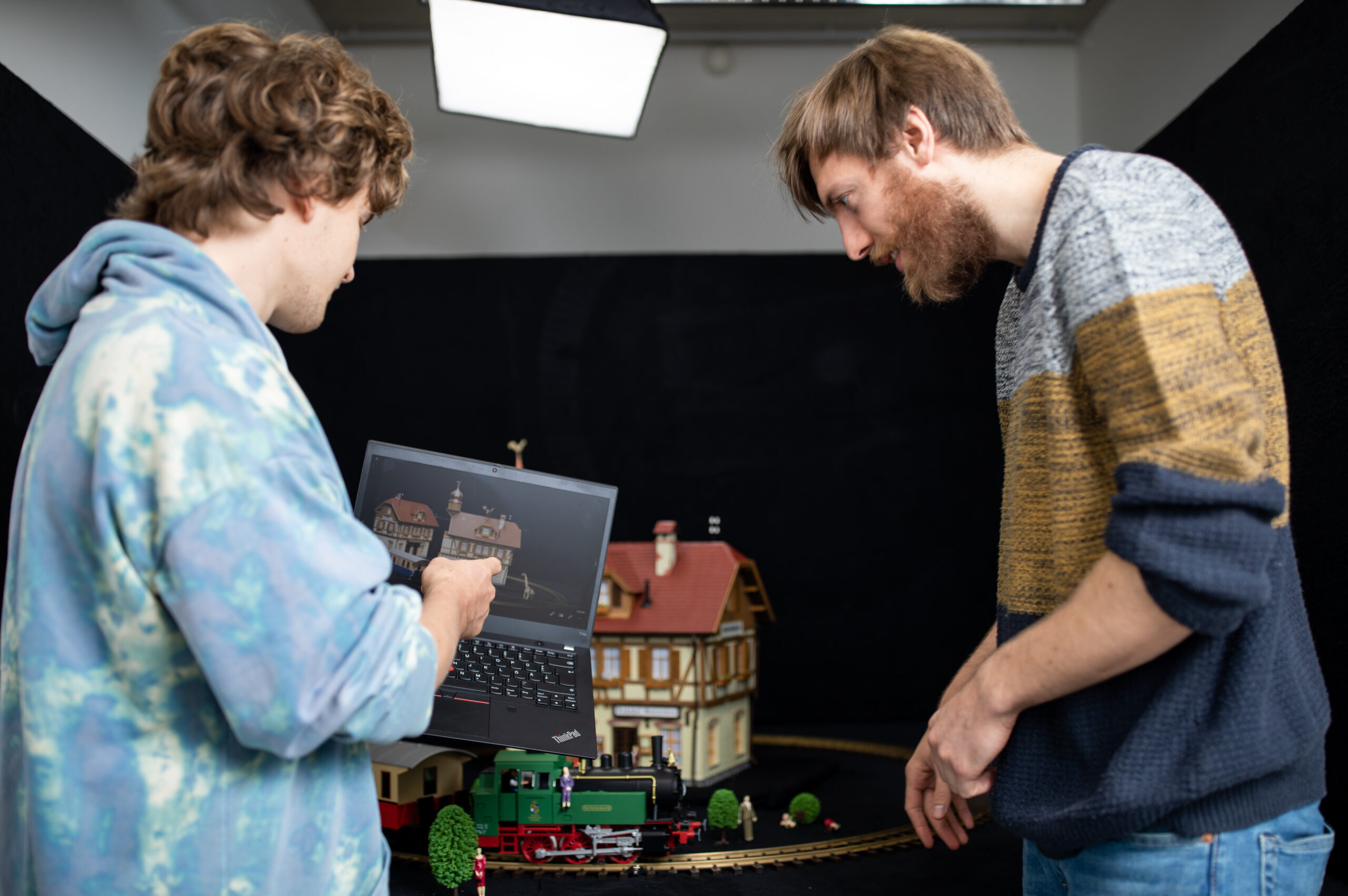
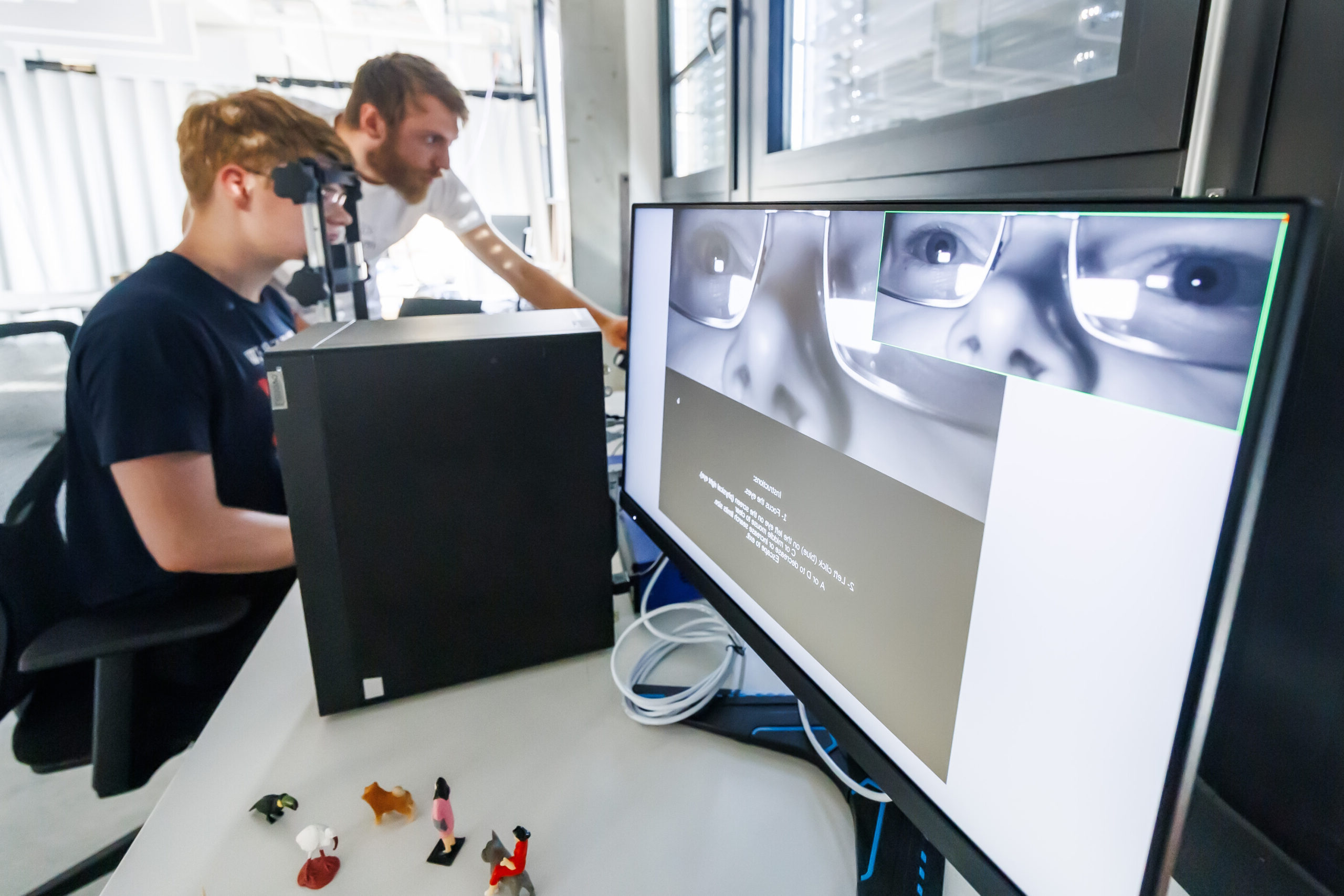
Combining eye‑tracking experiments with computational modeling, the dissertation develops a principled framework for disentangling the mechanisms underlying visual attention and saccadic decision‑making under naturalistic conditions. Across three interconnected studies, Nicolas shows that object‑level perceptual units play a crucial role in guiding gaze, that these representations are actively refined through eye movements, and that top‑down expectations about scene dynamics can systematically alter viewing behavior, even in visually identical scenes.

Crucially, this work goes beyond describing eye movement patterns. It provides a mechanistic account of how attentional decisions are formed, tested, and updated as humans interact with a changing world.This perspective opens the door to modeling visual exploration as an active, decision-driven process, and exemplifies the integrative approach at the core of the SCIoI  agenda.
Modeling the mechanisms underlying intelligent behavior

Every waking hour, humans make thousands of rapid eye movements, called saccades, effortlessly shifting their gaze to perceive the world. Where and when the eyes move, determines which aspects of our rich, dynamic environment is perceived. The visual information gathered from these choices shapes our internal model of the world—and with it, our thoughts, decisions, and actions. Eye movements, in this view, are not passive reactions to sensory input, but active expressions of what we know, want, and expect. Nico’s thesis lays both a methodological and scientific foundation for understanding these decisions in dynamic, real-world environments.

The developed framework makes it possible to isolate and test the contributions of specific attentional mechanisms to visual processing and active exploration. It allowsNico and his colleagues to address longstanding questions in vision science—such as what the brain attends to in complex scenes and what drives visual exploration.

It reveals that gaze behavior is not simply guided by visual salience but operates on discrete perceptual units, given by the objects in the scene. Drawing inspiration from information processing in robotics, the work also shows how perceptual units are dynamically formed and refined through active visual exploration.

The model reduces uncertainty by linking saccadic decisions with object segmentation, effectively improving its internal representation of the scene with each eye movement. This is an instantiation of active interconnections, a candidate principle proposed by SCIoI researchers, proposing that true intelligence emerges not just from sophisticated components, but from the rich, adaptive relationships between them.

SCIoI’s analytic-synthetic loop in action

Reflecting the scientific approach of SCIoI, Nico’s work follows the  analytic–synthetic loop in which computational models are not treated as final explanations, but as tools to further analyze intelligent behavior. Rather than building models for their own sake, he uses them to make concrete predictions about visual attention—predictions that can be tested, challenged, and refined through carefully designed eye-tracking experiments in naturalistic settings.

This iterative exchange between modeling and experiment is how Nicos’ doctoral work unfolds. Synthetic models provide full control over assumptions and mechanisms, while real-world behavioral data bring the richness and variability of human perception into focus.

When model behavior and human gaze diverge, this mismatch is not a failure, but a productive signal: it points to missing assumptions, overlooked mechanisms, or new questions worth pursuing. This loop (modeling, experimentation, mutual refinement) is more than a technical strategy; it lies at the heart of SCIoI’s mission to understand intelligence as an emergent, interactive process. In Nico’s thesis, the analytic-synthetic loop proves its value: each iteration drives the research forward, offering new insights into how intelligent visual behaviors arise both in minds and machines.

Seeing the future: how expectations guide eye movements

While the models developed in Nico’s thesis captured many aspects of gaze behavior, iterations of the A/S loop demonstrated that it is not yet understood how expectations about future events in a scene influence gaze behavior.

In a study published in Psychological Science, Nico and colleagues showed that even in visually identical scenes, eye movements differ depending on whether observers look at a static image or when they expect the scene to become dynamic. During the initial static phase, participants directed their gaze toward regions with a high potential for change, locations where motion was likely to occur. This anticipatory behavior appeared for both animate and inanimate objects, revealing how expectations guide attention in dynamic environments.

Together, these findings position visual attention as an active, predictive process rather than a purely reactive one. By showing that expectations about what might happen next shape gaze before any change occurs, the study highlights anticipation as a fundamental mechanism linking perception, learning, and intelligent action in a dynamic world.

Beyond the lab

Beyond his research, Nicolas has been deeply engaged in science communication and teaching. He is a co‑creator and host of the SCIoI podcast Punching Cards, which explores intelligence across humans, animals, machines, and collectives through conversations with international experts. He also co‑designed and taught the master‑level course “Communicating Hot Topics in Intelligence Research” at SCIoI, where students developed their own podcast series as a hands‑on introduction to science communication. In addition, Nico regularly contributed to public outreach events such as Berlin’s Long Night of the Sciences.

A Chorafas Prize for Nico’s Research

The Chorafas Prize, awarded by the Dimitris N. Chorafas Foundation, supports exceptional early‑career researchers whose work advances science and society. Endowed with 10,000 US dollars, the prize is awarded at only 21 partner universities worldwide, including MIT, ETH Zurich, and the University of Tokyo. TU Berlin has been part of this network since 1996.

By honoring Nico, the Chorafas Prize recognizes research that exemplifies a core principle of intelligence: multi-timescale computation. Adaptation to a changing environment requires mechanisms that operate across different temporal scales, because changes themselves unfold at different speeds, which can directly be seen in Nico’s work.

In doing so, his research makes a concrete contribution to the SCIoI agenda, demonstrating how fundamental mechanisms of human perception can be formalized, modeled, and ultimately transferred to artificial systems. The prize acknowledges a strong doctoral dissertation, and a body of work that advances our understanding of intelligence across disciplines.


Research

An overview of our scientific work

See our Research Projects