From animal movement to artificial swarms: Valentin Lecheval leads X-Student Research Group at SCIoI
When a school of fish turns in perfect synchrony or a swarm of insects navigates a complex landscape, the intelligence at work is not located in any single individual. It emerges from interaction. Understanding how this happens, and how such principles might be transferred to artificial systems, is at the heart of the research of SCIoI member Valentin Lecheval.
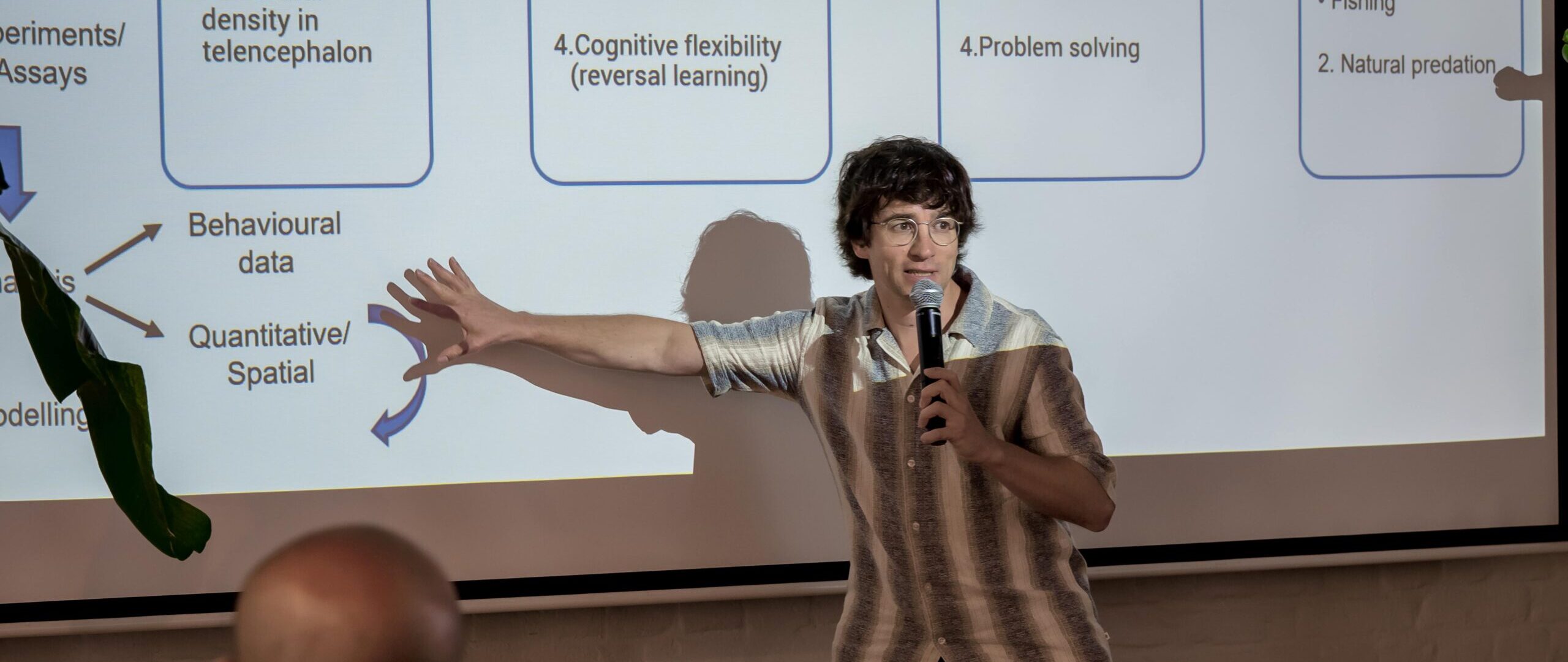
This question recently moved from the lab into the classroom. Funded by the Berlin University Alliance (BUA), in summer semester 2024, Valentin led an X-Student Research Group that invited students to engage directly with ongoing research on animal movement, collective behavior and artificial intelligence. The format is designed to give students early exposure to research by embedding them in real scientific projects led by early-career researchers across Berlin’s universities and excellence clusters. As part of the program, Valentin also took part in the BUA Teaching Qualification Program for Researchers, completing 26 hours of training in research-based learning and research group leadership.
In Valentin’s group, animal movement was treated as an optimal process to be explored through modelling. Students developed research questions inspired by behavioral experiments and translated them into agent-based models, in which individual agents were equipped with artificial neural networks. By doing so, they could probe how cognition, perception, social interaction and environmental constraints combine to produce collective motion. Alongside this theoretical work, the course introduced concepts from swarm robotics, bridging biological systems and artificial collectives.
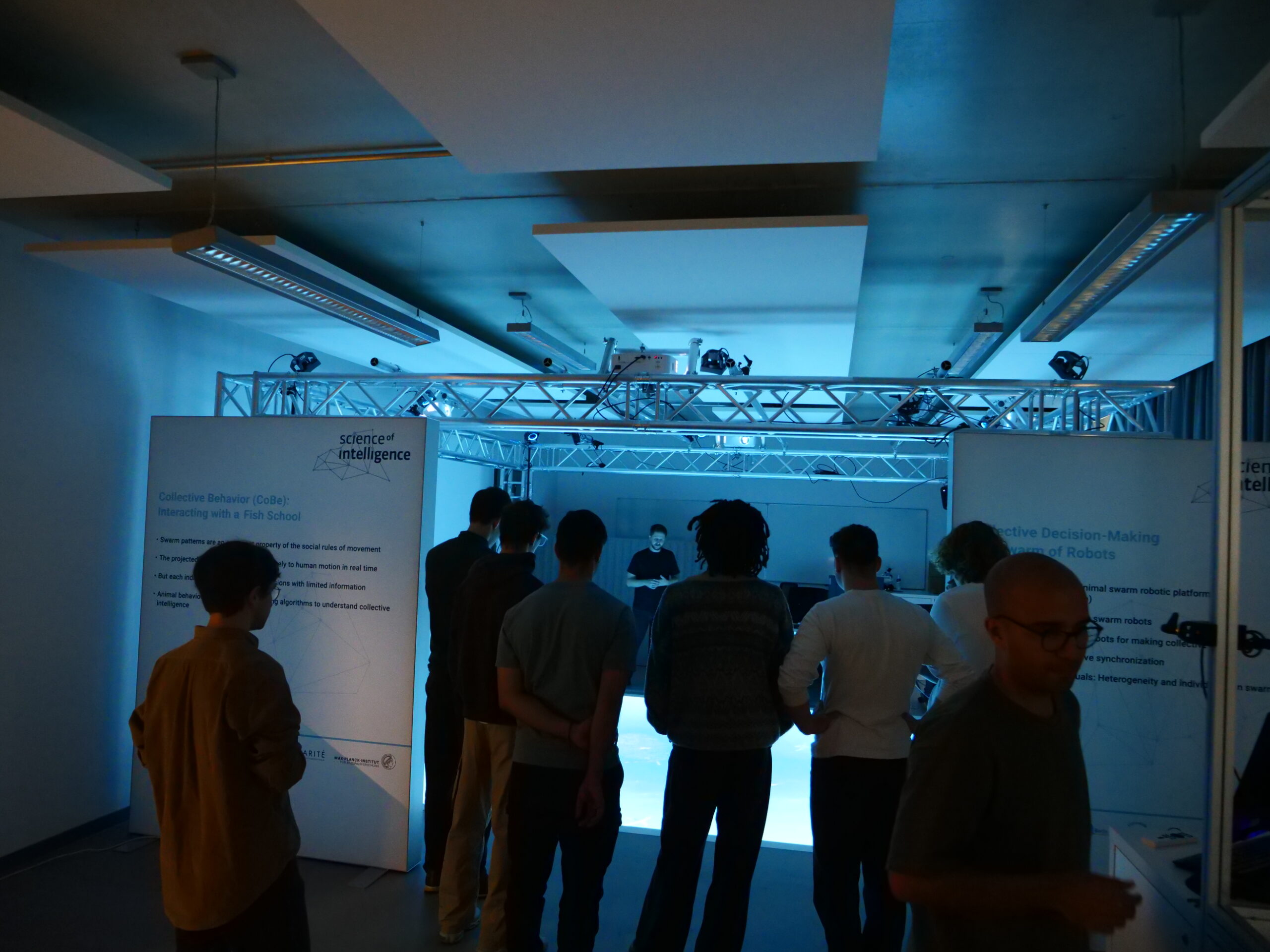
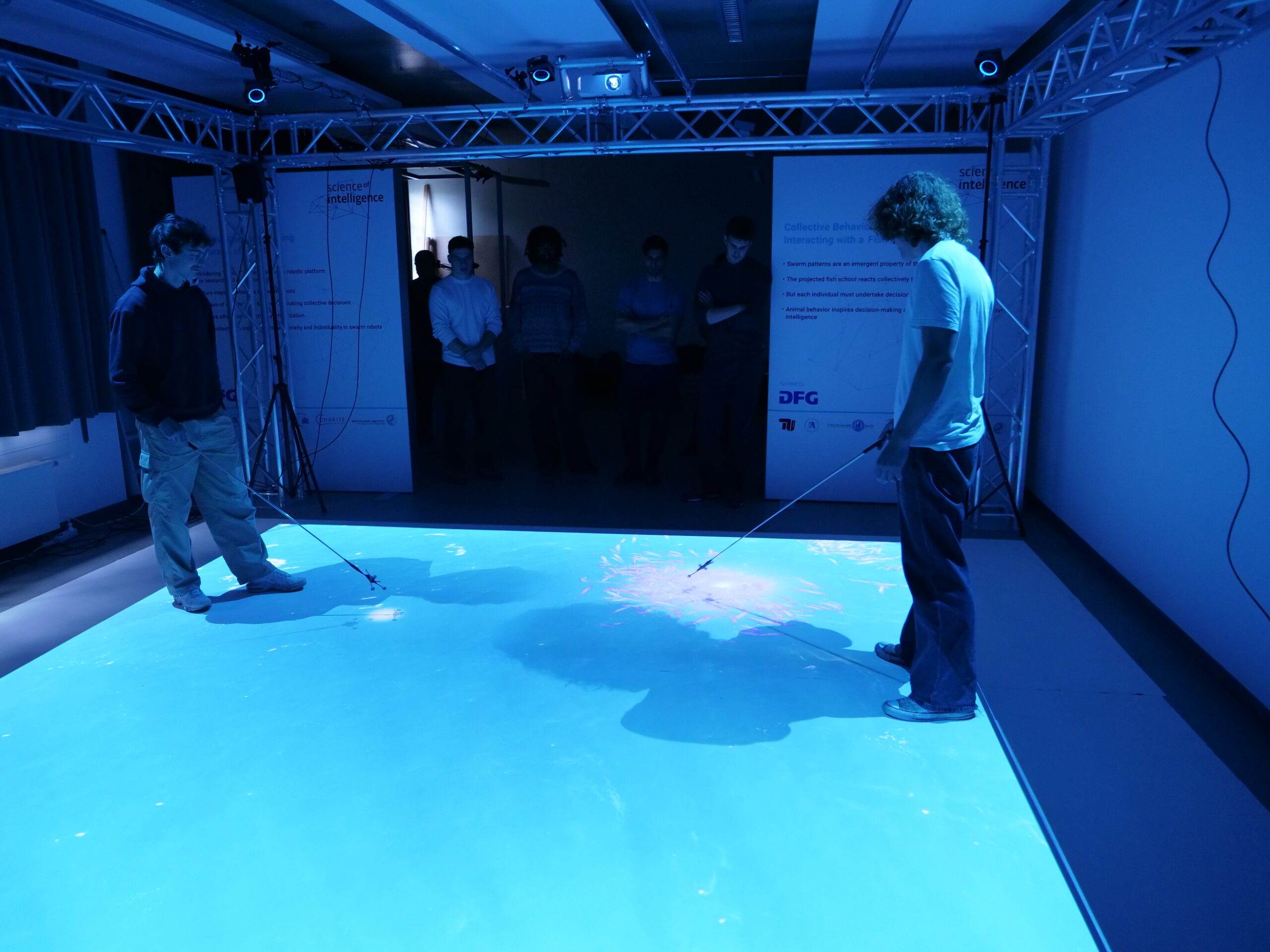
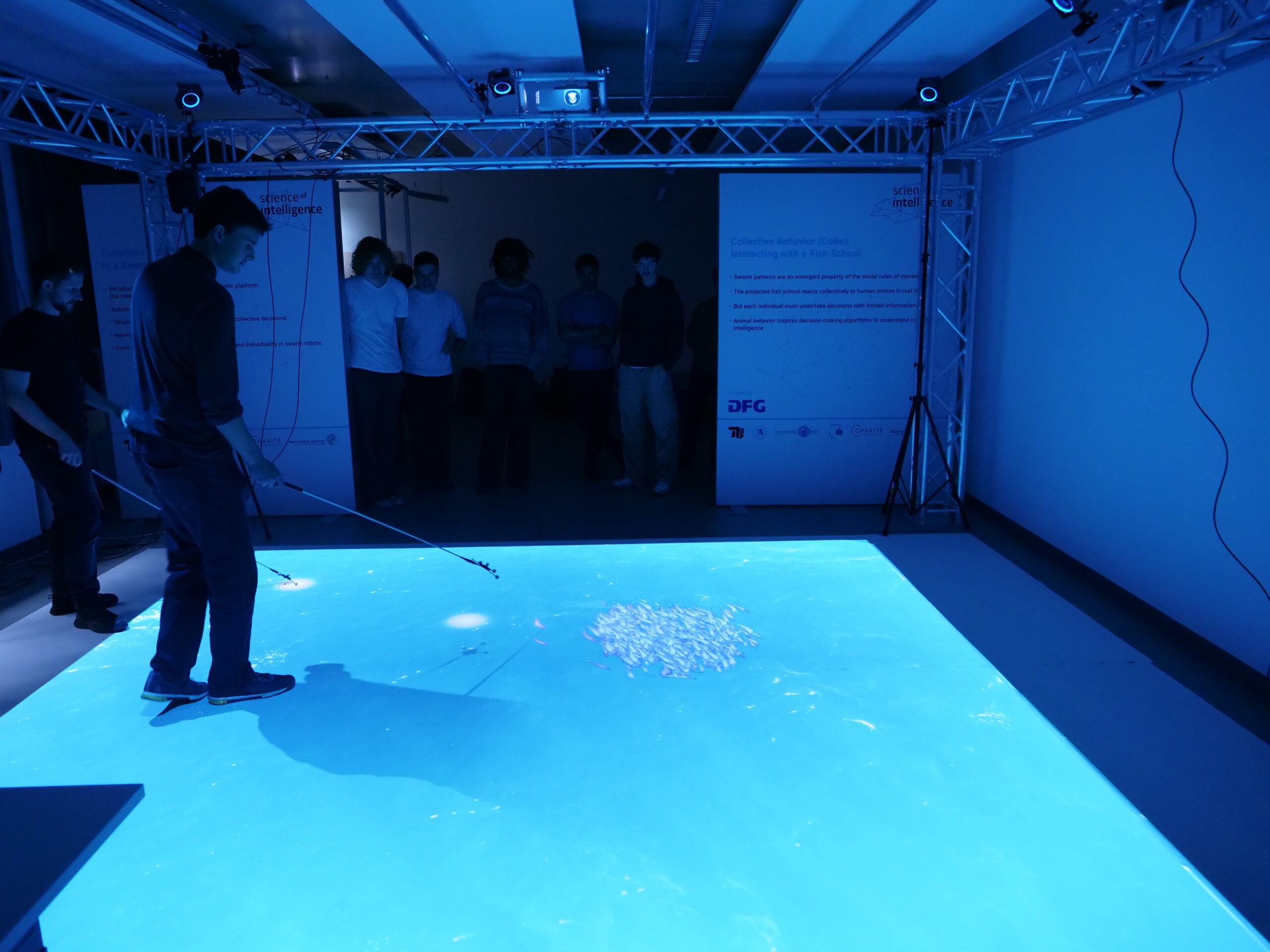
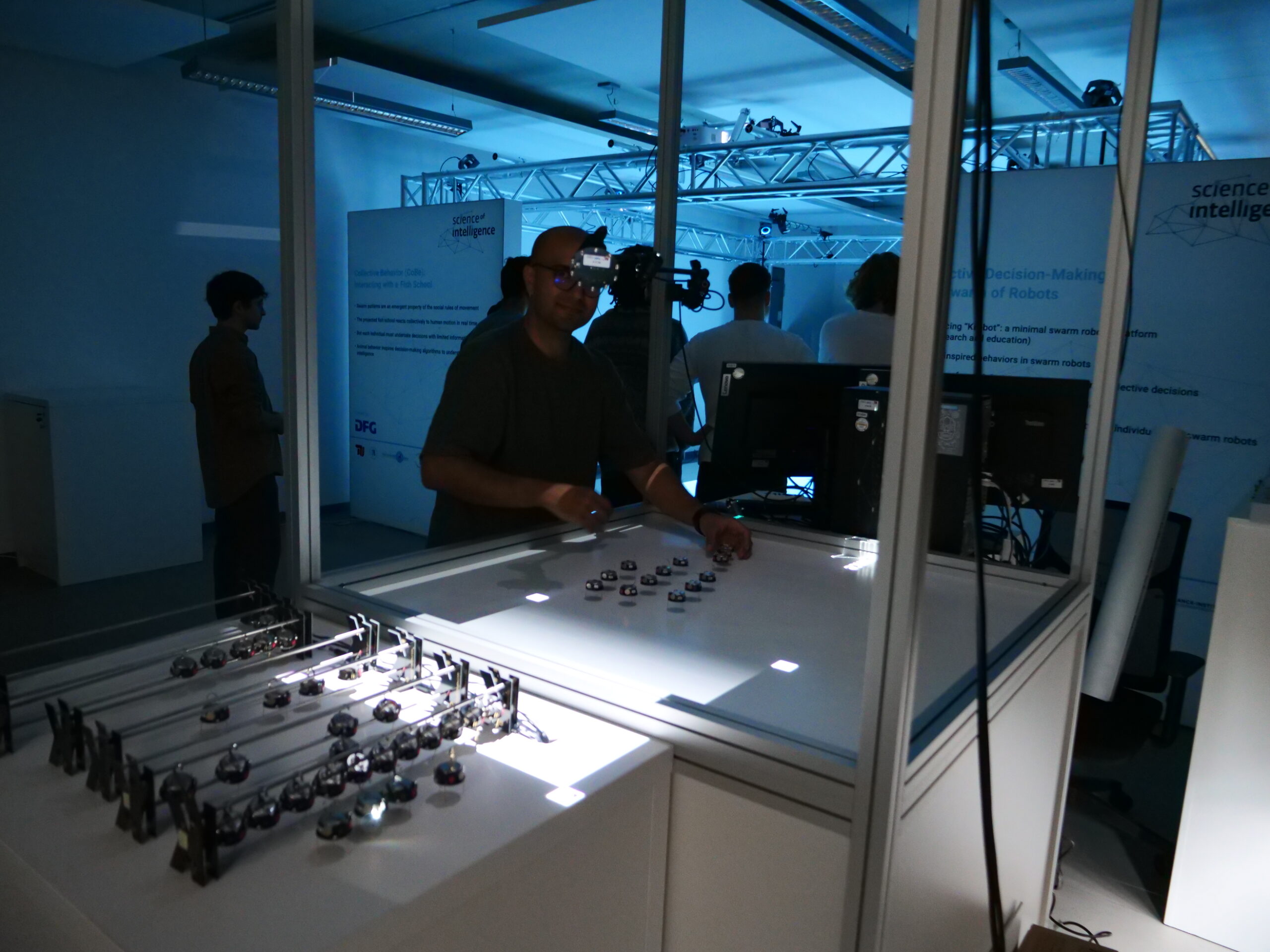
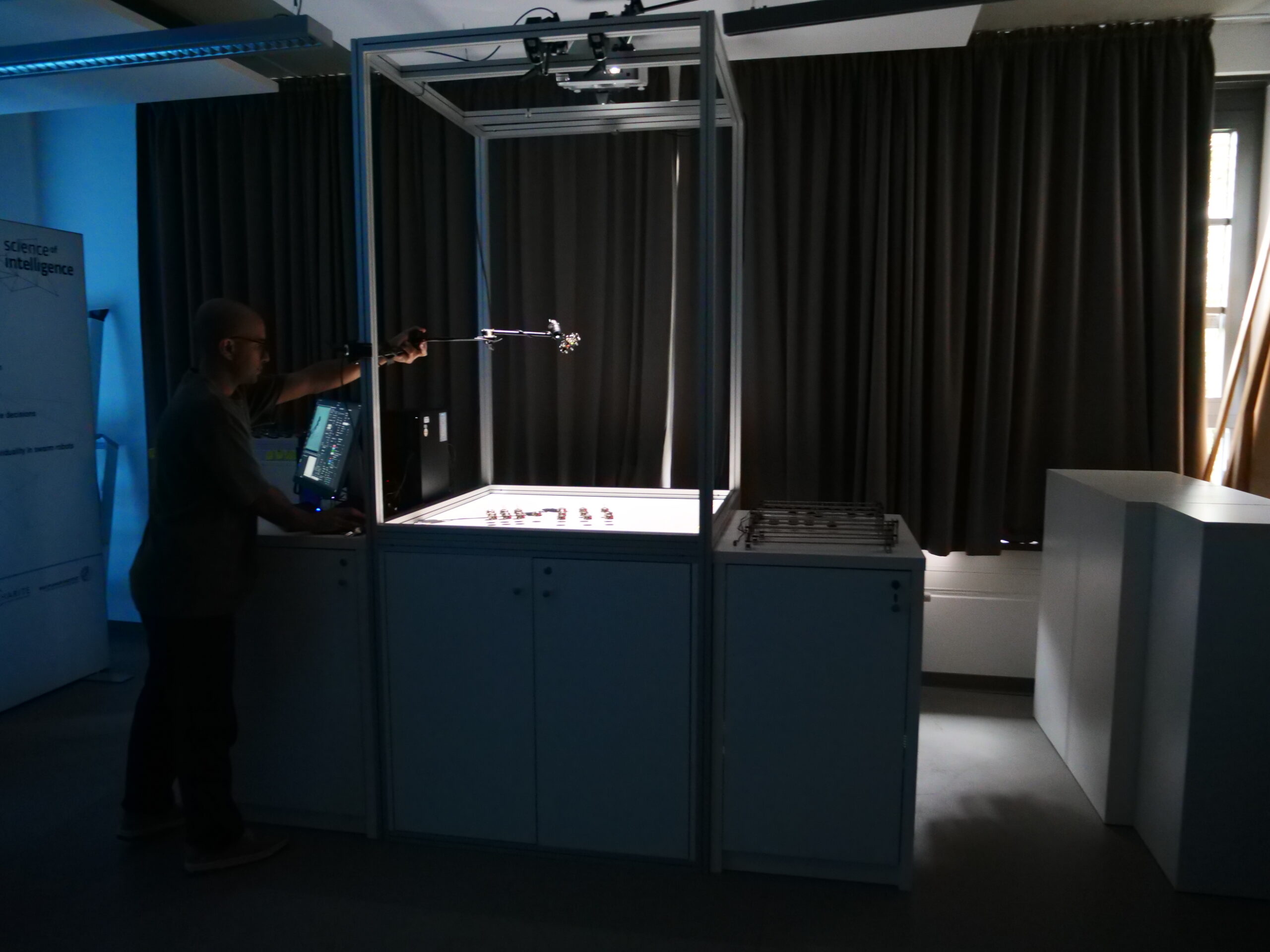
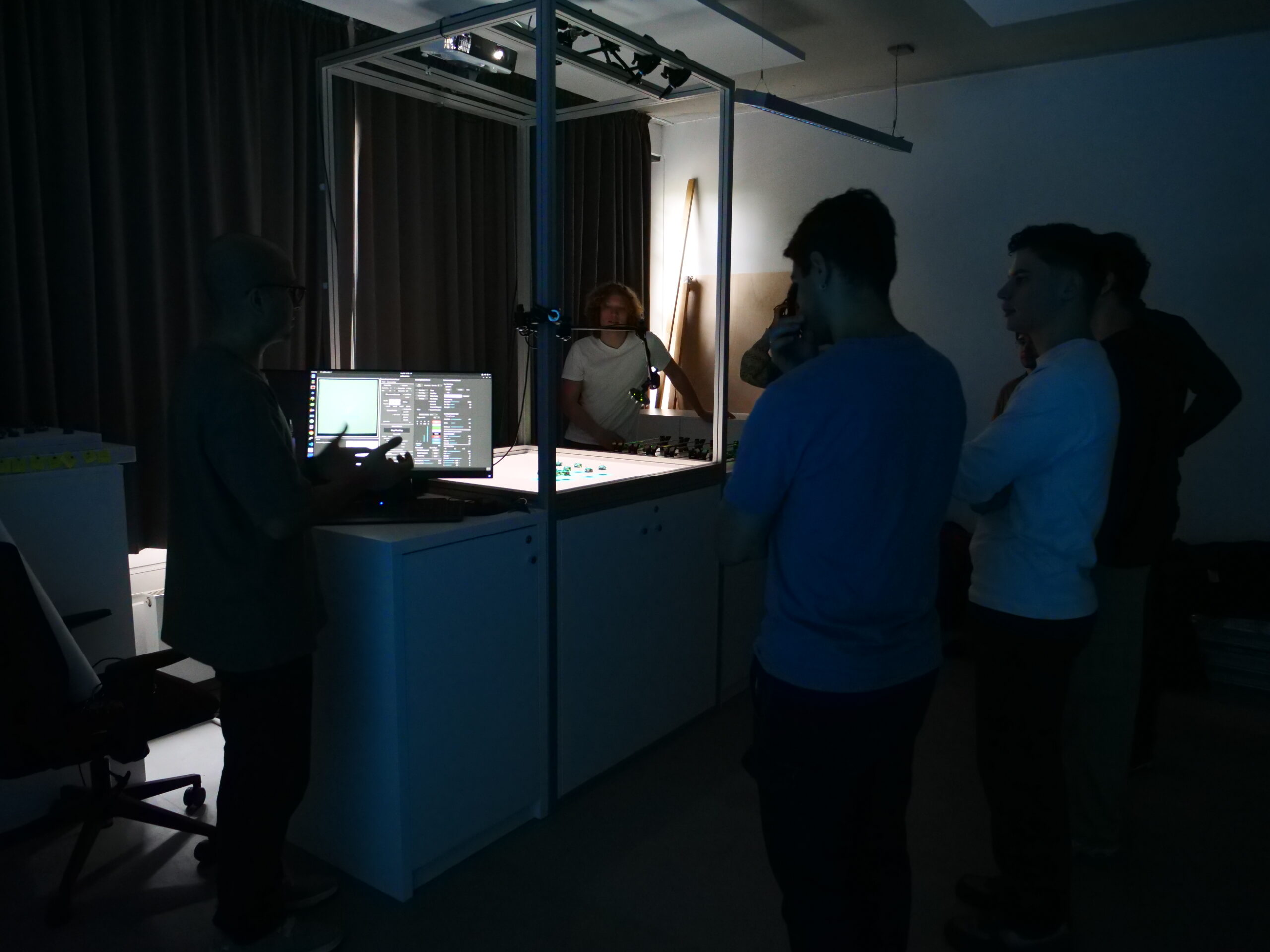
The course concluded with a strong emphasis on research practice. Students visited the SCIoI for lab tours, where they explored SCIoI’s robotic research setups, including CoBe, the interactive fish swarm projection, and engaged in discussions with researchers from the cluster. As part of the course, the students prepared and printed conference posters and presented three posters (abstract one, two and three) at two student research conferences: the 2024 Berlin Conference for Student Research and the 9th Conference for Student Research at the University of Hohenheim, supported by additional funding from the Berlin University Alliance.