©MATH+/Kay Herschelmann
What Vito works on beyond the stage
Behind this performance lies Vito’s everyday research as a roboticist. In his work, he explores how robots can act robustly in uncertain, real-world situations, where information is incomplete, environments change, and small disturbances can disrupt carefully designed behavior.
One of the approaches he works with is a framework called AICON (Active InterCONnect). Instead of instructing a robot with fixed sequences of actions, this method relies on continuous feedback between perception, internal estimates, and movement. The robot does not follow a stored script but rather adjusts its behavior based on whether its current actions improve the situation relative to a goal.
This way of working has been tested in physical tasks like opening a drawer under uncertain conditions. In these scenario, the robot adapts, corrects itself when something goes wrong, and continues even when the environment changes.
Why this matters
Within SCIoI, this perspective is central. Vito’s work shows how goal-directed behavior can be grounded in real-time perception and action, rather than in abstract representations and rigid plans. This connects artificial systems with biological ones, where organisms continuously adjust their behavior based on feedback rather than long-term foresight.
In this sense, his research contributes to a broader scientific question that defines the cluster: how intelligent behavior can emerge from simple principles when agents are embedded in a complex world.
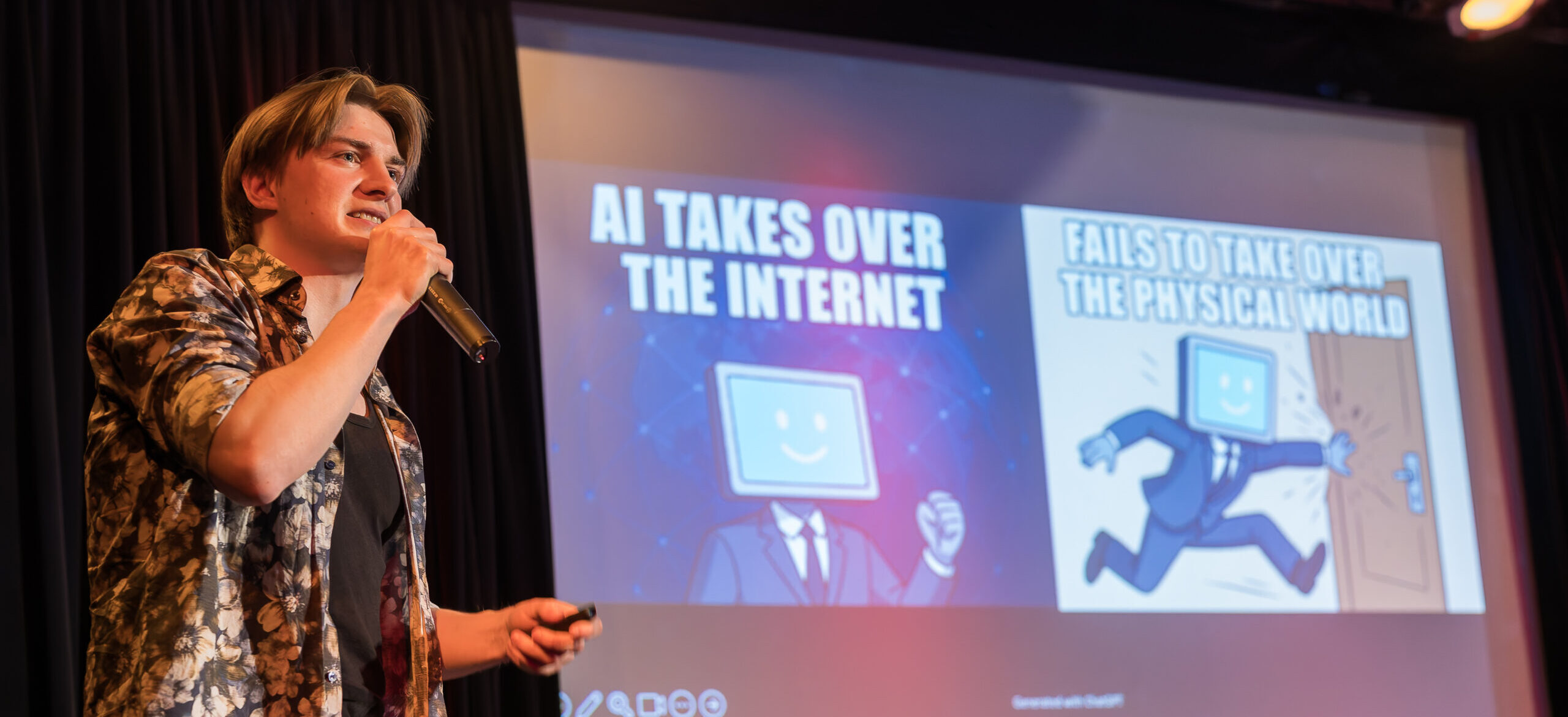
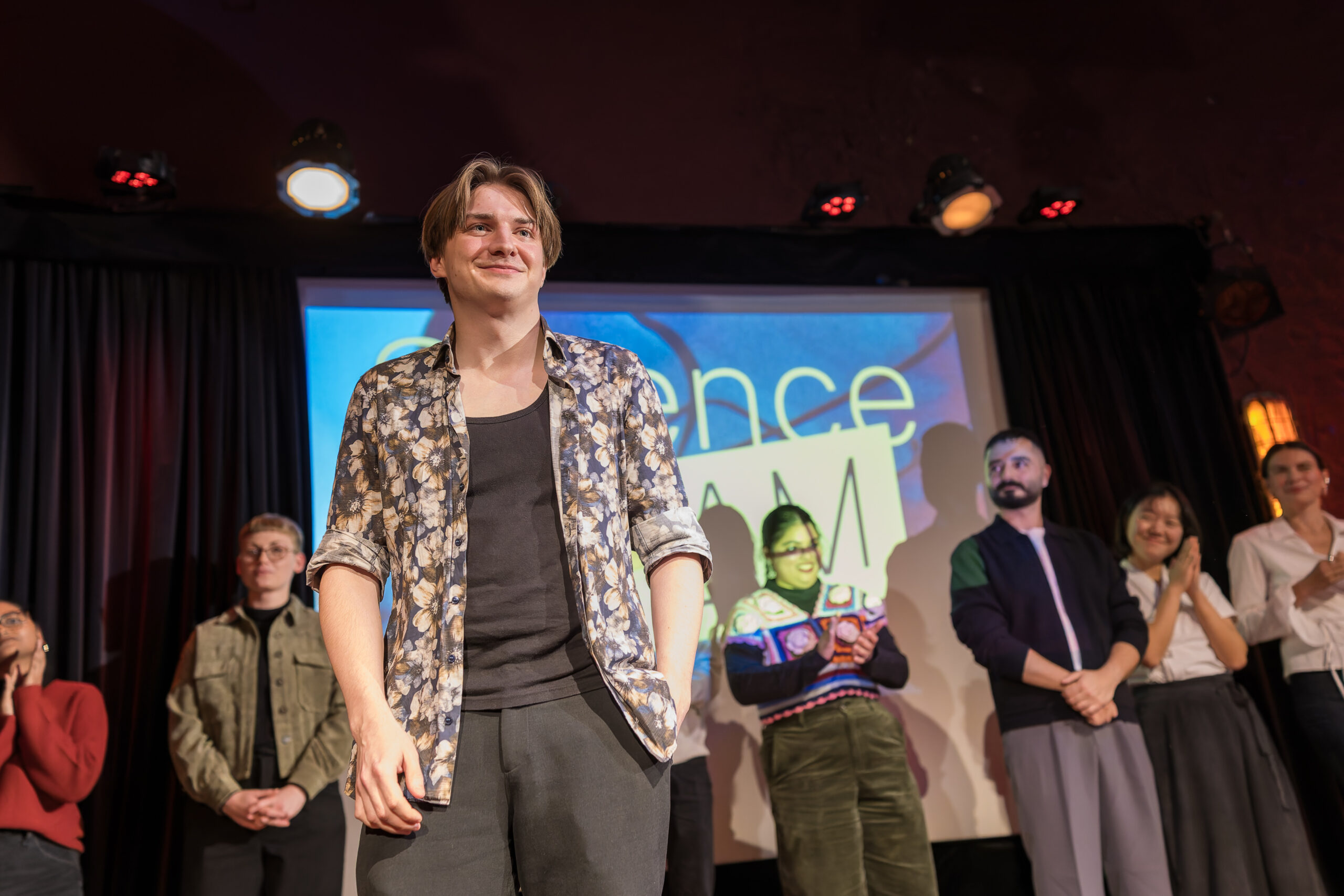
The Science Slam makes it possible to share such ideas beyond academic audiences. In six minutes, stripped of technical detail, what remains is the core question: are we building intelligent machines based on the right assumptions?
As part of Berlin Science Week’s 10th anniversary under the theme “Beyond Now,” SCIoI contributes three events—an exploration of collective intelligence, the inter-cluster Science Slam, and an Excellence Pub Quiz dedicated to the nature of intelligence. Together, they reflect the cluster’s commitment to bringing fundamental research into dialogue with the public.
And while Vito’s performance does not aim to explain his methods in detail, it opens a window onto the kind of thinking that drives his research, and invites a diverse audience to reconsider what intelligence might look like, in machines and beyond.