Ice-fishing competitions as a large-scale field experiment
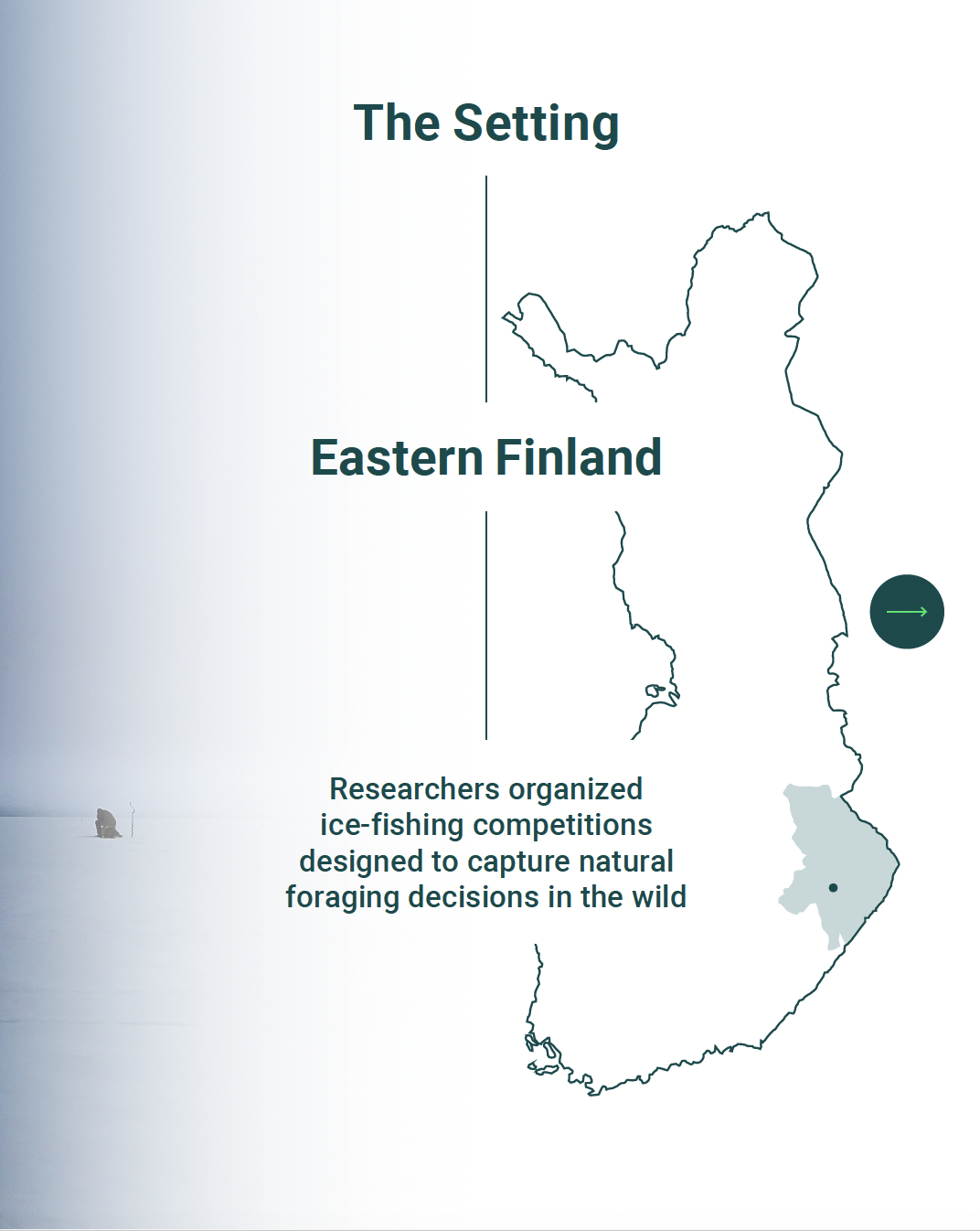
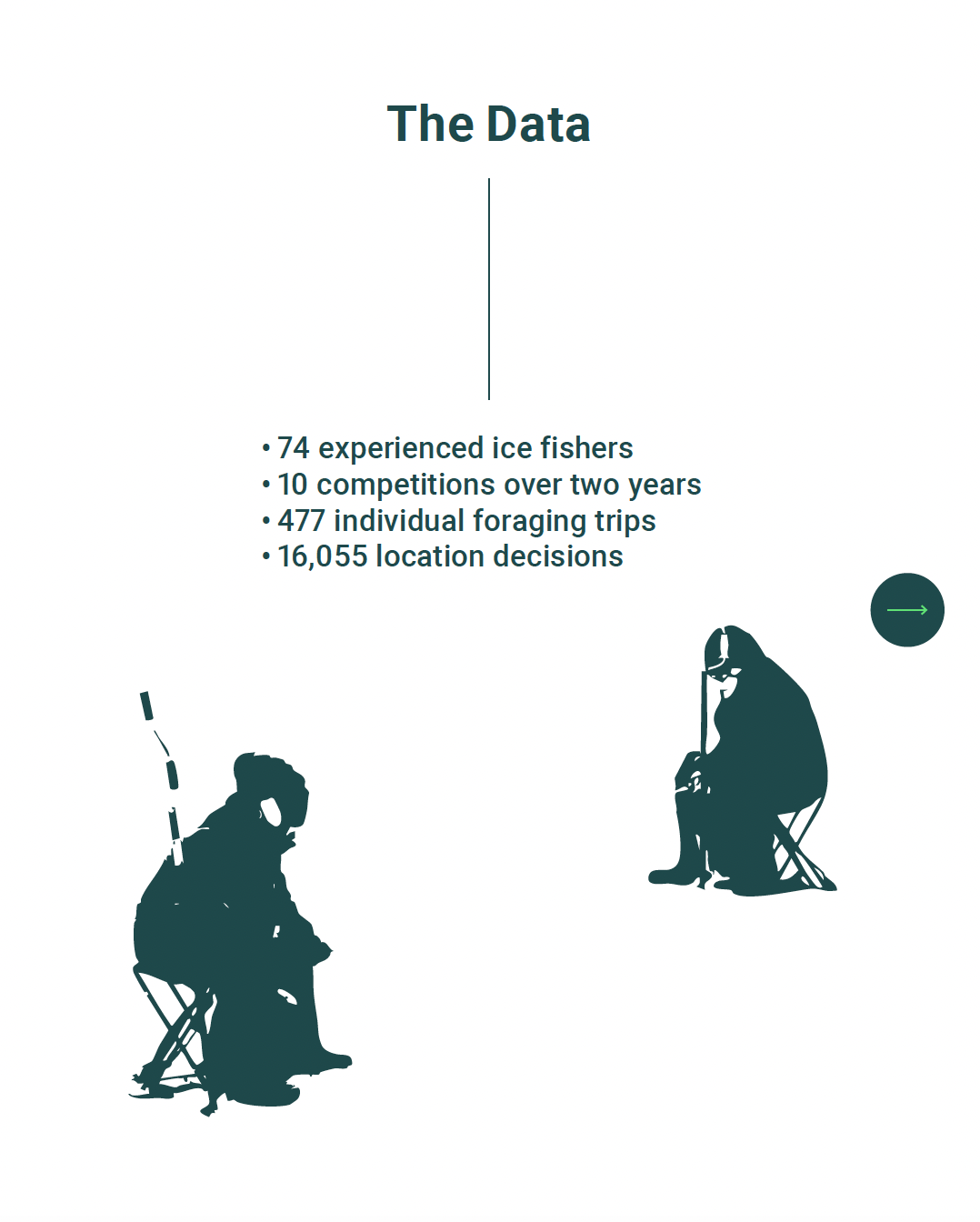
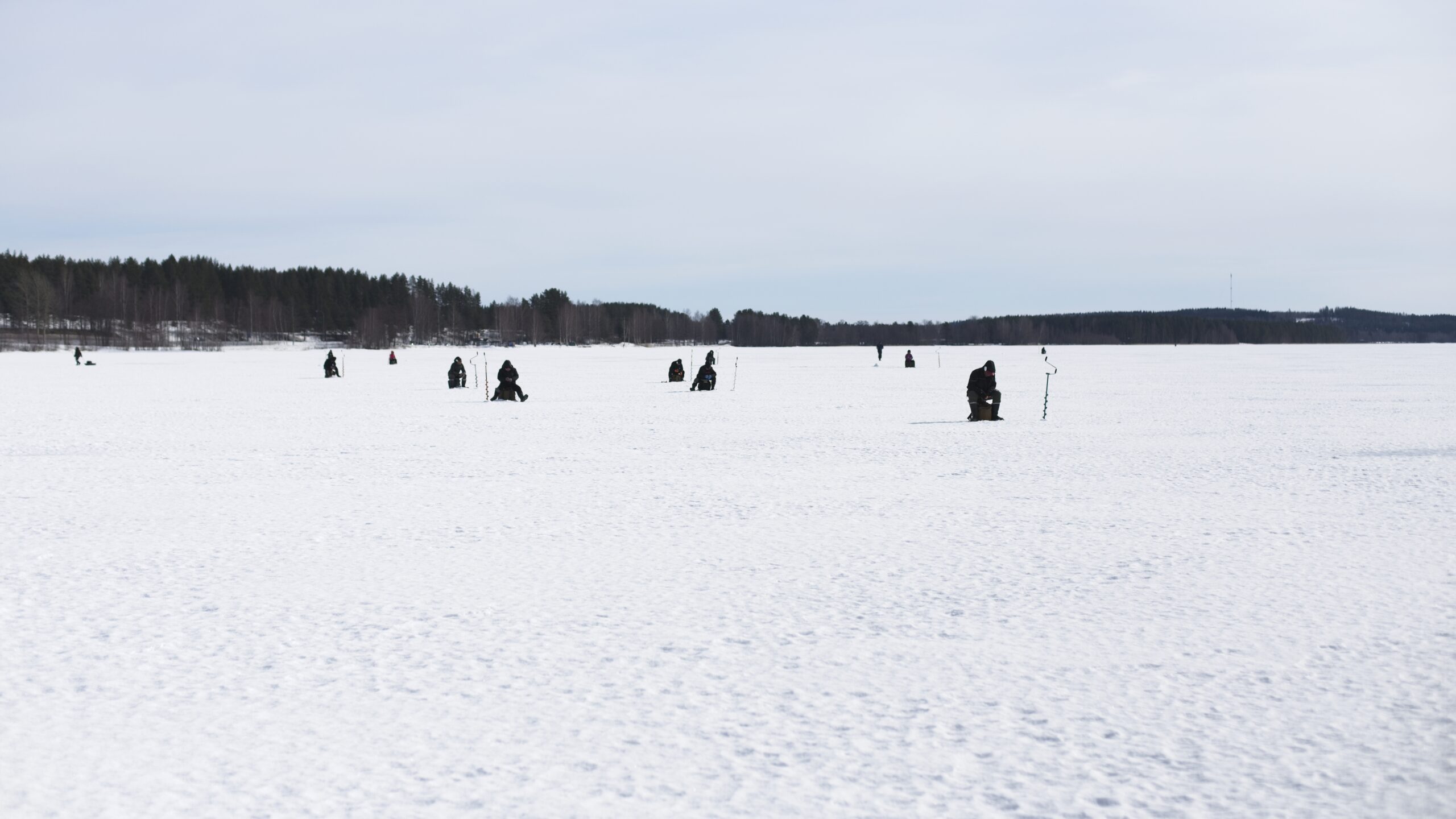
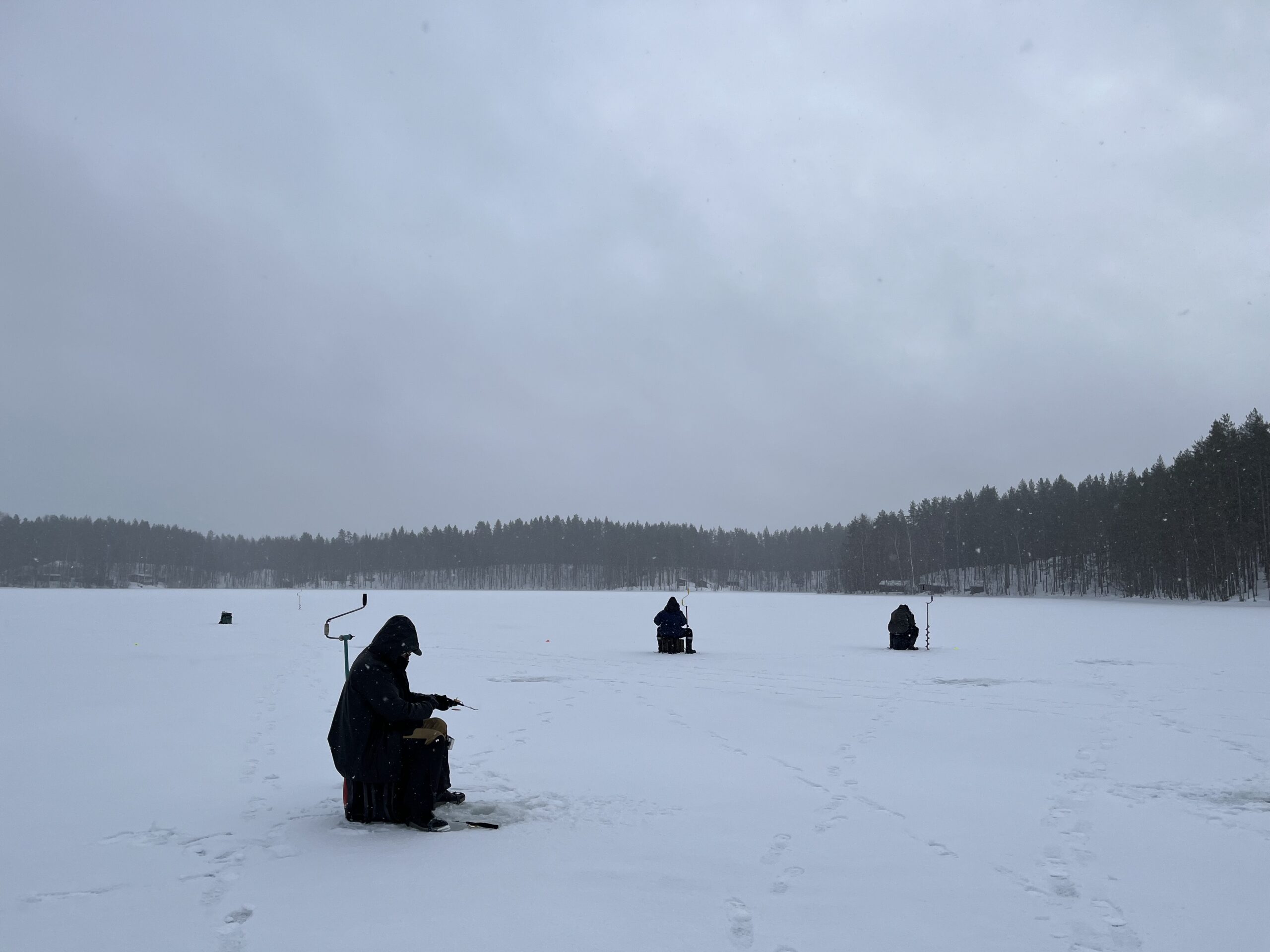
Together with researchers from the Max Planck Institute for Human Development, the Cluster of Excellence “Science of Intelligence” at TU Berlin and the University of Eastern Finland in Joensuu, Schakowski accompanied 74 experienced ice fishers over two years, during ten three-hour competitions on ten lakes in eastern Finland.Participants were equipped with GPS watches and wearable cameras, enabling the team to record participants’ routes, movements, fish catches, and the start and end of every fishing attempt. In total, they identified 477 individual foraging trips and 16,055 decisions for or against fishing locations. In addition, bathymetric maps showing detailed depth contours of the lakebeds were available. These made it possible to examine how the topological structure of a lake influences individual decision-making.
The team organized the competitions together with Finnish collaborators led by Raine Kortet. He is Professor in Aquatic Ecology at the University of Eastern Finland in Joensuu. As a passionate ice fisher deeply embedded in the community, Kortet has successfully participated in such competitions himself. “Without this connection, it would have been impossible to set up these competitions and recruit enough participants,” says Schakowski. Recruitment took place via dedicated messenger groups for ice fishers; in the second year, there were more volunteers than could be accommodated. “Ice-fishing has a very long tradition in Finland, and these competitions serve, among other things, as a means to keep this cultural practice alive,” says Kortet about the popularity of this sport. “Perch stocks in the Finnish lakes are numerous and healthy. For our participants, ice-fishing competitions are very important for their identity and reflective of ‘sisu’—a specifically Finnish concept describing strength in the face of adversity,” he says.
Five competitions in a row within a single week, followed by the same setup one year later, ensured comparable conditions. This required a lot of organization behind the scenes. “One challenge was to find cameras that could withstand minus 30 degrees Celsius for three hours. We tested this by placing different cameras in the freezer,” Schakowski recalls. To synchronize GPS and video data, the time displayed on the GPS watches was filmed at the start of each session. “In the end, we had the XY coordinates for every second, along with information on whether someone had just caught a fish. This allowed us to model how search behavior and decision-making change depending on success and the social environment.”
Schakowski himself tried ice fishing once—with little success. “Honestly, I wasn’t even sure what I would do if I actually hold a fish in my hands,” he says with a laugh. The team remained purely observational; the fishing itself was left to the professionals.
Social cues vs. personal experience
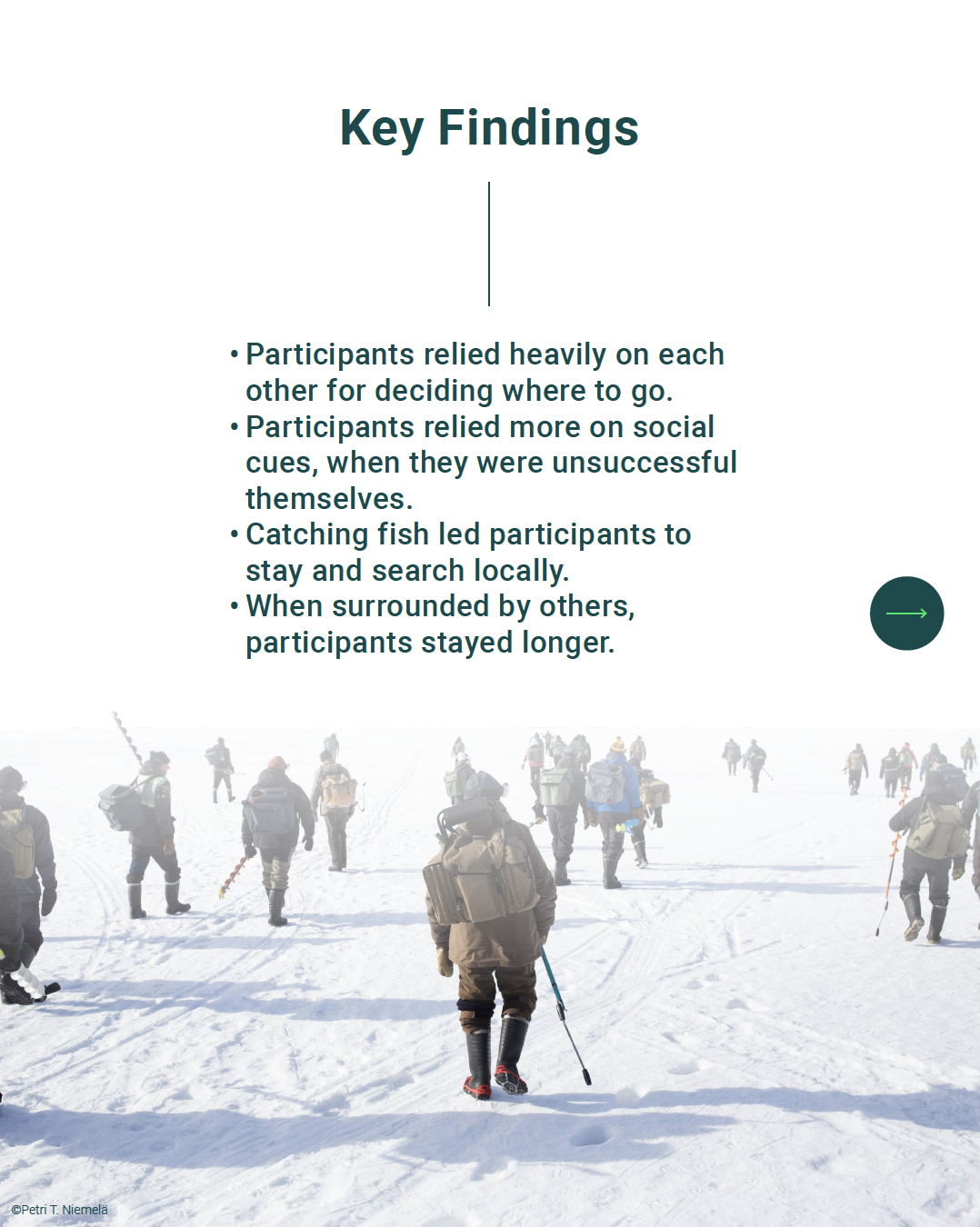
When deciding where to go next, a clear pattern emerged: personal experience and social cues act in a complementary manner. Participants who had just caught a fish continued searching near the successful location and avoided areas where no fish had bitten before. At the same time, the presence of others acted as a strong magnet—especially if a participant’s own success rate was poor. “If I see many ice fishers sitting in the same spot for a long time, I can assume something is going on there,” says Schakowski.
Conversely, successful participants relied more strongly on their own information and were less attracted to groups. This conditional use of social cues aligns with theories of social learning strategies: people are more likely to look to others when their own information is uncertain or outdated. Environmental cues derived from depth contours played a much smaller role. While they had a slight influence on location choice, they were not reliable predictors of actual catch success.
Who stays, who moves on?
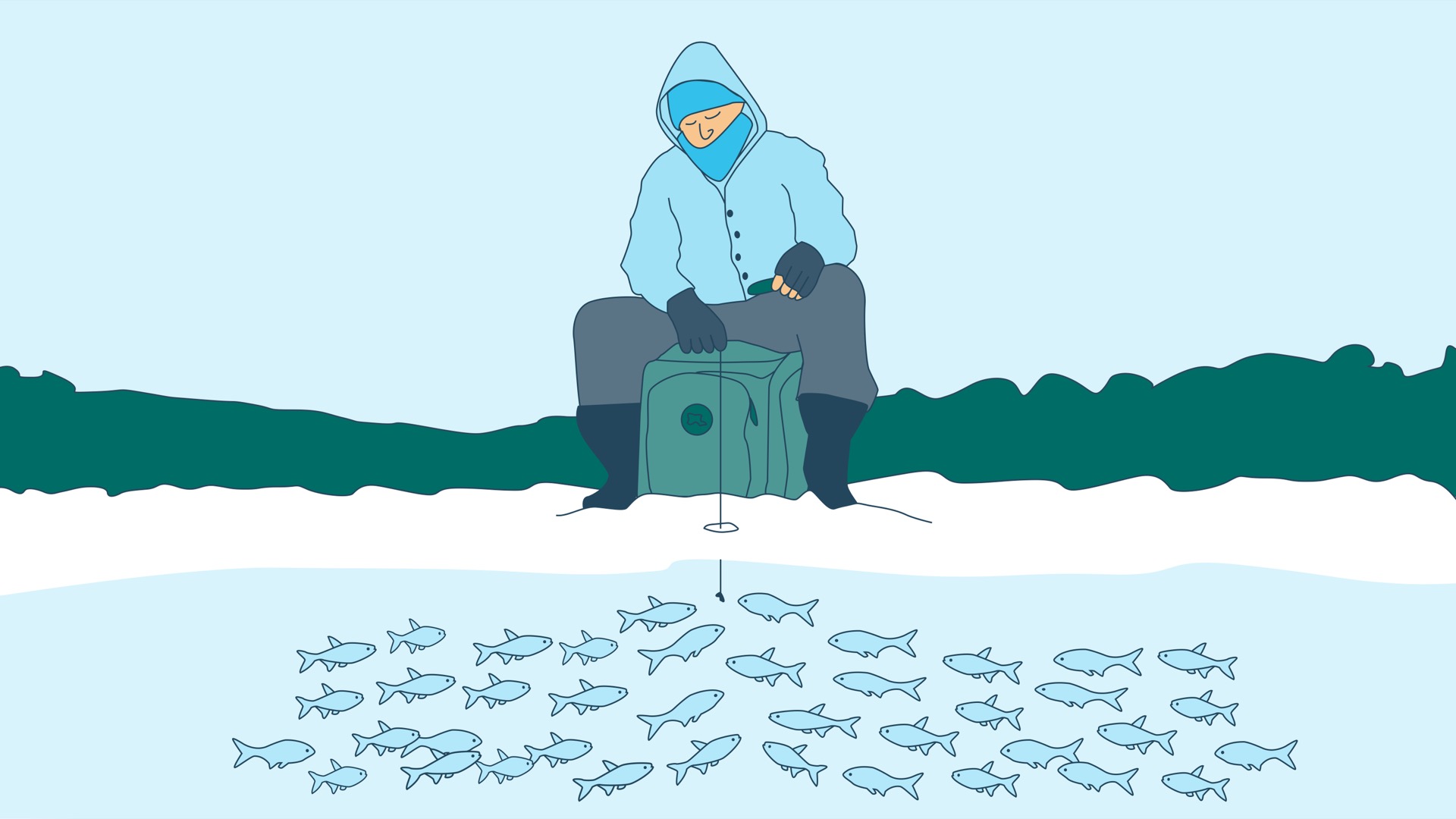
The results are even clearer when it comes to the decision to leave a fishing spot. Here, immediate feedback dominates: the longer the time without a catch, the higher the probability of moving on. The first catch, by contrast, acts as a brake, leading people to stay longer at that location.
“Essentially, behavior follows a simple rule: the ‘time without a catch,’ together with the information on whether a fish has already been caught, explains a lot of the variation in the decision to leave a fishing spot,” summarizes Schakowski. Social density at a location had a mildly stabilizing effect (people stayed slightly longer), whereas poor local conditions (many unsuccessful spots nearby) slightly increased the tendency to abandon a site.
Differences by age and gender
Participants differed consistently in how strongly they used social information and avoided unsuccessful areas. On average, women relied more on social cues, while older participants stayed longer in one place and were less likely to avoid unsuccessful areas. “This fits with literature showing that the tendency to explore declines with age,” says Schakowski.
Self-assessed fishing skill showed no clear effect. On average, participants had more than 40 years of experience in ice fishing, leaving little room for detectable differences.
The amount of fish in a lake shaped strategies. On lakes with a higher average catch, participants were less attracted to recent successful locations, and also left spots more quickly—a rational behavior in environments where profitable new locations are easier to find. Despite strategic differences, individual success remained highly variable. “It’s difficult to predict who will end up at the top of the table. A lot depends on luck and chance,” says Schakowski.
Innovative research methods from behavioral biology
Methodologically, the project serves as a blueprint. “We wanted to get out of the lab. The methods commonly used in cognitive psychology are difficult to scale to large, real-world social contexts. Instead, we took inspiration from studies of animal collective behavior, which routinely use cameras to automatically record behavior and GPS to provide continuous movement data for large groups of animals,” says project leader Ralf Kurvers. He is Senior Research Scientist at the Center for Adaptive Rationality at the Max Planck Institute for Human Development and Principal Investigator at the Cluster of Excellence “Science of Intelligence.” Kurvers, who originally studied the behavioral ecology of bird flocks and fish schools, now investigates collective decision-making in both humans and animals.
Insights into the foundations of social learning in complex environments can also improve the understanding of resource management under changing climatic conditions—for example, how “hotspots” form and how overuse—in this case, overfishing—might be prevented.
At a glance
- Ice-fishing competitions as a model for decision-making research: An international research team of the Max Planck Institute for Human Development, the Cluster of Excellence “Science of Intelligence” at TU Berlin and the University of Eastern Finland in Joensuu organized ice-fishing competitions in eastern Finland to study human foraging decisions in natural settings, including the influence of social context, personal experience, and environmental information.
- Participants and competitions: A total of 74 experienced ice fishers took part, over two years, in ten three-hour competitions on ten lakes in eastern Finland. Researchers recorded 477 individual foraging trips and 16,055 decisions about fishing locations.
- Interaction of personal experience and social cues: Successful anglers relied more strongly on their own experiences, while less successful participants used the presence of others as an indicator of promising locations. Environmental information had only a minor influence.
- Rules for staying or moving on: The decision to leave a fishing spot is primarily driven by the time without a catch, with the first catch extending the duration of stay. Social density further increases the likelihood of staying.Schakowski, A., Deffner, D., Kortet, R., Niemelä, P. T., Kavelaars, M. M., Monk, C. T., Pykälä, M., & Kurvers, R. H. J. M. (2026). High-precision tracking of human foragers reveals adaptive social information use in the wild. Science, 391(6784), Article eady1055. https://doi.org/10.1126/science.ady1055
Data and code are freely available at: https://github.com/aschakowski/Social-Foraging