Skip to content

  • About
    • Our Mission
    • Participating Institutions
    • Collaborations
    • Boards
    • Diversity
    • SCIoI Cluster Reports
    • Labs and Facilities
    • Newsletter
    • Contacts
  • Research
    • SCIoI Disciplines
    • Research Projects
    • Research Structure
    • Research Proposal (2026-2032)
    • Candidate Principles of Intelligence
    • Research Data
    • Final theses
    • Grants & Awards
    • SCIoI Publications
  • Activities
    • Intelligence Lectures
    • Lecture Series
    • Press coverage
    • TV/Radio Coverage
    • SCIoI Fair
    • Punching Cards Podcast
    • SCIoI Talks & Videos
    • Outreach Activities
    • Press Room
  • People
  • Education
    • Doctoral Program
    • Master’s Track
    • Conferences and Collaborations
  • Events
  • News
  • Jobs
  • About
    • Our Mission
    • Participating Institutions
    • Collaborations
    • Boards
    • Diversity
    • SCIoI Cluster Reports
    • Labs and Facilities
    • Newsletter
    • Contacts
  • Research
    • SCIoI Disciplines
    • Research Projects
    • Research Structure
    • Research Proposal (2026-2032)
    • Candidate Principles of Intelligence
    • Research Data
    • Final theses
    • Grants & Awards
    • SCIoI Publications
  • Activities
    • Intelligence Lectures
    • Lecture Series
    • Press coverage
    • TV/Radio Coverage
    • SCIoI Fair
    • Punching Cards Podcast
    • SCIoI Talks & Videos
    • Outreach Activities
    • Press Room
  • People
  • Education
    • Doctoral Program
    • Master’s Track
    • Conferences and Collaborations
  • Events
  • News
  • Jobs
12 events found.

Events Search and Views Navigation

Event Views Navigation

  • List
  • Month
Today
  • February 2024

  • Thu 1
    Thursday Morning Talk
    1 February, 2024 @ 10:00 am - 11:00 am

    Stefan Leutgeb, “Hippocampal Computations in Support of Spatial Navigation and Working Memory”

    MAR 2.057

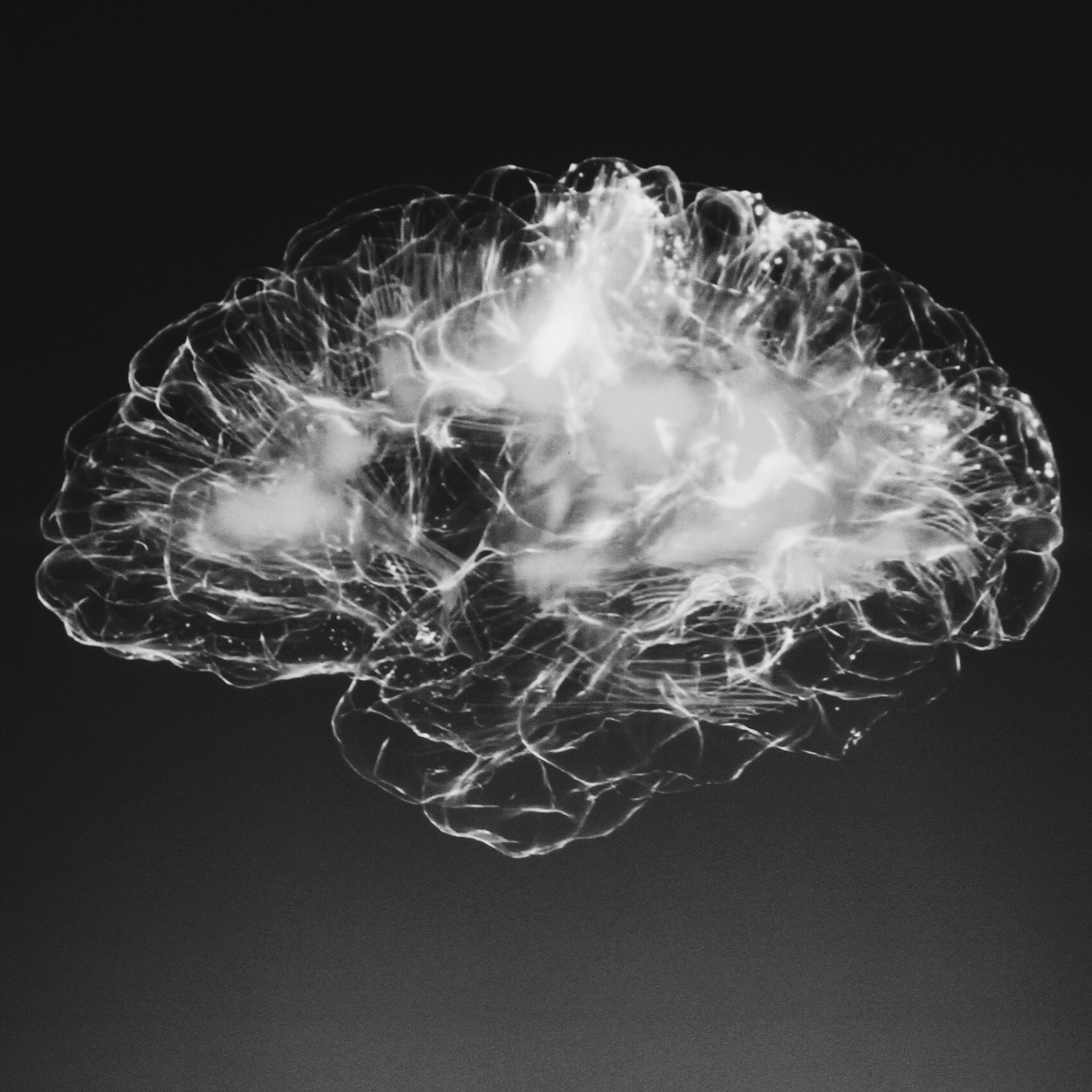
    Stefan Leutgeb is Professor of Neurobiology at University of California San Diego. Currently a fellow of the Wissenschaftskolleg zu Berlin with his research on neural computations in real brains and in artificial systems. More details to follow. This talk will take place in person at SCIoI. Photo by Alina Grubnyak on Unsplash.    
  • Thu 22
    Thursday Morning Talk
    22 February, 2024 @ 10:00 am - 11:00 am

    Tim Kietzmann (University of Osnabrück), “Large Language Models Offer a Rich Representational Format for Understanding the Transformation of Visual Information in the Human Brain.”

    Abstract: Originating from the connectionist movement of cognitive science, deep neural networks (DNNs) have had tremendous influence on artificial intelligence, operating at the core of today’s most powerful applications. At the same time, cognitive computational neuroscientists have recognised their promise to act as “Goldilocks” models of brain function: DNNs are grounded in sensory data, can

  • Thu 22
    Distinguished Speaker Series
    22 February, 2024 @ 4:00 pm - 5:30 pm

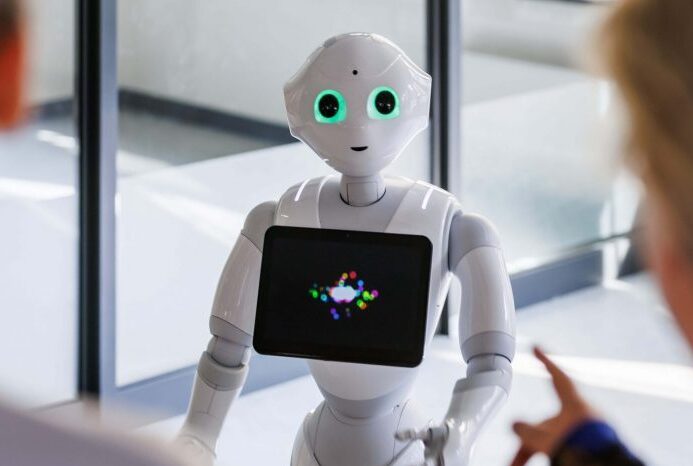
    Antonio Bicchi (University of Pisa), “What Is It Like To Be a Bot?”

    Abstract The impressive evolution that artificial intelligence, virtual reality, and robotics have recently undergone reached a point where it is now possible to fuse these technologies and create another body for the self. This possibility poses new questions at the core of embodied intelligence. In this talk I will examine a few of the technical,

  • Mon 26
    External Event
    26 February, 2024 - 1 March, 2024

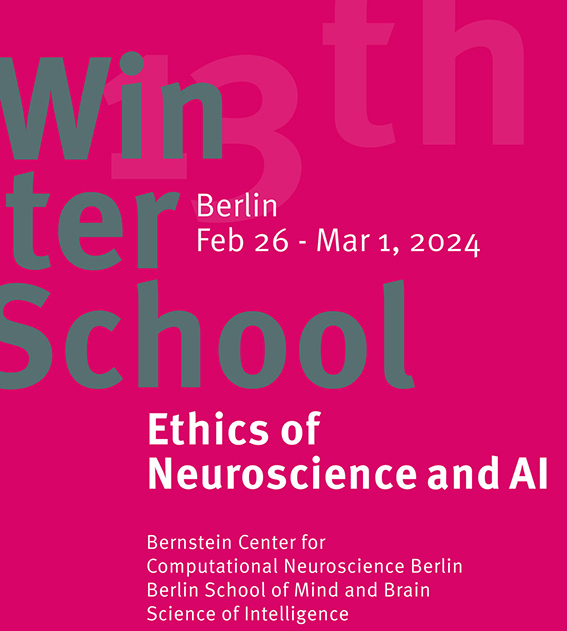
    Winter School “Ethics of Neuroscience and AI” 2024

    The 13th Winter School "Ethics of Neuroscience and AI" is taking place on Feb 26 - March 1, 2024. It is organized by the BCCN Berlin/ICCN, the Berlin School of Mind and Brain, and the Excellence Cluster "Science of Intelligence". The event is tailored for MSc and PhD students, but covers a range of topics

  • March 2024

  • Thu 7
    Thursday Morning Talk
    7 March, 2024 @ 10:00 am - 11:00 pm

    Christian Poth (Bielefeld University), “Task-Driven Phasic Alertness: How Being Ready for Action Relies on the Current Task”

    Abstract: Humans often must respond quickly to events happening in their environment. To support fast perception and action, the brain has evolved a warning system. Warning stimuli are used to elicit a transient state of readiness for perception and action (phasic alertness) that results in faster perceptual processing and faster decision-making for action. Phasic alertenss

  • Thu 7
    Distinguished Speaker Series
    7 March, 2024 @ 4:00 pm - 5:00 pm

    POSTPONED: Onur Güntürkün (Ruhr-Universität Bochum), “The Evolution of Brain and Cognition: A Wild Hypothesis”

    Onur Güntürkün is regarded as a pioneer of biologically based psychology. The aim of his work is to find out how perception, thought and action arise in the brain. He is interested in diverse topics, such as motor learning, fear, risk-taking behavior and even kissing. In his research, Güntürkün combines psychological, biological and neuroanatomical aspects

  • Thu 21
    Distinguished Speaker Series
    21 March, 2024 @ 8:00 am - 5:00 pm

    Michael Beetz (Universität Bremen), “Empowering Robots with Digital Mental Models: Filling the Cognitive Gap for Everyday Tasks”

    In this talk I introduce Digital Mental Models (DMMs) as a novel cognitive capability of AI-powered and cognition-enabled robots. By combining digital twin technology with symbolic knowledge representation and embodying this combination into robots, we tackle the challenge of converting vague task requests into specific robot actions, that is robot motions that cause desired physical

  • Thu 21
    Thursday Morning Talk
    21 March, 2024 @ 10:00 am - 11:00 am

    Fariba Karimi (Graz University of Technology), “Complexity Science for Societal Good”

    MAR 2.057

    Abstract: Social inequalities -- structured and recurrent patterns of unequal distribution of wealth, opportunities, and rewards -- are on the rise, and quick-fix, top-down approaches are failing. Structural inequality is one of the important manifestations of social inequalities in which institutions, policies, and societies create systems of privilege that are structural barriers to equality and

  • Thu 28
    Thursday Morning Talk
    28 March, 2024 @ 10:00 am - 11:30 am

    Heiner Spieß (Science of Intelligence), “Tools to Study the Generality of Deep Neural Network Representations”

    More details to follow. This talk will take place in person at SCIoI.  

  • April 2024

  • Thu 4
    Thursday Morning Talk
    4 April, 2024 @ 10:00 am - 11:30 pm

    Jacek Wiland, “Assessing the Factual Knowledge Contained in Language Models During Lifelong Learning”

    More details to follow. This talk will take place in person at SCIoI.  

  • Thu 11
    Thursday Morning Talk
    11 April, 2024 @ 10:00 am - 11:00 am

    Hector Garcia De Marina (University of Granada), “Practical Challenges in Formation Control and Mobile Robot Swarms”

    MAR 2.057

    Abstract: Robot swarms have the potential to assist us with simpler logistics in persistent missions involving vast scenarios. Robot swarms also promise added resilience to complete their objectives despite unforeseen difficulties. However, current demonstrations of swarm technology in unstructured environments only count on single-digit individuals. That is farther from what one would expect from the

  • Thu 18
    Thursday Morning Talk
    18 April, 2024 @ 10:00 am - 11:30 am

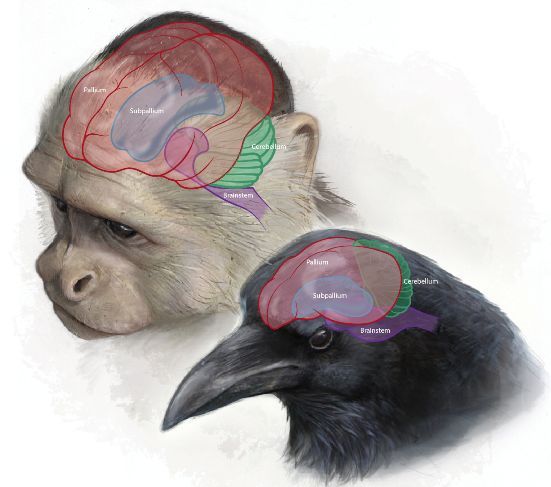
    Pavel Němec (Charles University), “Two Independent Origins of Complex Brains and Intelligent Behavior in Birds and Mammals”

    Abstract: Over the last 20 years, it has been shown that birds and mammals are startlingly similar in their cognitive repertoire. Even the most intelligent taxa from each group – great apes and large corvids and parrots – match each other in most domains of cognition. This functional similarity is remarkable considering that birds and

  • Previous Events
  • Today
  • Next Events
  • Google Calendar
  • iCalendar
  • Outlook 365
  • Outlook Live
  • Export .ics file
  • Export Outlook .ics file

Science of
Intelligence

Funded by the Deutsche Forschungsgemeinschaft (DFG, German Research Foundation) under Germany ́s Excellence Strategy – EXC 2020/1 and 2020/2 – Project number 390523135.

Marchstr. 23 – MAR 5-2
10587 Berlin
Email: info@scioi.de
Tel: +49 30 314 70660

  • Instagram Icon
  • Facebook Icon
  • Youtube Icon
  • Twitter Icon

Imprint | Data Protection

Newsletter

Subscribe to our newsletter to receive the latest news from SCIoI.

Subscribe

Useful links

Doctoral Program
Publications
Events
Press Room
Contacts
Jobs and Research Positions