• For the Public

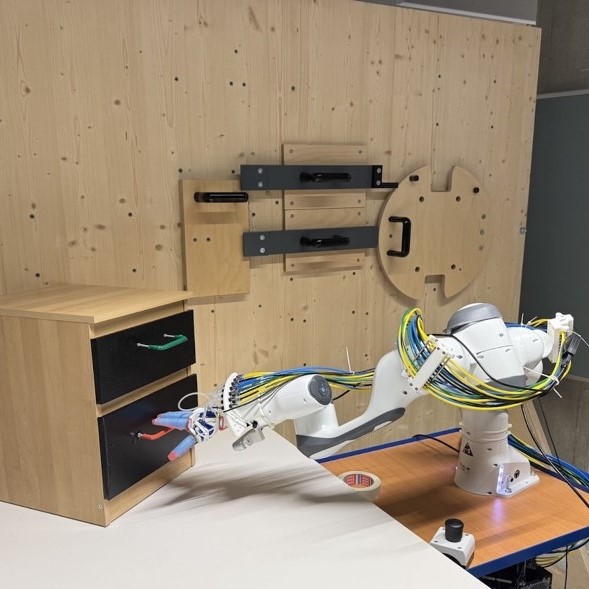
    LNDW 2025/Open Labs at RBO: Hands-On with the Future: Control a Soft Robotic Hand!

    SCIoI, MAR Building Marchstr. 23, Berlin

    Where: RBO Lab (5th floor) Time: At regular intervals between 5:30 and 10pm Event Type:  Experiment By Alexander Koenig Language: English and German Suitable for kids: Yes, from 5 Website: www.tu.berlin/en/robotics Did you ever wonder what it feels like to control a robotic hand? At the Robotics and Biology Lab you can see, touch and

  • For the Public

    LNDW 2025/SCIoI Open Labs: Become a Swordfish and Chase Virtual Fish in a Mixed Reality Game

    SCIoI, MAR Building Marchstr. 23, Berlin

    Where: Showroom, SCIoI, TU MAR building Room 2.034 Time: At regular intervals from 5:30 to 10pm By David Mezey and Palina Bartashevich Language: English Suitable for kids: Yes (only with parental supervision 5+) Description: Visitors can dive into the world of collective intelligence by becoming a marlin (a large swordfish) and chasing a swarm of

  • For the Public

    LNDW 2025/SCIoI Open Labs: How Group Structure Shapes the Spread of Behavior

    SCIoI, MAR Building Marchstr. 23, Berlin

    Where: Showroom, SCIoI, TU MAR building Room 2.034 Time: At regular intervals from 5:30 to 10pm By Maryam Karimian Language: English Suitable for kids: No This demo showcases simulation results that illustrate how group size and density influence the spread of behavior by systematically manipulating these factors and evaluating their impact on contagion dynamics. Check

  • For the Public

    LNDW 2025/SCIoI Open Labs: Explore Vision Science & Create Art with Your Eyes!

    SCIoI, MAR Building Marchstr. 23, Berlin

    Where: Dark Lab (Room 2.008) Time: regular intervals between 5:30 and 10pm Event Type:  Experiment By Ole Hall, Julie Ouerfelli-Ethier, and Qu Runfeng Language: English, German, French Suitable for kids: Yes, from 5 The SCIoI Vision Lab is opening its doors to the public! Join us for a unique experience. Discover Eye Tracking – Live demonstrations will

  • For the Public

    LNDW 2025/Open Labs at RBO: Feeling Without Seeing

    SCIoI, MAR Building Marchstr. 23, Berlin

    Where: RBO Lab (5th floor) Time: regular intervals between 5:30 and 10pm Event Type: Experiment By Furkan Davulcu Language: English Suitable for kids: Yes, from 5 Website: www.tu.berlin/en/robotics How do you recognize objects just by touch? Our amazing soft robotic hand can do it too! Fitted with special sensors in its squishy fingers, it feels

  • For the Public

    LNDW 2025/Open Labs at RBO: Robot Plays Escape Room

    SCIoI, MAR Building Marchstr. 23, Berlin

    Where: RBO Lab (5th floor) Time: at regular intervals between 5:30 and 10pm Event Type:  Demonstration By Paul Xu Pu Language: English Suitable for kids: Yes, from 5 Website: www.tu.berlin/en/robotics Do you know our robot can play the escape room game? Join us to explore how we build intelligent systems by combining various abilities. Watch

  • For the Public

    LNDW 2025/SCIoI Open Labs: Smart Swarms – How Mathematics Helps To Understand Swarm Behavior and Collective Intelligence

    SCIoI, MAR Building Marchstr. 23, Berlin

    Where: SCIoI, TU MAR building Room 2.013 Time: at 5:45 and 6:45pm (duration: 30 mins) Event Type: Talk By Prof. Pawel Romanczuk Language: English and German Suitable for kids: No This exciting lecture is meant to give a short intro to collective intelligence, and can also serve as an introduction to the CoBe experiments you

  • For the Public

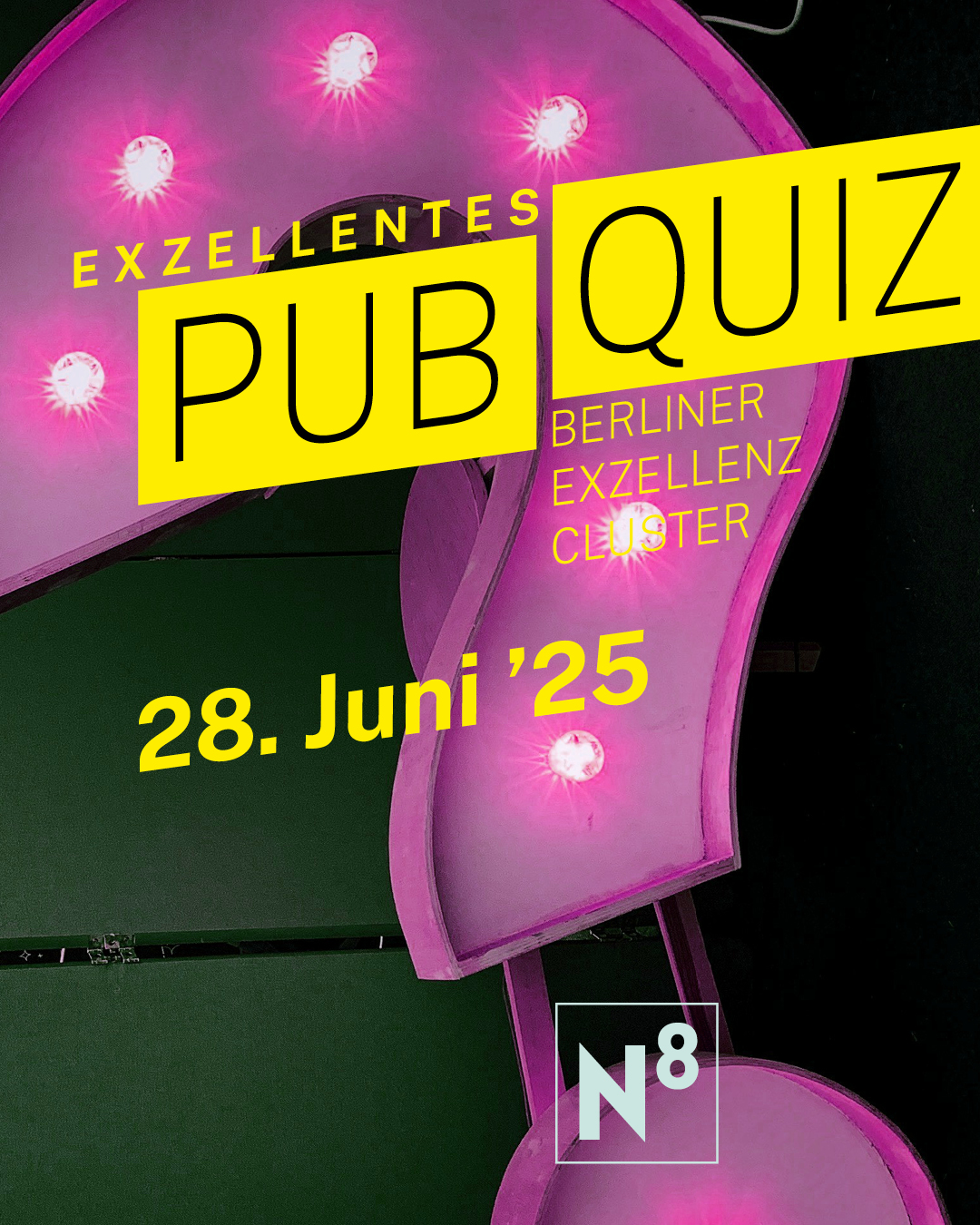
    Lange Nacht der Wissenschaften 2025, Excellent Pub Quiz

    TU Berlin, Wangari Mathaai Foyer, Straße des 17. Juni 135, in the main building

    Join the “Excellent Pub Quiz” at the Long Night of the Sciences 2025! Back by popular demand: team up with your friends (2–4 people), come up with a fun team name, and put your knowledge to the test at the Excellent Pub Quiz hosted by Berlin’s seven Clusters of Excellence at TU Berlin. Exciting prizes

  • Hot Topics in Intelligence Research

    POSTPONED: Alan Winfield (UWE Bristol) & Dafna Burema (Science of Intelligence)

    SCIoI, Marchstraße 23, 10587 Berlin, Room 2.057

    This event has been postponed to 29 July 2025. How should we think about Ethics when Machines become part of our social worlds? Alan Winfield and Dafna Burema will explore the ethical and societal dimensions of robotics and AI in an interactive fishbowl and in conversation with Master`s students of the course “Introduction to Modeling

  • Thursday Morning Talk

    Raina Zakir (Université Libre De Bruxelles), “Robust Decision-Making in Minimalistic Robot Swarms Under Social Noise”

    SCIoI, Marchstraße 23, 10587 Berlin, Room 2.057

    Abstract Minimalistic robot swarms hold great promise for applications in healthcare, disaster response, and environmental monitoring. A key challenge lies in enabling these robots to rapidly and reliably reach consensus using limited communication, computation, and memory. In this talk, we explore how robot swarms can collectively identify the best among multiple discrete options in their

  • Hot Topics in Intelligence Research

    William Warren (Brown University), “The Dynamics of Perception and Action: From Pedestrian Interactions to Collective Behavior”

    SCIoI, Marchstraße 23, 10587 Berlin, Room 2.057

    It’s a perplexing time in the study of visual perception. On the one hand, there is a resurgence of models that freely posit a priori structure in the visual system, including priors, generative world models, and physics engines. On the other hand, there is the astonishing a posteriori success of deep neural networks trained only

  • Thursday Morning Talk

    Matthias Nau (Vrije Universiteit Amsterdam), “Revealing General Principles Underlying Active Vision and Memory”

    SCIoI, Marchstraße 23, 10587 Berlin, Room 2.057

    Abstract: Cognitive neuroscience seeks theories that jointly explain behavioral, neural, and mental states. The dominant approach is to use specialized tasks designed to optimally probe a concept of interest (e.g., episodic memory), and to disentangle behavioral, sensory, and mnemonic factors through design (e.g., by constraining gaze during image recognition). I will present an alternative framework