• Carlo Pinciroli (Worcester Polytechnic Institute), “Simulation Platforms and sim2real Gap”

    Hot Topics in Intelligence Research
    SCIoI, Marchstraße 23, 10587 Berlin, Room 2.057

    Carlo Pinciroli is an Associate Professor and Graduate Coordinator of the Robotics Engineering department at Worcester Polytechnic Institute (WPI), where he leads the NEST (Novel Engineering for Swarm Technologies) Lab. With additional appointments in WPI’s Artificial Intelligence Program, Computer Science, and Fire Protection Engineering, his research centers on swarm robotics. He is the creator of

  • Oliver Kroemer (Carnegie Mellon University), “Modularity and Learning To Structure Robot Manipulation Skills”

    Hot Topics in Intelligence Research
    SCIoI, Marchstraße 23, 10587 Berlin, Room 2.057

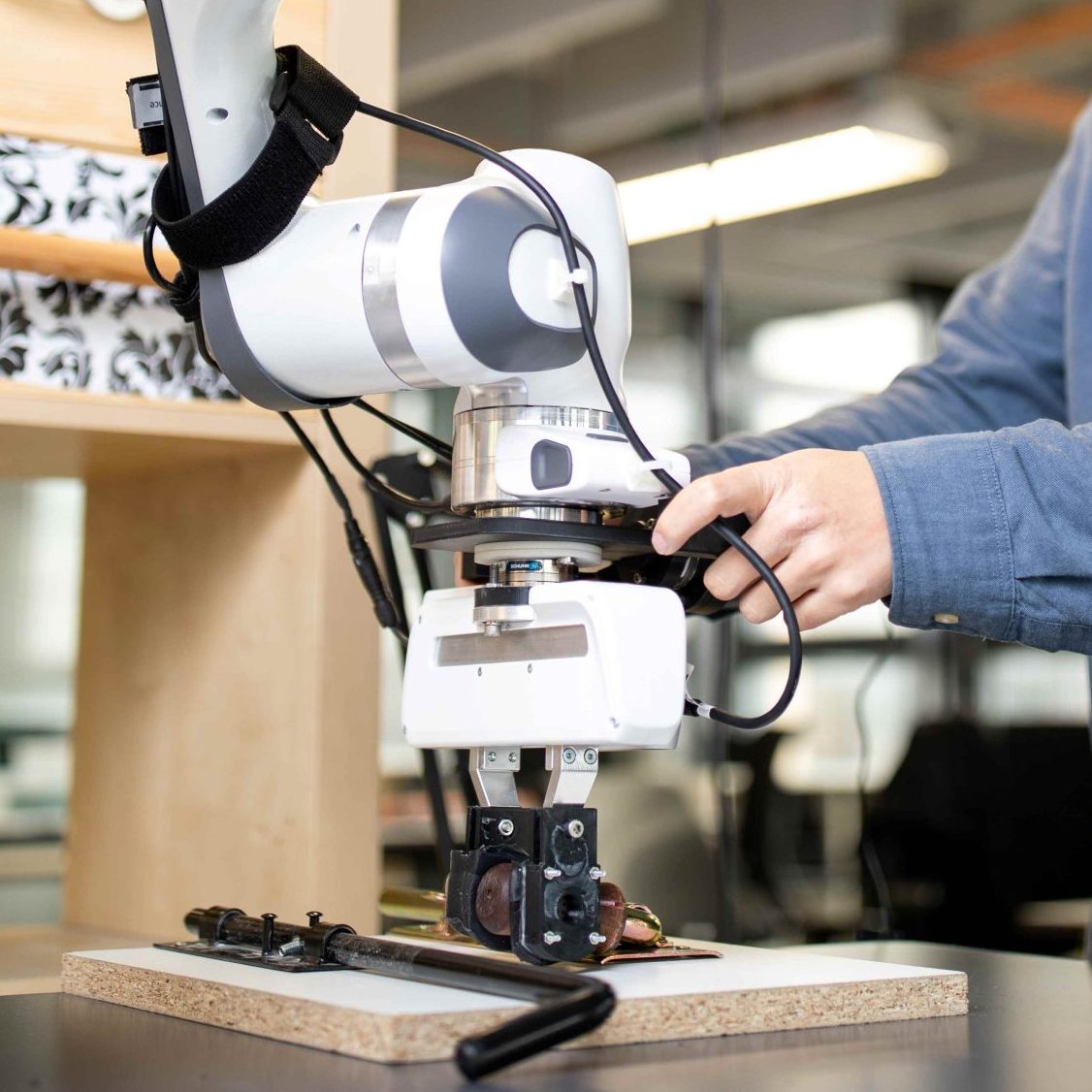
    Oliver Kroemer’s research focuses on developing algorithms and representations that enable robots to learn versatile manipulation skills over time. By equipping robots with the ability to acquire new skills and adapt manipulations to novel situations, his work opens up a wide range of potential applications—from assisting the elderly and maintaining parks and public spaces to

  • Mary Ellen Foster (University of Glasgow), “Face-to-Face Conversation With Socially Intelligent Robots”

    Hot Topics in Intelligence Research
    SCIoI, Marchstraße 23, 10587 Berlin, Room 2.057

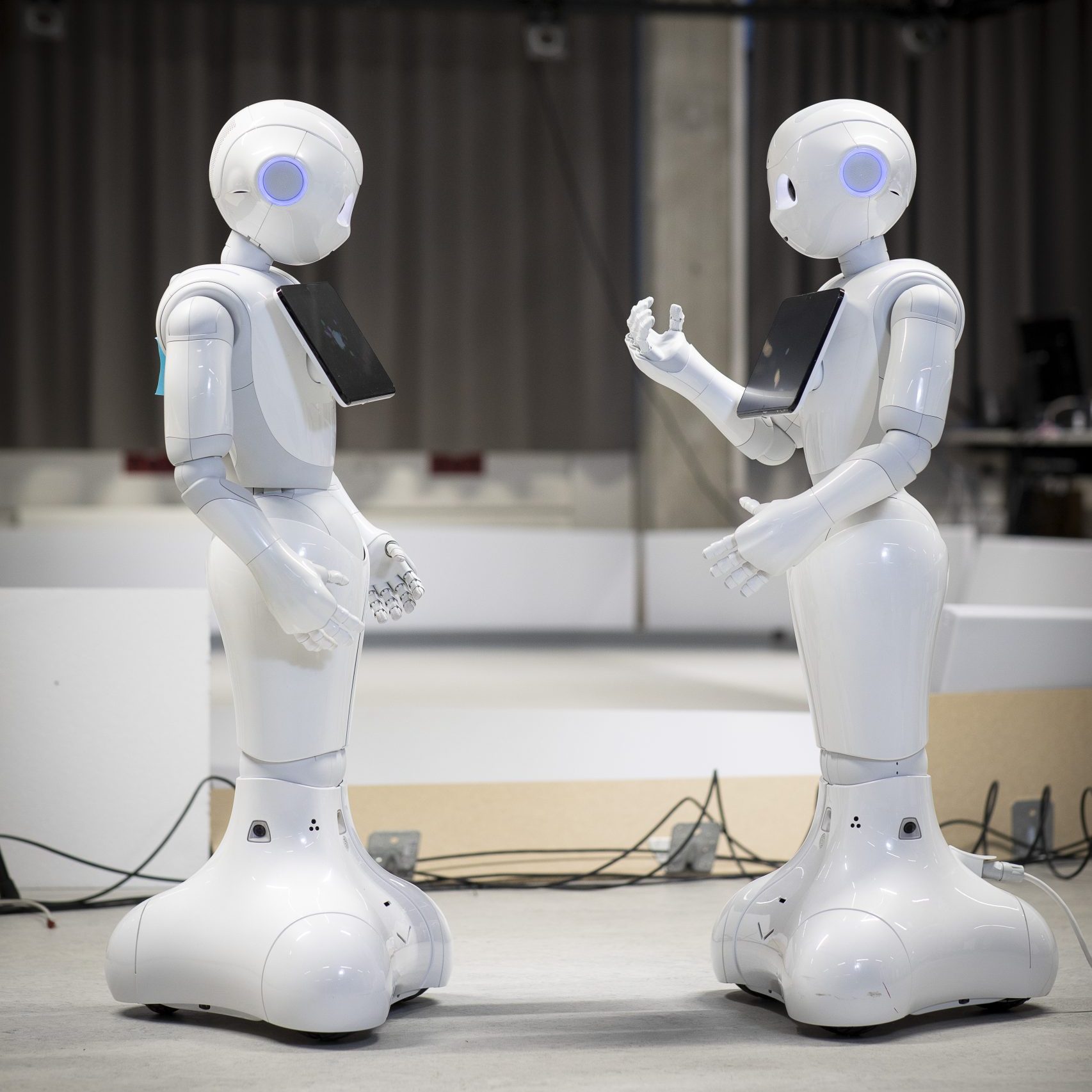
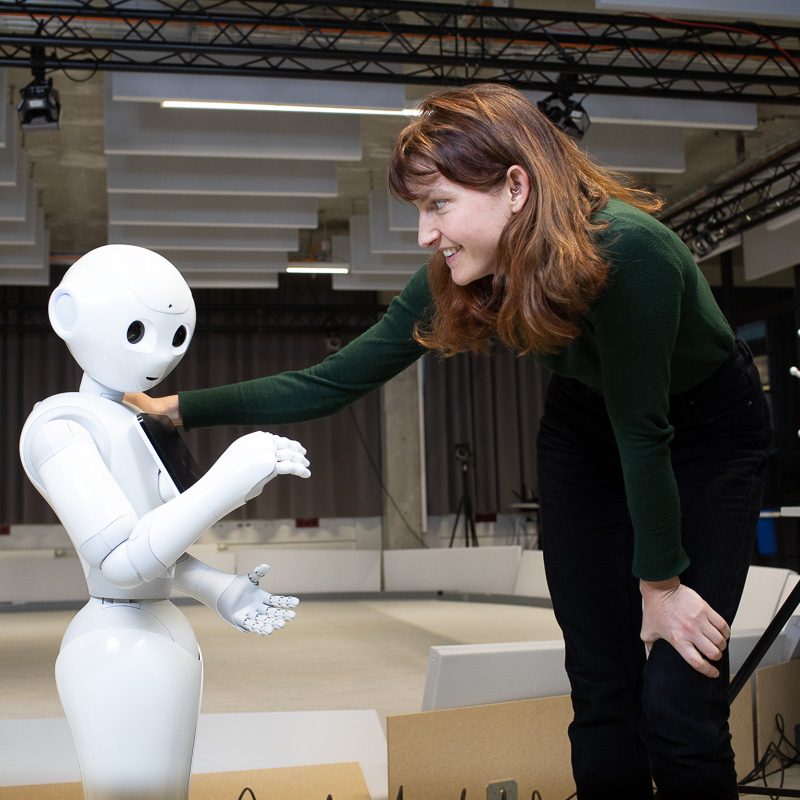
    When humans talk to each other face-to-face, they use their voices, faces, and bodies together in a rich, multimodal, continuous, interactive process. For a robot to participate fully in this sort of natural, face-to-face conversation in the real world, it must also be able not only to understand the social signals of its human partners,

  • Anita Keshmirian (Forward College, Berlin): “Many Minds, Diverging Morals: Human Groups vs. AI in Moral Decision-Making”

    Thursday Morning Talk
    SCIoI, Marchstraße 23, 10587 Berlin, Room 2.057

    Moral judgments are inherently social, shaped by interactions with others in everyday life. Despite this, psychological research has rarely examined the impact of social interactions on these judgments. In our study, we explored the role of group dynamics in moral decision-making by having small groups (4-5 participants) evaluate moral dilemmas first individually, then collectively, and

  • SCIoI at Oxford Berlin Colloquium on AI Ethics

    External Event
    Beit Room, Rhodes House, South Parks Road, Oxford, OX1 3RG

    The 2025 Oxford Berlin colloquium on AI ethics will be held in Oxford and bring together scholars and professionals to discuss a variety of topics, hosted by Dr Caroline Green (Oxford) and Dr Luise Muller (Freie Universitat Berlin). AI technologies, from large language models to self-driving cars, raise fundamental philosophical questions. The aim of the

  • Rudolf Lioutikov (Karlsruher Institut für Technologie), “Versatile, Language Conditioned Robots”

    Hot Topics in Intelligence Research
    SCIoI, Marchstraße 23, 10587 Berlin, Room 2.057

    More info will follow soon. This talk will take place as part of SCIoI member Svetlana Levit’s seminar “Selected Topics in Robot Learning,” which explores how advances in machine learning are helping robots operate in new environments, learn new behaviors, and adapt to changing conditions.

  • Giovanni Beltrame (Polytechnique Montreal), “Field Collective Robotics: Challenges and Applications”

    Hot Topics in Intelligence Research
    SCIoI, Marchstraße 23, 10587 Berlin, Room 2.057

    Giovanni Beltrame is a Professor in the Department of Computer and Software Engineering at Polytechnique Montréal, where he leads the Making Innovative Space Technology (MIST) Laboratory. At MIST Lab, Giovanni is conducting projects in collaboration with industry and government agencies in areas such as robotics, disaster response, and space exploration. His research interests include the

  • Stephen M. Fiore (University of Central Florida), “Studying Artificial Social Intelligence: Understanding and Examining Social Cognitive Processes in Human-Machine Collaborations”

    Hot Topics in Intelligence Research
    SCIoI, Marchstraße 23, 10587 Berlin, Room 2.057

    In this presentation Stephen M. Fiore will provide an overview of a body of research in social cognition and its relation to developing artificial social intelligence. In the rapidly evolving landscape of artificial intelligence (AI), an important research direction is the development of systems that can work alongside and collaborate with humans as actual teammates.

  • Wannes Ooms (KU Leuven Centre for IT & IP Law -Imec): A General Introduction to the EU AI Act

    Thursday Morning Talk
    Marchstraße 23, 10587 Berlin, Room 2.057

    The EU AI Act introduces new obligations for providers and deployers of AI systems. In this presentation, we will discuss the scope of the AI Act, the different qualifications of AI systems under the act and the related obligations or requirements. We also provide a look ahead at key deadlines, the status of standards and

  • Maarten Sap (Carnegie Mellon University), “Artificial Social Intelligence? On the Challenges of Socially Aware and Ethically Informed LLMs”

    Hot Topics in Intelligence Research
    SCIoI, Marchstraße 23, 10587 Berlin, Room 2.057

    Modern AI systems such as LLMs are pervasive and helpful, but do they really have the social intelligence to seamlessly and safely engage in interactions with humans? In this talk, Maarten Sap will delve into the limits of social intelligence of LLMs and how we can measure and anticipate their risks. He will introduce Sotopia,

  • Goldie Nejat (University of Toronto), “Paging the Socially Assistive Robots: Intelligent and Persuasive Social Robots for Healthcare and Beyond”

    Hot Topics in Intelligence Research
    SCIoI, Marchstraße 23, 10587 Berlin, Room 2.057

    The world is experiencing a silver tsunami: rapid population aging. As the world’s older population significantly increases, dementia is becoming one of the fastest growing diseases, with no cure in sight. Socially assistive robots are a unique disruptive innovation that are becoming a crucial part of everyday society, especially in a post-pandemic world, aiding people

  • Tucker Hermans (University of Utah, NVIDIA), “Learning and Planning With Relational Dynamics Models for Robot Manipulation”

    Hot Topics in Intelligence Research
    SCIoI, Marchstraße 23, 10587 Berlin, Room 2.057

    More info will follow soon. This talk will take place as part of SCIoI member Svetlana Levit’s seminar “Selected Topics in Robot Learning,” which explores how advances in machine learning are helping robots operate in new environments, learn new behaviors, and adapt to changing conditions.