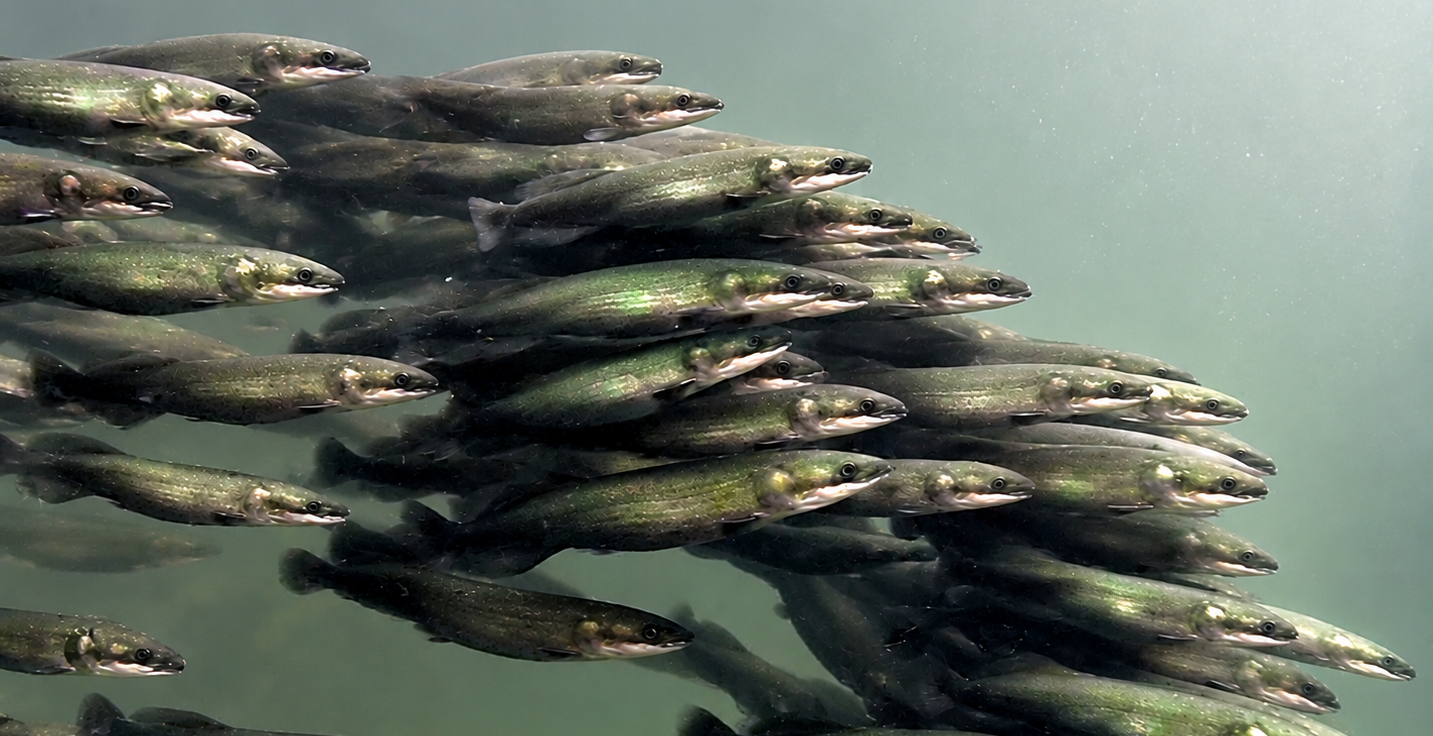
And now, everyone: breathe!

Paper DOI →

Young Arapaimas — the giants of the Amazon — surface for air in perfect synchrony


Some fish swim in synchrony. Others, it turns out, breathe in synchrony. This is true for the Arapaima, an obligate air-breathing species living in the Amazon. A new study in Communications Biology, led by the Leibniz Institute of Freshwater Ecology and Inland Fisheries (IGB) in collaboration with the Cluster of Excellence “Science of Intelligence”, has demonstrated for the first time that Arapaima juveniles gather by the hundreds to synchronize their trips to the water surface with split-second precision, most likely to avoid predators and maximize survival and efficiency. The principle behind this behavior could also help inform mathematical models for synchronizing heterogeneous groups of robots or drone swarms.

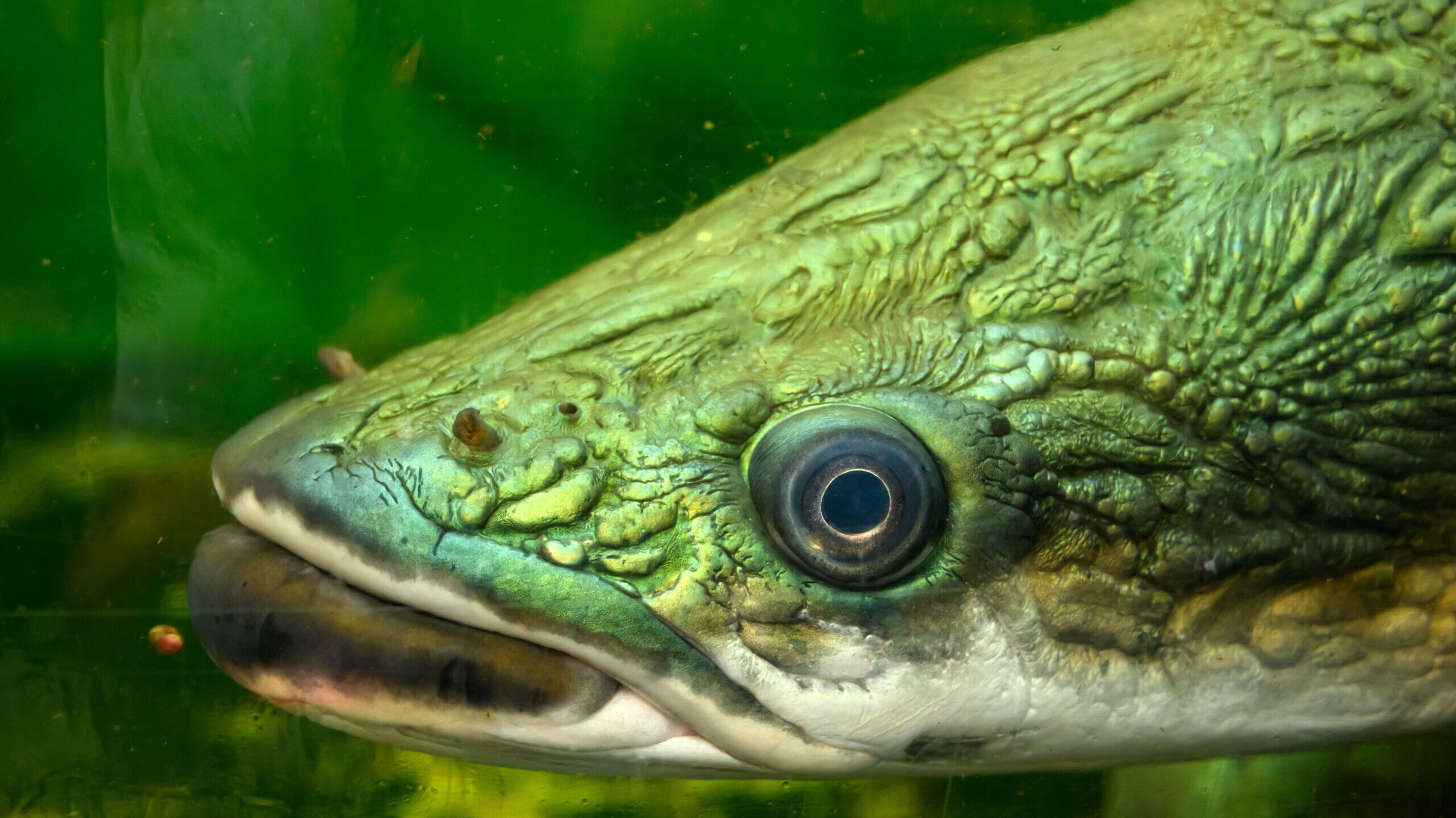
Not much is known about this rare species: Arapaimas (Arapaima gigas) are among the largest freshwater fish in the world, reaching lengths of more than two meters and weights of almost 300 kilograms. Unlike most fish, they depend on breathing air. Adult Arapaimas must surface roughly every ten minutes, while juveniles need to come up much more often, every one to two minutes. This adaptation allows them to survive in the often oxygen-poor waters of the Amazon Basin. The new study shows that young Arapaimas do not simply surface individually: in groups of several hundred animals, they synchronize their breaths down to the second.
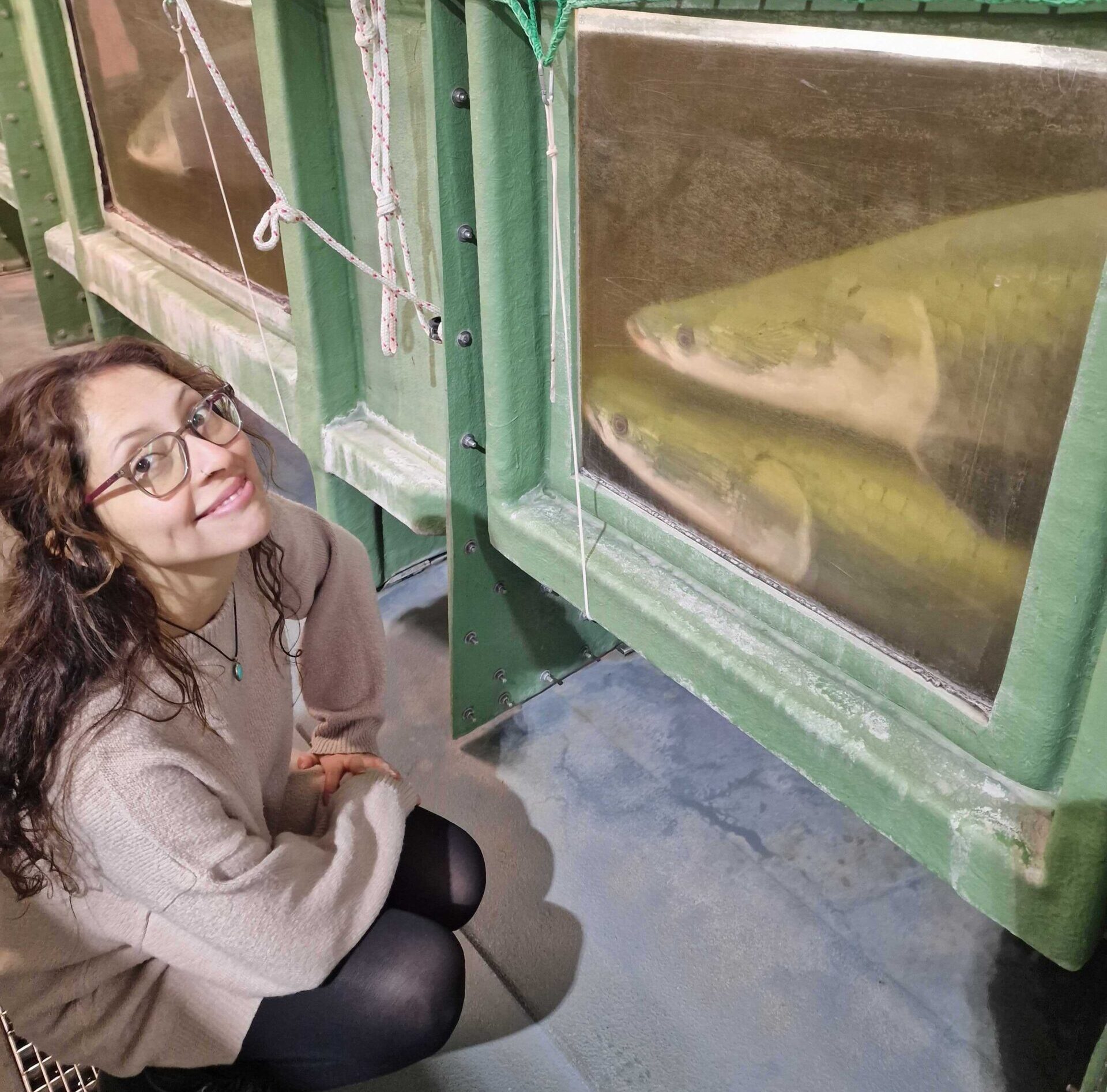
In an aquaculture facility, the researchers observed that in a group of around 200 juveniles, more than 100 fish often surfaced together within a single second to gulp air. In some cases, all 200 fish rose to the surface at the same time. This highly synchronized behavior was repeated approximately every fifteen seconds. When observed individually, however, the fish showed very different intervals between breaths, ranging from about one minute to more than two minutes.

Collective behavior can confuse attacking birds

“Remarkably, the individual juveniles actually differ quite a lot in how long they can hold their breath. But it seems to pay off to swim to the surface together with many others. This way, the juveniles, which are only a few centimeters long, are better protected from birds waiting for them to come up for air,” says Palina Bartashevitch, first author of the study. “In large groups, animals are safer because predators have a harder time targeting single individuals, especially when everything happens very quickly, as it does with Arapaimas. At the same time, the risk of being eaten is spread across all those taking part. If you encounter a predator alone, however, it is clear who will be eaten.”

Synchronization through “breathing groups”

Using computer simulations, the researchers were able to identify how the animals synchronize their different breathing needs. The model suggests that fish surface together with group members that have similar needs for air. This means they have to make fewer compromises than they would if the entire group had to surface together every time. Fish that have just taken a breath sit out the next round.

This form of “cluster synchrony” allows more than 75 percent of the group to take part in many breathing events, without any individual having to wait too long — or having to swim to the dangerous surface too often.

A natural principle for synchronizing diverse robot and drone swarms

The findings do more than shed light on swarm dynamics and animal survival strategies. “Thanks to the generalized modeling approach, this synchronous behavior, shaped by more than 23 million years of evolution, can also be transferred to swarms of robots and drones,” says David Bierbach, who led the study.

“There are different models of drones that fly synchronously or perform a specific behavior together, and the computer models we were able to derive from the study can be used to improve their synchronous performance,” says Bierbach. And one key advantage is that the robots or drones would not all have to be identical. Even heterogeneous groups could still perform highly synchronized movements or actions, much like young Arapaimas surfacing together for air.”

This makes the findings especially relevant for future robotics: if each machine coordinates with others that best match its own needs, mixed groups could achieve highly synchronized behavior with minimal individual compromise, from environmental monitoring and agriculture to microplastics removal and search-and-rescue missions.

At a Glance

  • Arapaimas are among the largest freshwater fish in the world, reaching lengths of more than two meters and weights of almost 300 kilograms. In order to survive the oxygen-poor water of the Amazon Basin, they are obligate air-breathers.
  • Researchers from the Leibniz Institute of Freshwater Ecology and Inland Fisheries (IGB) in collaboration with the Cluster of Excellence “Science of Intelligence” have described for the very first time that these fish’s juveniles gather by the hundreds to synchronize their breathing trips to the water surface.
  • Most likely, this behavior maximizes their survival: By synchronizing their breathing events at the surface, the juveniles are better protected from birds waiting for them to come up for air: the birds just have a harder time targeting single individuals, and the risk of being eaten is split between all the fish.
  • The experiment, which was done in an aquaculture tank in Germany, resulted in a computational model that can be applied to building robots or drones acting in synchrony, optimizing their behavior.

Research

An overview of our scientific work

See our Research Projects