• 20th Conference of the Gesellschaft Für Ichthyologie (GfI)

    External Event
    Bernstein Center for Computational Neuroscience Berlin Philippstraße 13/Haus 6, 10115 Berlin

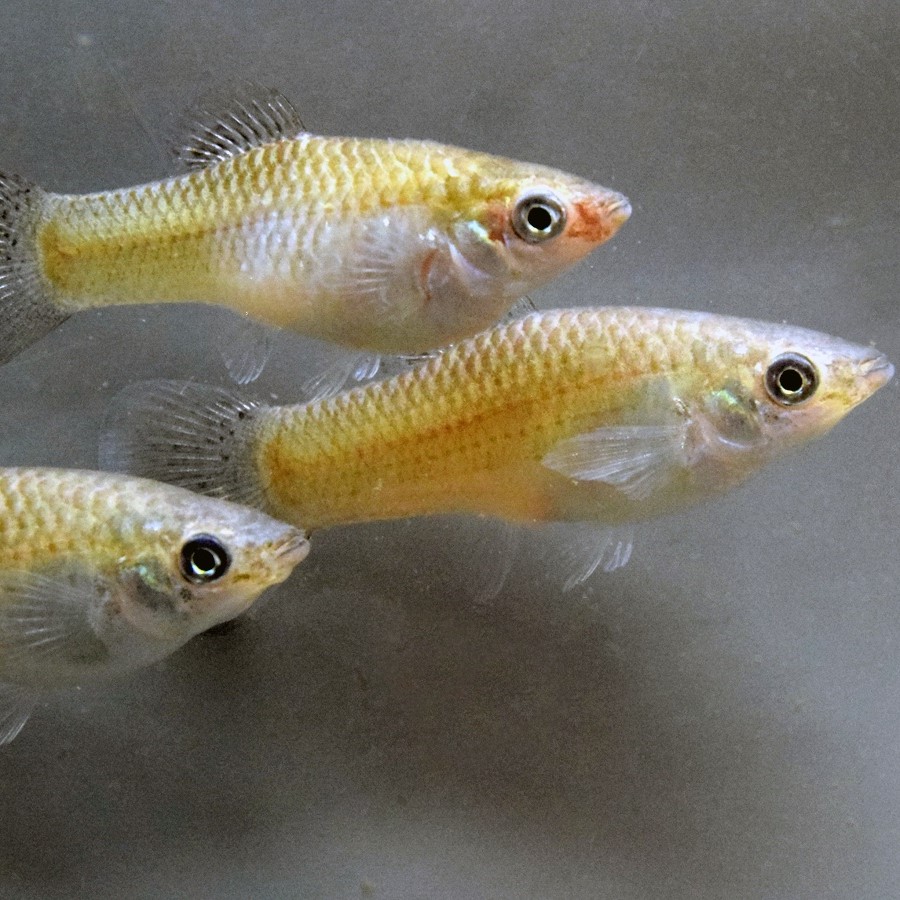
    The 20th conference of the Gesellschaft für Ichthyologie (GfI) e.V.  is intended to provide a diverse insight into research with and about fish, but also to give interested hobbyists a chance to speak. It will cover a diverse range of topics, including Evolution, Collective Behavior, Fish Ecology, Fish Communities, Animal Welfare, and poster presentations. Find


  • Berlin Science Week: Science Slam of the Berlin Clusters of Excellence

    For the Public
    Roadrunner's Paradise Saarbrücker Str. 24 10405 Berlin Germany

    Slammin’ like there’s no tomorrow – at our cluster science slam, researchers try everything to entertain their audience, regardless of whether the subject is e.g. mathematics, neuroscience or active material. The sky is the limit when it comes to what’s possible. Costumes, props, movies, power-point presentations or other experimental setups – it is all allowed.

  • Pawel Romanczuk (Science of Intelligence), “Introduction to Complexity Science: Part II”

    Hot Topics in Intelligence Research
    SCIoI, Marchstraße 23, 10587 Berlin, Room 2.057

    Pawel Romanczuk holds a professorship on Complexity Research in Adaptive Systems at HU. For SCIoI, he works at the interface of applied mathematics, theoretical physics, and behavioral biology. He focuses on collective behavior of organismic systems. His research bridges analytical and synthetic sciences to study self-organization, evolutionary adaptations, and functional dynamical behavior. This talk will

  • Sylvain Calinon (IDIAP, EPFL), “Frugal Learning of Manipulation Skills in Robotics”

    Hot Topics in Intelligence Research
    SCIoI, Marchstraße 23, 10587 Berlin, Room 2.057

    Many applications in robotics would benefit from robots being able to learn manipulation skills from only few demonstrations or trials. This contrasts with the ongoing trend in machine learning of constantly increasing the amount of data required to learn tasks. The main challenge of acquiring manipulation skills from limited training data is to find inductive

  • Mohsen Raoufi (Science of Intelligence), “Crash Course on Network Science”

    Hot Topics in Intelligence Research
    SCIoI, Marchstraße 23, 10587 Berlin, Room 2.057

    Mohsen is a doctoral researcher at SCIoI, working on Project 27, Speed-Accuracy Tradeoffs in Collective Estimation. His research explores the role of networks in shaping collective opinion dynamics. In this lecture, he will provide an overview of network science with a focus on its applications in collective robotics. He will cover basic topics in graph

  • Justin Werfel (Harvard University), “Bio-Inspired Intelligence and Robotics”

    Hot Topics in Intelligence Research
    SCIoI, Marchstraße 23, 10587 Berlin, Room 2.057

    Justin Werfel is a senior research scientist at Harvard’s Wyss Institute for Biologically Inspired Engineering, where he works on topics in complex and emergent systems, including swarm robotics, termite behavior, engineered molecular nanosystems, and evolutionary theory. He leads the Designing Emergence Laboratory, and works closely with a number of other collaborating labs. This talk will take place as

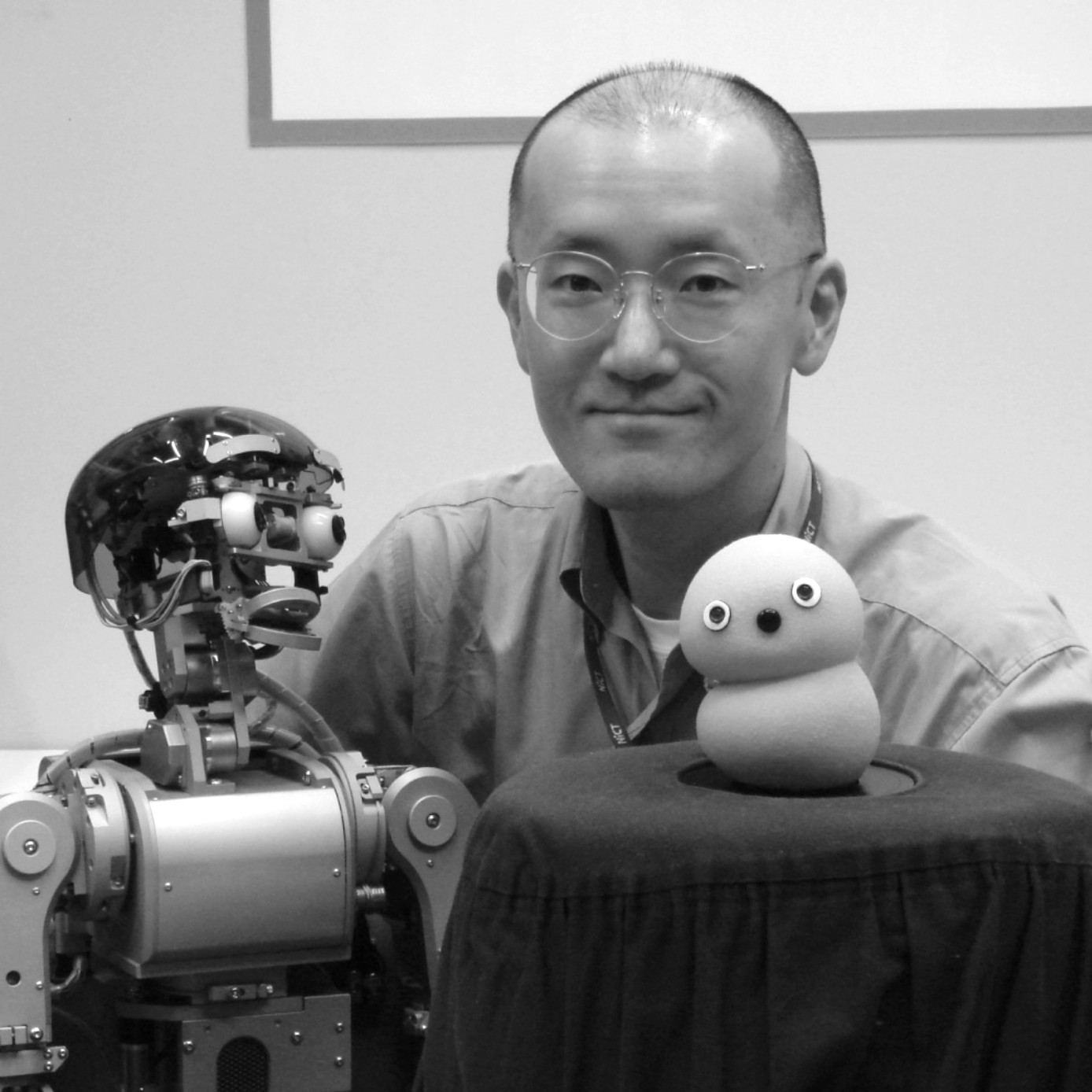
  • Hideki Kozima (Tohoku University), “Child-Robot Interactions for Therapeutic and Educational Research and Practices”

    Thursday Morning Talk
    SCIoI, Marchstraße 23, 10587 Berlin, Room 2.057

    Abstract: Research in developmental robotics includes modeling human intelligence and the process of its emergence in robotic systems. A novel research paradigm in psychology is emerging in conjunction with such efforts regarding reproducing human-specific communication abilities in robots and observing how children interact with robots with various communication capabilities. I will discuss such research trends

  • Majid Khadiv (TU München), “Optimal Control and Learning for Contact-Rich Robotics”

    Hot Topics in Intelligence Research
    SCIoI, Marchstraße 23, 10587 Berlin, Room 2.057

    The past few years have witnessed significant progress in the field of legged locomotion and manipulation. This is mainly due to the availability of high-performance hardware as well as development of algorithms that scale to high-dimensional, hybrid and under-actuated systems. In this talk, I will present my recent research efforts, mainly on the algorithmic side,

  • Mario Di Bernardo (University of Naples Federico II), “Control of Complex Multi-Agent Systems”

    Hot Topics in Intelligence Research
    SCIoI, Marchstraße 23, 10587 Berlin, Room 2.057

    Mario di Bernardo is Professor of Automatic Control at the University of Naples Federico II, Italy and Visiting Professor of Nonlinear Systems and Control at the University of Bristol, U.K. He currently serves as Deputy pro-Vice Chancellor for Internationalization at the University of Naples and coordinates the research area and PhD program on Modeling and

  • Onur Güntürkün (Ruhr University Bochum), “The Evolution of Brain and Cognition: A Wild Hypothesis”

    Distinguished Speaker Series
    SCIoI, Marchstraße 23, 10587 Berlin, Room 2.057

    Onur Güntürkün is regarded as a pioneer of biologically based psychology. The aim of his work is to find out how perception, thought and action arise in the brain. He is interested in diverse topics, such as motor learning, fear, risk-taking behavior and even kissing. In his research, Güntürkün combines psychological, biological and neuroanatomical aspects

  • Sabine Hauert (University of Bristol), “Breaking Swarm Stereotypes: Scalability, Adaptability, and Robustness in Real-World Applications”

    Hot Topics in Intelligence Research
    SCIoI, Marchstraße 23, 10587 Berlin, Room 2.057

    Sabine Hauert is Professor of Swarm Engineering at the University of Bristol in the UK. Her research focuses on making swarms for people, and across scales, from nanorobots for cancer treatment, to larger robots for environmental monitoring, or logistics. Before joining the University of Bristol, Sabine engineered swarms of nanoparticles for cancer treatment at MIT,