
SCIoI alumna Lynn Schmittwilken receives prestigious Glushko Dissertation Prize

SCIoI alumna Lynn Schmittwilken has received the Robert J. Glushko Dissertation Prize in Cognitive Science for the doctoral thesis she completed at SCIoI. The award recognizes her work on active visual perception and the role of small eye movements in shaping how humans see.

Awarded by the Cognitive Science Society and the Glushko-Samuelson Foundation, the prize honors outstanding dissertations that make an original contribution across the disciplines of cognitive science. Each year, up to five researchers receive the award for work that connects fields such as psychology, neuroscience, computer science, philosophy and linguistics in the shared effort to understand minds and intelligent systems.

For Lynn, the prize is a significant recognition of a research program that combines theoretical depth, experimental precision and a strong interdisciplinary perspective.

Rethinking what happens when we look
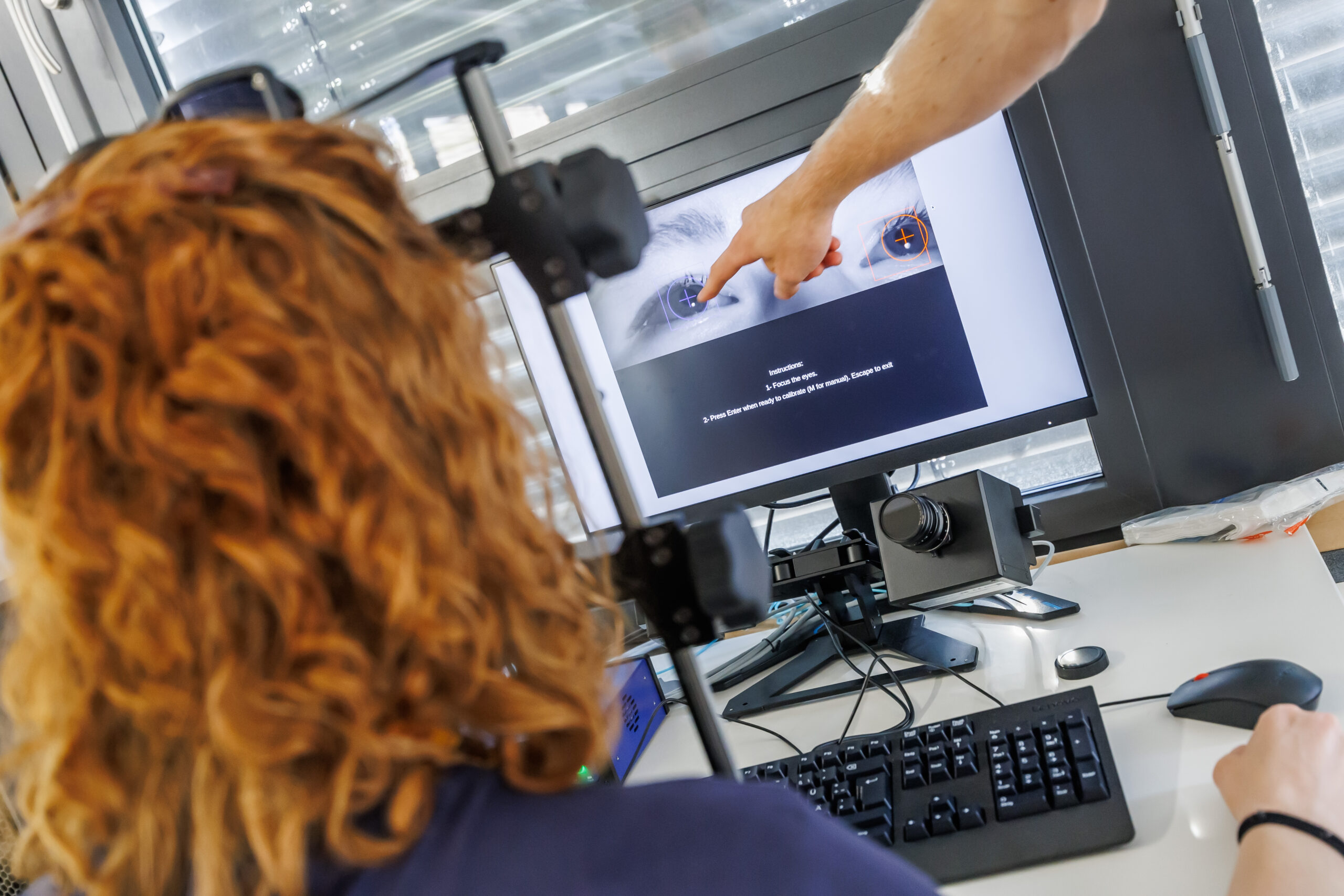
 

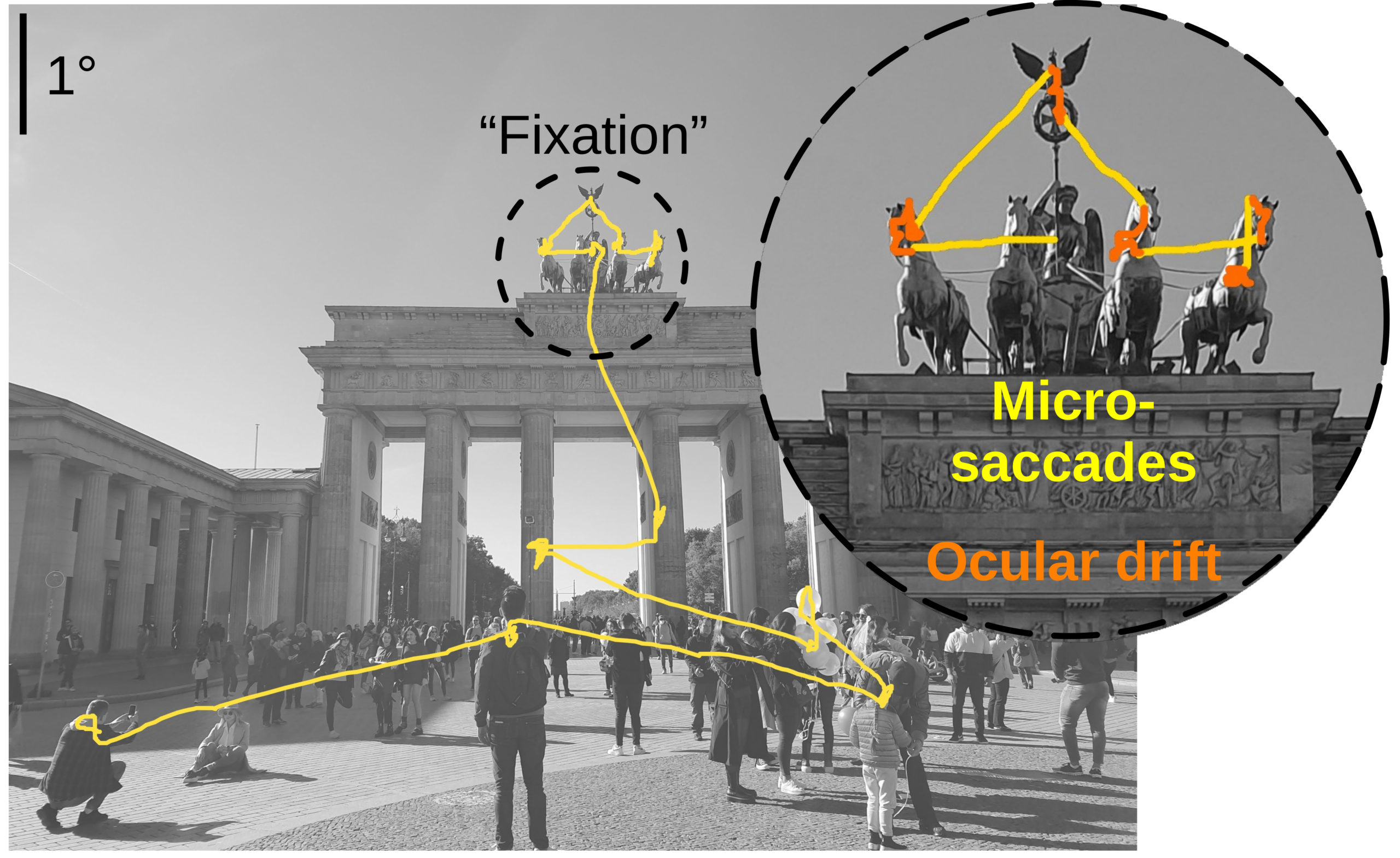
Lynn’s dissertation, “Seeing by Moving: Revisiting Pattern Vision Through Fixational Eye Movements,” challenges a long-standing assumption in vision science: that visual perception begins with a sequence of static images captured while the eyes are at rest. In reality, our eyes are never completely still. Even during fixation, tiny involuntary movements continuously alter the visual input reaching the retina.

Lynn’s work focuses on the most limiting case: the smallest eye movements that persist even when both observers and experimenters strive to eliminate any motion. It suggests that these ever-present movements, particularly ocular drift, are not simply noise that the visual system must overcome. Instead, they affect how we detect edges, recognise spatial structures and make sense of the world around us.

By placing these small eye movements at the centre of her research, Lynn offers a different view of early visual processing: seeing is not passive, but active from the very beginning.

From static images to active vision

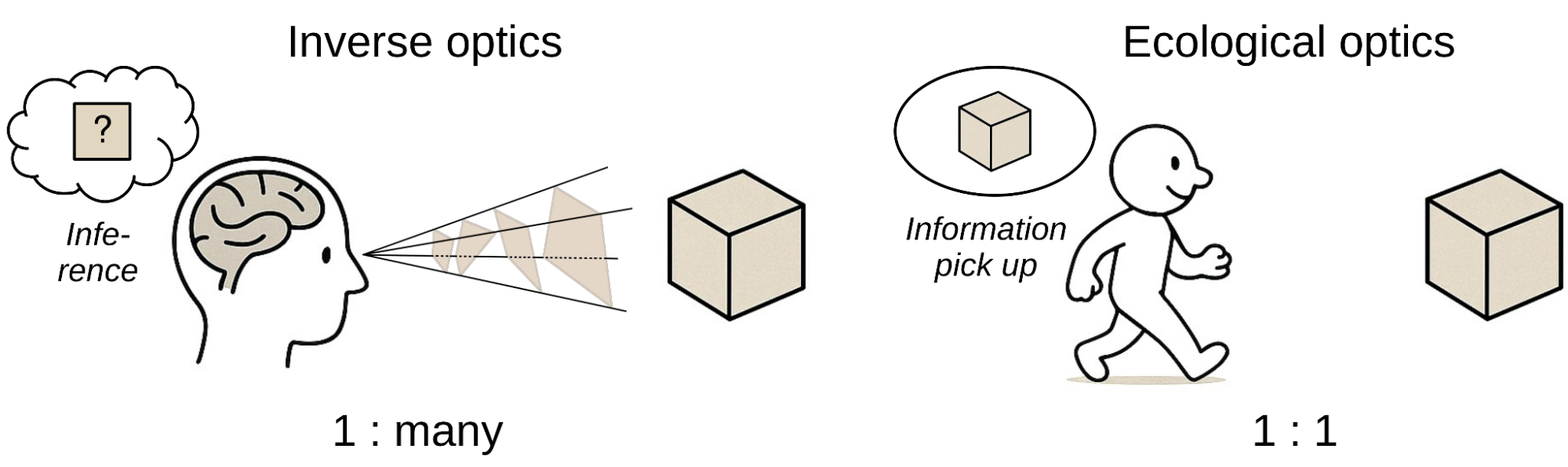
Combining psychophysical experiments, computational modelling and the development of new experimental tools and datasets, Lynn argues for a shift from purely spatial models of vision towards active, spatiotemporal accounts.

In this view, perception is not a reconstruction of static information but an embodied process shaped by the observer’s own movements.

Her research demonstrates that incorporating ocular drift into established models can improve predictions of human edge sensitivity. It also suggests that some traditional models may compensate for the absence of eye movements through other assumptions.

By connecting carefully controlled laboratory research with more naturalistic visual tasks, Lynn’s dissertation opens new avenues for studying how perception works under real-world conditions. Her work also provides practical tools and datasets that can support future research in vision science.

A dissertation shaped at Science of Intelligence (SCIoI)

Lynn carried out this research as a doctoral researcher at SCIoI, where she worked on visual processing in humans as part of the project “Object-level scene descriptions and attention in visual search”.

Her work contributed to a broader understanding of vision as an active process that depends on decisions about where and when to look. Together with her collaborators, she investigated object-based attention, eye-movement behaviour and the mechanisms through which people explore complex, dynamic scenes.

The team’s findings helped show that vision is not only a matter of receiving information, but of actively selecting and structuring it.

The interdisciplinary scope of Lynn’s dissertation reflects the ambition at the heart of SCIoI. Her research brings together psychology, neuroscience and computational modelling, while also raising questions that are highly relevant to computer vision.

What can artificial systems learn from the active way humans explore their surroundings? And how might models of machine vision improve if they did not treat visual input as a series of static images?

Continuing the journey in Darmstadt

Lynn is now a postdoctoral researcher in the Perception Lab at Technische Universität Darmstadt and a member of the newly found Cluster of Excellence “The adaptive mind”.

There, she continues to study human visual perception using psychophysics and computational models. Her current work includes eye movements, perceptual organization, advances in psychophysical methods and comparisons between biological and artificial vision.

This next step is a natural continuation of the questions that shaped her SCIoI research: how perception and action intricately work together to support natural behaviors, and what this may teach us about artificial systems.

A well-deserved recognition

The Glushko Dissertation Prize is accompanied by a certificate, a $15,000 award and three years of membership in the Cognitive Science Society. More importantly, it recognizes a coherent and ambitious body of research with the potential to influence how early visual processing is understood.

We warmly congratulate Lynn on this outstanding achievement. We are proud that the dissertation now recognized by the Cognitive Science Society was developed at SCIoI, and delighted to see the originality, depth and interdisciplinary strength of her work honored in this way.


Research

An overview of our scientific work

See our Research Projects